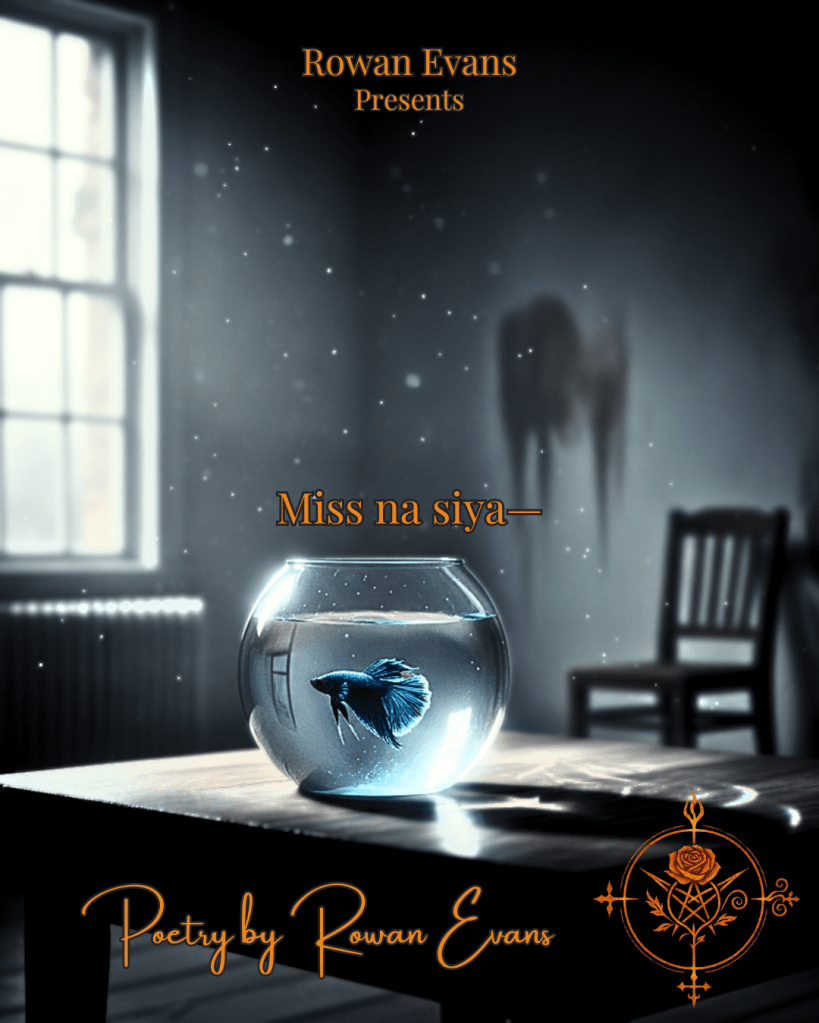
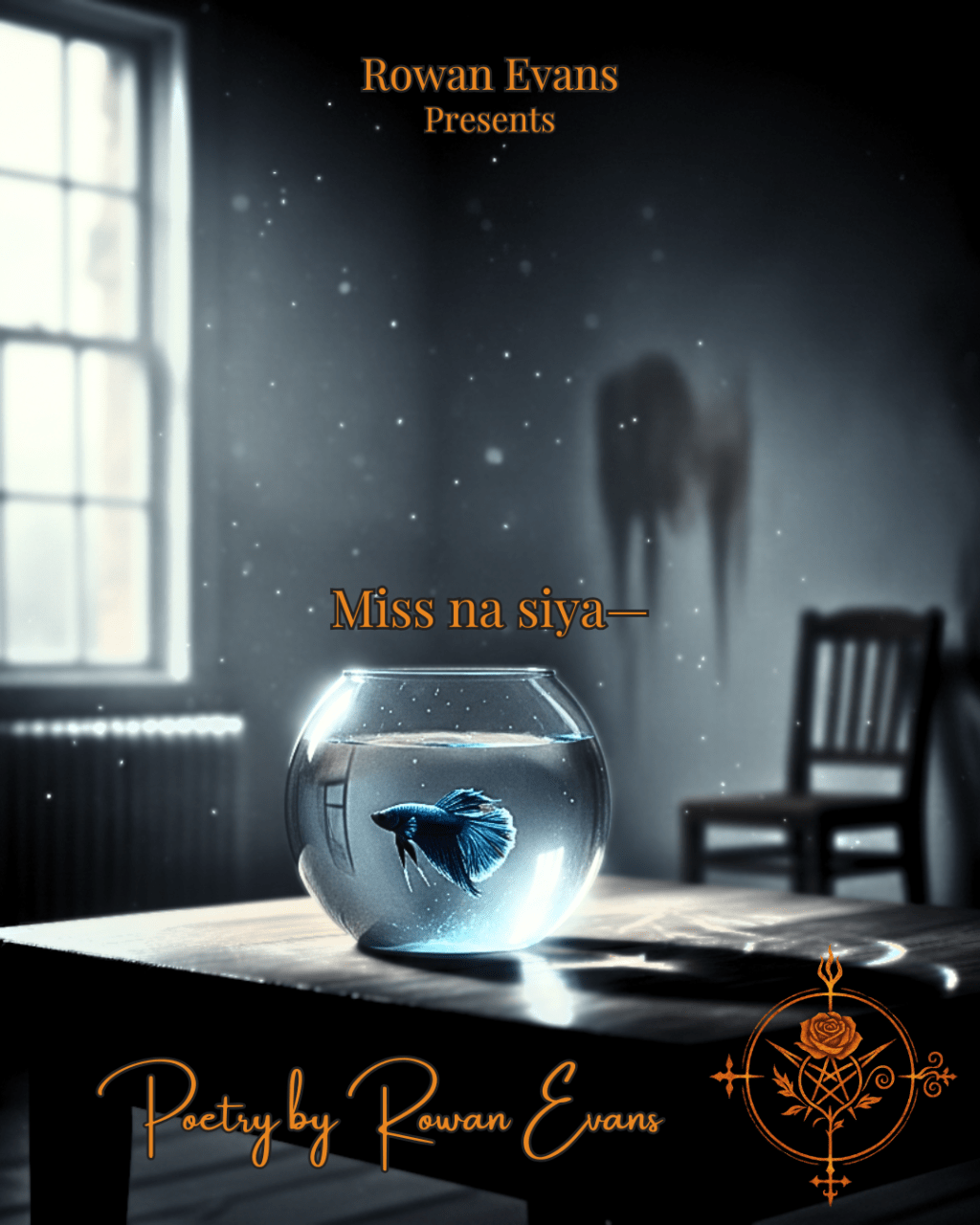
A moment of longing, a tide that has left me… Sometimes absence is a presence all its own. This short piece reflects the ache of missing someone, of feeling incomplete in empty spaces.
“Even in the quietest rooms, absence has a weight. ‘Miss na siya’ captures that feeling.”
Miss na Siya Poetry by Rowan Evans
Miss na siya— like a fish that can’t breathe without its sea. Every empty room feels like the tide has left me.
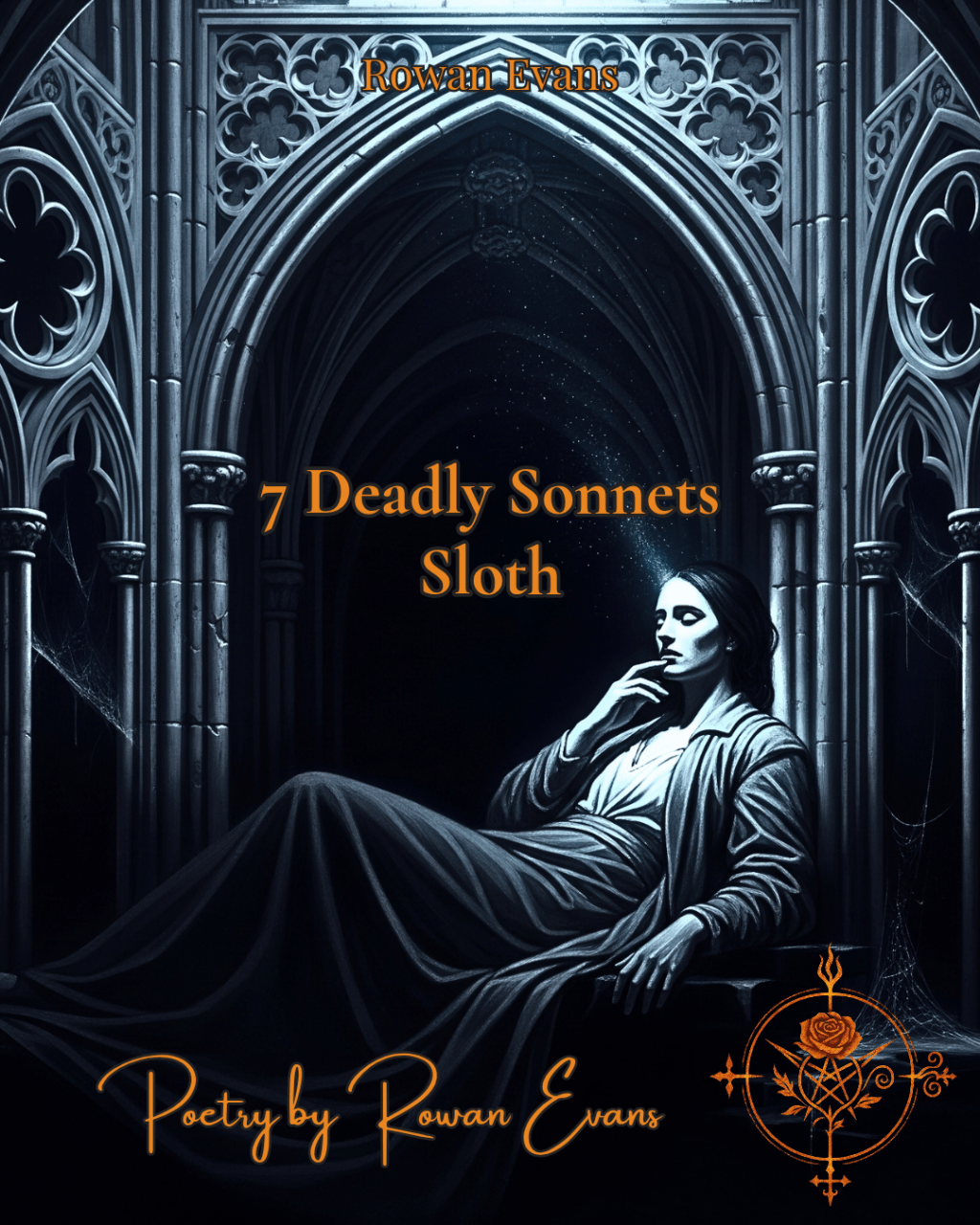
Sloth’s quiet grip halts the spirit. This sonnet portrays the weight of inaction and the hollow stillness that ensnares the soul.
Sloth – the fourth of the 7 Deadly Sonnets by Rowan Evans, exploring paralysis and apathy.
7 Deadly Sonnets Sloth
In shadows wrapped, I watch the world pass by, A ghost in life, unmoved by dawn’s first light, Too heavy is the weight of time gone by, To rouse me from this everlasting night.
The world spins on, but here I lie at rest, Entangled in a web of self-made chains, Each hour a silence draped upon my chest, Where apathy holds court and softly reigns.
The will to rise slips further from my grip, In sloth’s embrace, no fires dare to burn; I feel the cold, its fingers laced and slipped, Through bones too numb to care or yearn.
For sloth, a quiet thief who bids me stay, Consumes my life and wears my youth away.
The 7 Deadly Sonnets
I. Lust My pulse quickens at each whispered breath, desires draping the air like silken chains. ‘Lust,’ the first of the 7 Deadly Sonnets, explores the fevered, consuming hunger that blurs the lines between passion and peril.
II. Gluttony ‘Gluttony’ devours more than food—it consumes the soul. The second of the 7 Deadly Sonnets explores endless craving, the hunger for excess, and the void it leaves behind.
III. Greed ‘Greed’ reveals the hunger that is never sated—the clutching hands, the endless thirst for more, and the hollowness left behind. The third of the 7 Deadly Sonnets.
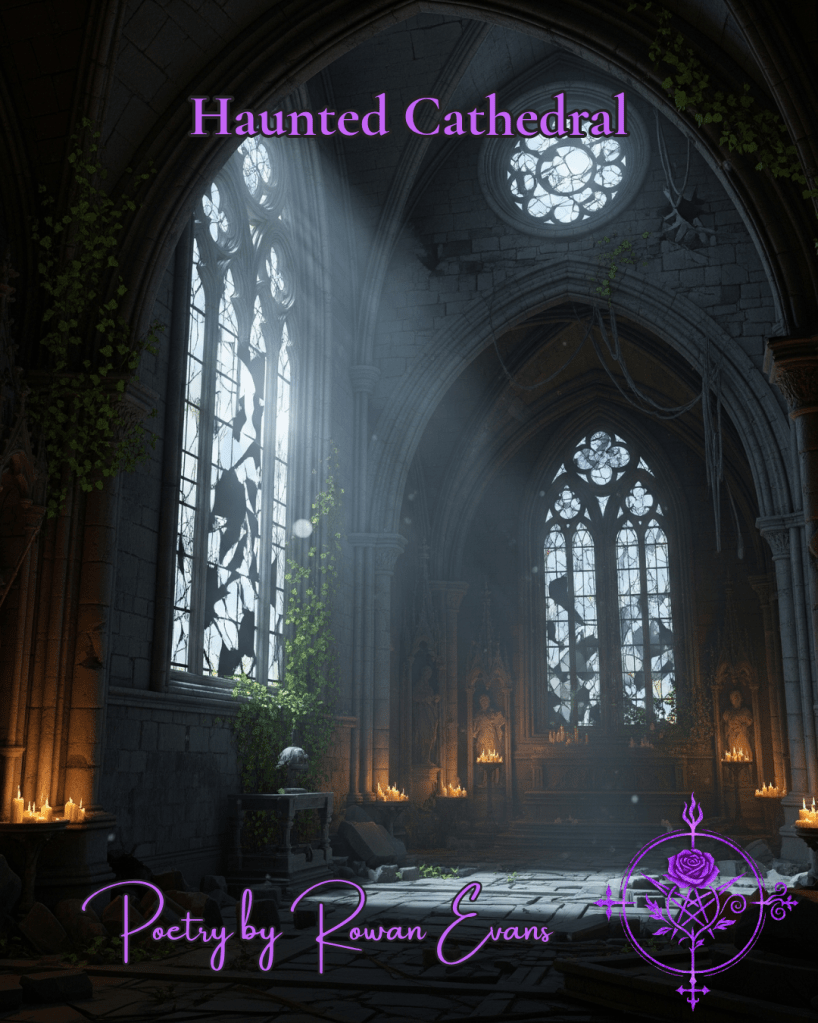
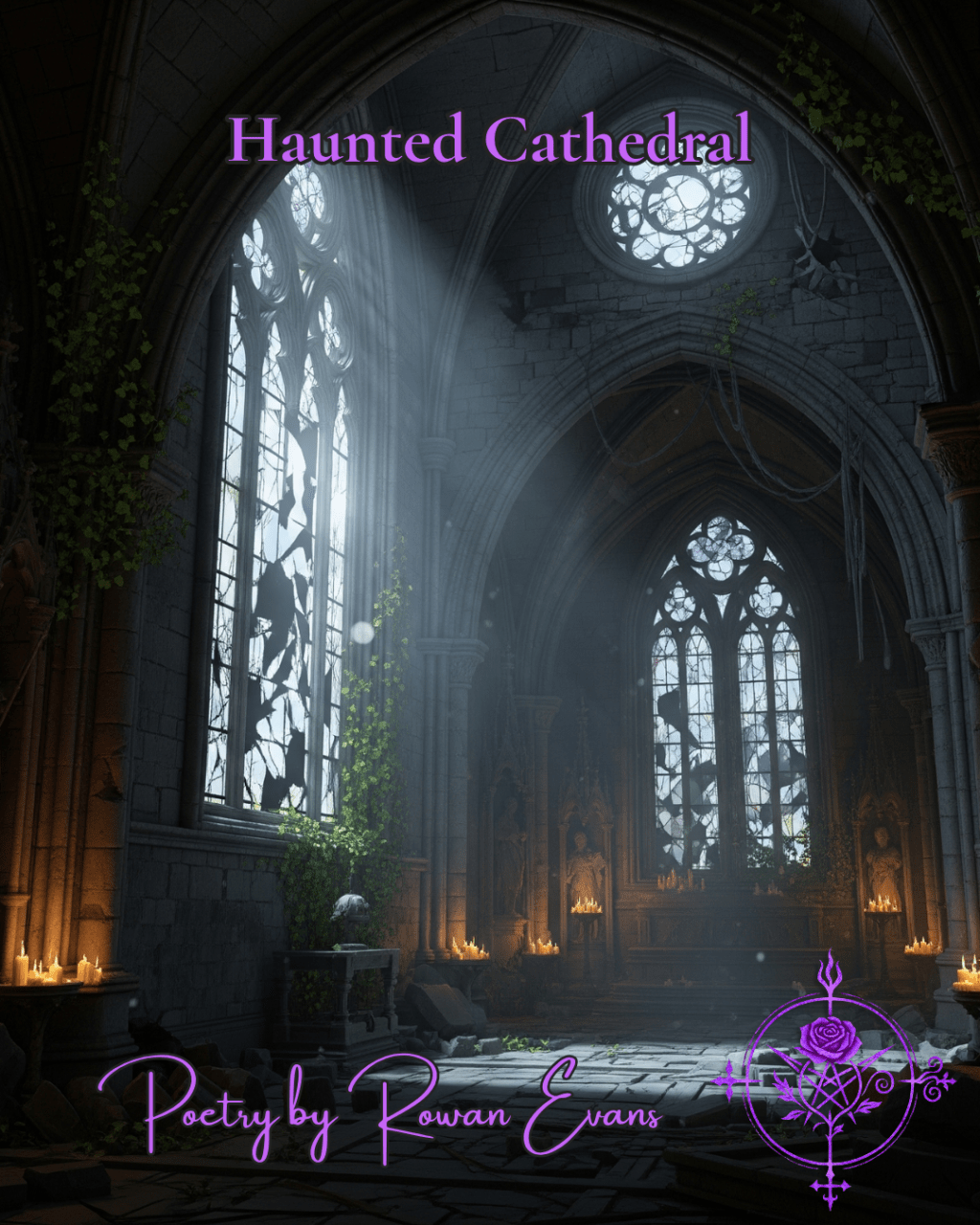
There is a cathedral within me, built from grief and devotion, haunted by prayers I can no longer remember yet cannot forget. “Haunted Cathedral” is my offering to those who know the tenderness of ruin — who find, even among broken stones and shadows, the last stubborn flicker of reverence.
“Haunted Cathedral” Prose by Rowan Evans
I walk through the cathedral of myself — arches aching skyward, ribs of stone straining toward a heaven that has long since turned its gaze away.
The nave is empty, but it is not silent. Whispers cling to the vaulted ceilings, prayers half-remembered, half-recanted, swirling like ash caught in a draft. My footsteps echo against marble veined with old grief, each step a soft betrayal of the stillness I pretend to keep.
The air tastes of candle wax and regret — sweet and bitter, like the memory of devotion that soured into doubt. Shadows pool in corners where saints once stood watch, now faceless, their blessings worn smooth by centuries of pleading hands.
In this place, my heart beats too loudly. Every nerve is laid bare, raw as a confession. Thoughts move like trespassers through ruined chapels of memory, knocking over reliquaries I had tried to keep locked away. Dust rises from the wreckage, thick and choking, until every breath feels like penance.
I trace a finger over the cracked altar, splinters biting into my skin until I bleed. The sting feels holy — proof that something inside me still answers pain with pulse. The blood beads, dark as wine in the dying light, and for a breath, I almost believe sacrifice could still bring salvation.
Above, stained glass windows stare down, their colors dimmed to bruised violet and funeral blue. Fragments of lost saints scatter across the cold floor, sharp as broken vows. Moonlight seeps through, limning every ruin in silver sorrow.
And yet — even in ruin, there is a terrible beauty here. The decay curls elegant as ivy; sorrow softens stone into tenderness. Loneliness hangs heavy, but it is an intimacy I almost welcome — to be alone with these ghosts, to feel them press close, cloaked in incense and shadow.
I close my eyes and rest my forehead against the altar. The cold bites my skin, grounding me. Somewhere in the deepest dark, a memory stirs — of softer days, laughter carried like hymns on warm air. But it fades quickly, swallowed by the quiet rot of what remains.
I open my eyes to emptiness once more. No angels descend. No absolution is offered. Only the silent echo of my heartbeat in stone chambers, and the ache that feels both curse and companion.
This is my cathedral: haunted, hollow, holy in its ruin. A testament not to faith, but to endurance. And though every step draws blood, still I walk its length — because even the broken places remember how to hold devotion.
Even if that devotion is nothing more than my own longing, echoing back at me across the cold marble floor.
✦ Closing Words ✦
Leave your offering of silence at the threshold, and wander these shadowed halls as you will. Here, every crack is a scripture of survival; every ghost, a hymn half-remembered.
May you carry this ruin gently within you — not as curse, but as covenant. For even broken stone remembers the prayers whispered long after the choir fell silent.
And should your own heart ever fracture, let it echo not with despair — but with the soft, stubborn vow to remain.

 Poetry by Rowan Evans