Tag: reflective poetry

  • Author’s Note

    Perspective is one of the strangest things we possess.

    Two people can stand in the same place, witness the same moment, and walk away carrying completely different worlds inside them.

    I’ve spent a lot of time thinking about that—not as something that separates us, but as something that makes us interesting.

    This poem isn’t saying one perspective is better than another. It isn’t about claiming superiority.

    It’s about accepting that no one else can inhabit your mind.

    No one else sees exactly what you see, makes the same connections, or experiences the same emotional landscape. We can describe our inner worlds through art, conversation, and metaphor, but there will always be a distance between experiencing something and hearing someone describe it.

    As a poet, I spend much of my life trying to bridge that distance.

    This poem acknowledges that the bridge will never be perfect—and that’s okay.

    Our perspectives don’t need to become identical to be meaningful.

    Sometimes it’s enough to simply recognize that every person is looking through a different window.

    Rowan Evans


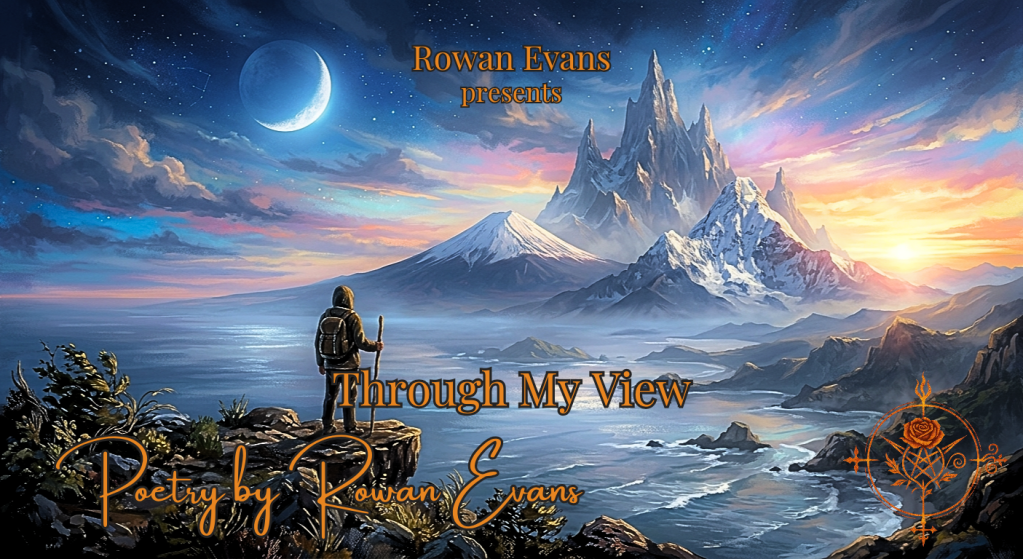
    A surreal sunrise over towering mountains, a vast ocean, and a fading moon, symbolizing a unique personal perspective on the world.
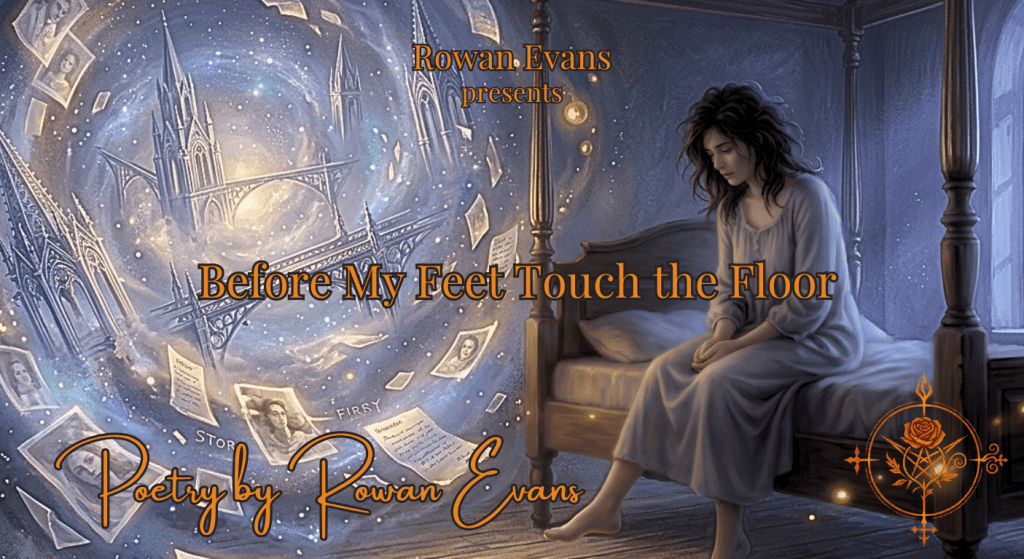
    No one else can stand exactly where you stand or see the world through your eyes.

    Through My View
    Poetry by Rowan Evans

    It’s eight,
    I hear the birds chirp.
    It’s late, I’m awake—
    what’s new?

    Silence.
    It’s violence—
    the words that I choose,
    when I’m cut loose.

    Like my thoughts,
    I’m off leash—
    you can’t stop me.

    I’ve got a mind
    that stacks lines,
    mountains high,
    metaphors rise—

    higher than Fuji,
    higher than Everest.

    You’ll never finish this climb,
    your mountains will never match mine.
    You could do this for the rest of your life—

    but you’ll never cross my ocean,
    you’ll never see my moon
    with your own eyes.
    You’ll never feel the pull of my tide—

    because your mind
    doesn’t work like mine.
    You’ll never see the beauty
    in my horizon line—

    the way the colors
    shift and shine
    with the change of time.

    You’ll never see the world like—
    I do,
    you’ll never see the world through—
    my view.


    Journey into the Hexverse…

    [Just Human]
    Just Human is a reflective free verse poem about seeing people before borders, choosing empathy over division, and finding home in our shared humanity rather than on a map.

    [Monster Theology]
    What if the monsters under the bed weren’t monsters at all? Monster Theology explores difference, belonging, and the human tendency to fear what we don’t understand through a conversation with the creatures we’ve spent our lives imagining.

    [Before We Created The Labels]
    Ancient gods return to a fractured world shaped by borders, identities, and separation. “Before We Created the Labels” explores humanity’s divisions through mythic imagery, sacred ritual, and symbolic collapse—asking what remains when we learn to see one another beyond labels.

    [No You and I, Ony Us]
    A hopeful free verse poem about empathy, borders, and imagining a world where humanity matters more than division.

    [Two Americans]
    What does it mean to share a country, a language, and still feel completely different? Two Americans explores identity, culture, and the quiet disconnect between people who should feel the same—but don’t.

    If you’re interested in more poetry, you can find it here → [The Library of Ashes]
  • Author’s Note

    I’ve never been particularly good at thinking in borders.

    When I look at a map, I see countries.

    When I look at people, I don’t.

    I’ve always found it easier to connect with someone’s story than with the place they happened to be born. A passport can tell you where someone came from, but it can’t tell you what keeps them awake at night, what they dream about, or what they’ve survived.

    That’s the part that interests me.

    This poem isn’t political.

    It’s personal.

    It’s an attempt to describe the way I’ve always experienced humanity—as something far larger than geography.

    I don’t believe compassion should stop at a border.

    I don’t believe kindness needs a nationality.

    Maybe that’s why so much of my writing wanders across oceans and continents, chasing people I’ll probably never meet, writing about places I’ve only visited through dreams, conversations, photographs, and stories.

    To me, humanity has always felt like one conversation happening in countless languages.

    Different histories.

    Different landscapes.

    The same heartbeat.

    That’s all this poem is trying to say.

    We’re all just human.

    Rowan Evans


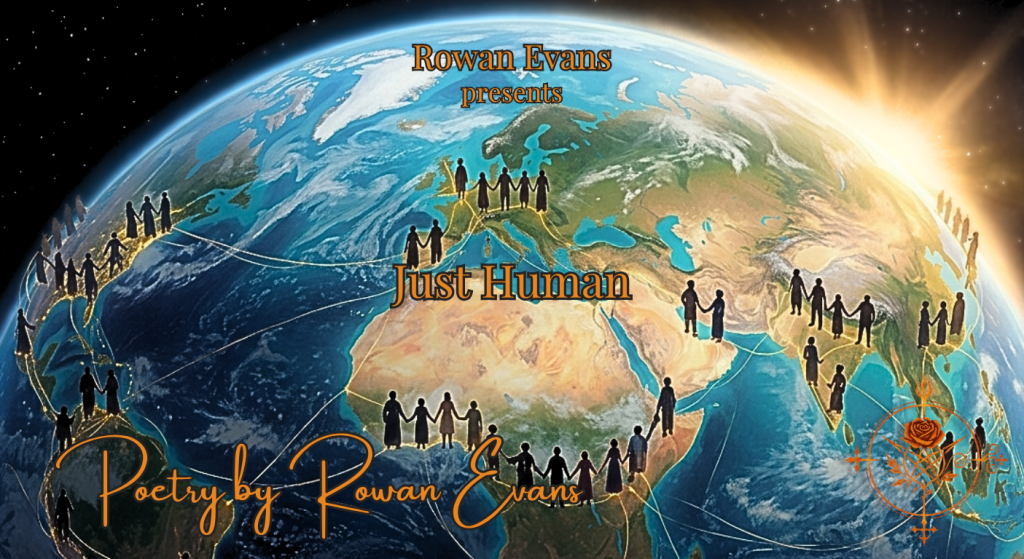
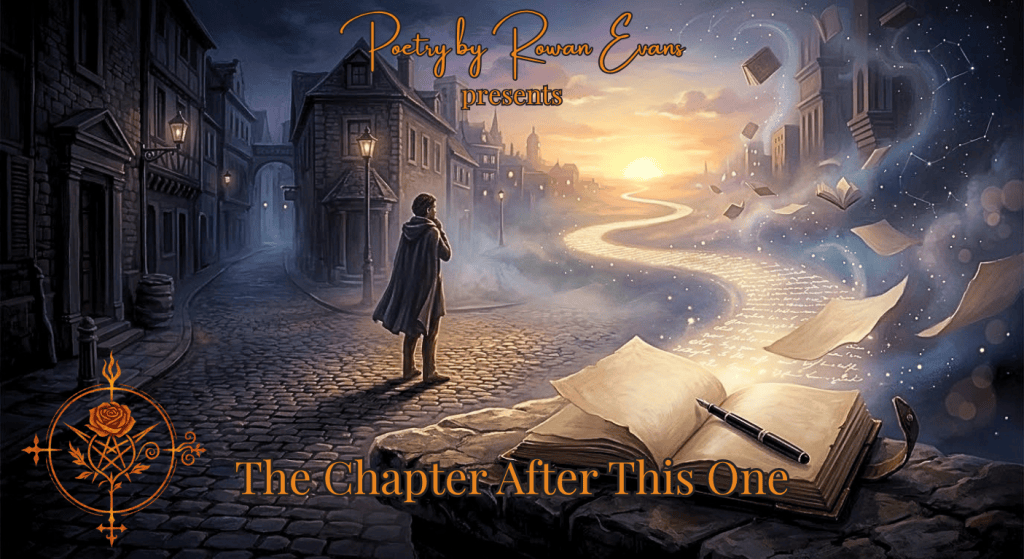
    The Earth at sunrise with diverse people connected across continents by glowing threads of light, symbolizing shared humanity.
    Before we’re anything else, we’re human.

    Just Human
    Poetry by Rowan Evans

    With my eyes wide—
    I see the world.
    Not one corner.
    The whole globe,
    and I’ve got love for it.

    Every person,
    every soul—
    not divided by borders,
    not separated by flags,
    just human.

    Just here.

    Trying to make it
    through the same sunrise
    and the same storms.

    Not because I know them,
    but because I recognize them—
    the way a heartbeat
    recognizes another heartbeat
    anywhere on Earth.

    I don’t split the map
    into colors or countries.
    I don’t measure worth
    by lines drawn long before I was born.
    I just see people—
    living, trying, hoping.

    Maybe it’s the way I grew up
    feeling like I belonged everywhere
    and nowhere at once.

    Maybe it’s the way strangers
    always felt more familiar
    than the places I called home.

    Because home, to me,
    was never a location—

    it was a feeling,
    a recognition,
    a quiet knowing
    that we’re all carrying
    the same fragile humanity
    through different landscapes.

    And when I say
    I love the world,
    I mean I love its people—

    the way they rise,
    the way they break,
    the way they keep going
    even when the map
    forgets their names.


    Journey into the Hexverse…

    [Another Fire]
    A powerful poem exploring global chaos, systemic inequality, and emotional exhaustion in a world where conflict grows faster than it can be understood.

    [Raising Governments]
    A sharp, satirical poem that reframes global leadership as misbehaving children, Raising Governments blends humor with frustration to highlight the immaturity and contradictions often seen in power structures.

    [Government Time-Out]
    A direct and controlled follow-up to Raising Governments, this poem strips away humor to confront power with accountability—demanding reflection, responsibility, and change.

    [Calculating Profits (Ledger of Lives)]
    Calculating Profits (Ledger of Lives) is a raw anti-war poem confronting how modern conflict is often reduced to statistics, strategy, and spectacle. Through stark imagery and direct language, Rowan Evans challenges the “us vs. them” narrative and reminds readers that behind every number in war’s ledger is a human life.

    [Crash Landed]
    A reflective poem about feeling like an outsider in a world shaped by tribalism, selective compassion, and identity-driven thinking.

    If you’re interested in more poetry, you can find it here → [The Library of Ashes]
  • Author’s Note

    I’ve always had a difficult time describing what music actually does to me.

    People often say a song makes them feel happy, sad, nostalgic, or energized.

    That has never felt quite specific enough.

    Music feels physical.

    Some songs settle over me like fog.

    Some arrive like thunderstorms.

    Some feel like walking outside after rain when the air still smells different.

    And then there are the songs that somehow collapse time.

    They don’t simply remind me of childhood.

    They return me to it.

    Not through memory alone, but through sensation.

    The warmth of pavement beneath bare feet.

    The way summer evenings seemed endless.

    The strange certainty that tomorrow would always have enough time.

    That’s what fascinated me while writing this piece.

    Not the songs themselves, but the environments they create inside us.

    The weather of memory.

    The emotional climates we revisit every time a familiar melody begins.

    I’ve always believed that poetry and music are close relatives.

    One speaks through rhythm.

    The other through silence between the notes.

    Both have the remarkable ability to transport us somewhere we cannot physically return to.

    This poem is my attempt to describe that journey.

    Not through genres or artists.

    Through atmosphere.

    Because sometimes music doesn’t just soundtrack our lives.

    Sometimes it changes the forecast within them.

    Rowan Evans


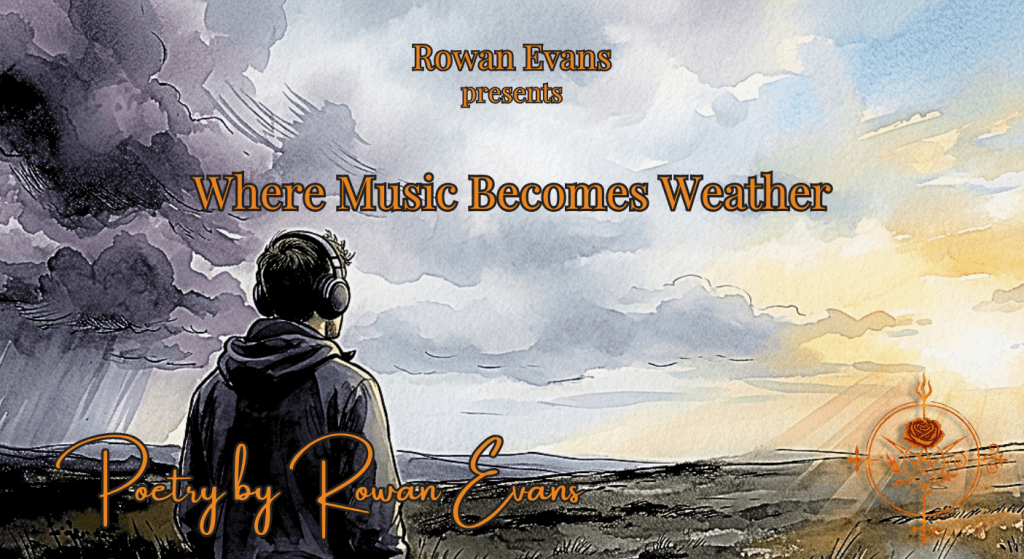
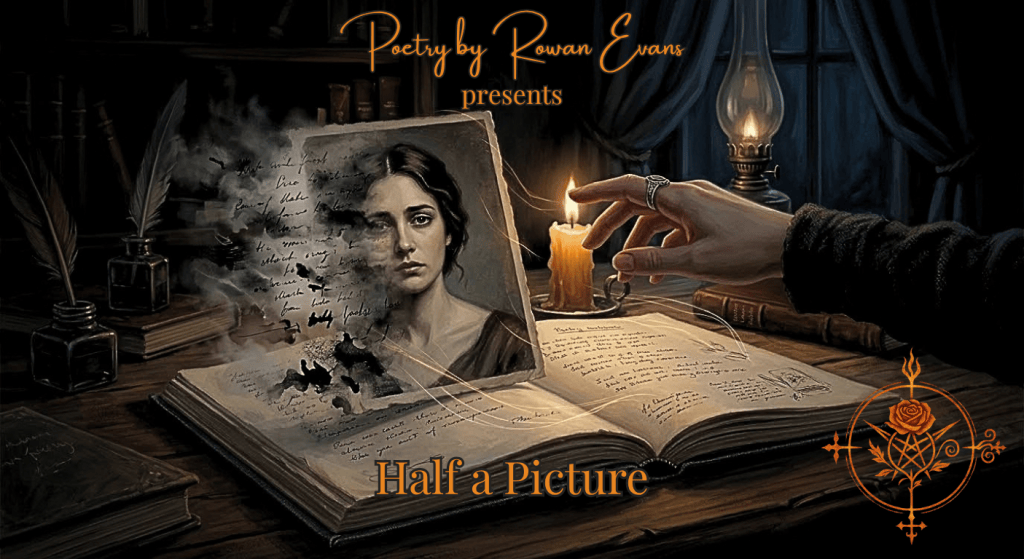
    A person wearing headphones stands beneath a sky shifting from storm clouds to warm sunlight, symbolizing how music changes emotions and memories.
    Some songs don’t just play. They change the weather inside us.

    Where Music Becomes Weather
    Poetry by Rowan Evans

    I put my headphones on,
    hit the button—
    noise cancelling.
    Then I let the music play,
    let it lead my emotions
    whatever which way.

    I drift through different soundscapes—
    crossing borders in sound,
    watching emotion mix with ink
    like paint on the canvas.

    Certain songs
    feel like humidity.
    They put a heavy feeling
    in your chest,
    it almost makes it hard
    to catch your breath.

    Other songs
    feel like clouds.
    The way they hold me
    in soft hands.
    And I feel safe,
    because they hold me close
    but in motion—
    like a slow dance.

    But then
    there are those songs—
    the ones that feel
    like warm concrete
    on bare feet.
    Like time travel,
    I’m back in my childhood.

    Back when summer felt endless,
    and every day was measured
    by the position of the sun.

    Before I knew what nostalgia was—
    only that certain songs
    felt familiar before I’d ever heard them.


    Journey into the Hexverse…

    [A Heart That Echoes in Another Language]
    A poetic journey through music across Japan, Korea, China, and the Philippines, exploring how sound becomes identity, memory, and emotional geography.

    [Sound as a Vessel]
    “Sound as a Vessel” is a free verse poem about music as emotional architecture, exploring how international artists and soundscapes shaped identity, creativity, memory, and poetic voice.

    [The Music Holds Me Upright]
    A reflective free verse poem about using music, writing, and rhythm to navigate anxiety, depression, and emotional overwhelm.

    [Global Takeover]
    What if home isn’t a place—but something you build from the music you love? Global Takeover blends sound, culture, and identity into one borderless space.

    [I’ll Be There to See Your Sunrise]
    Love has never come easily to me. This poem explores the fear, vulnerability, and quiet courage required to stay emotionally present when connection begins to matter deeply. “I’ll Be There to See Your Sunrise” is about choosing love despite the risk of heartbreak—and promising to remain long enough to witness someone fully.

    If you’re interested in more poetry, you can find it here → [The Library of Ashes]
  • Author’s Note

    I’ve written about dreams for years.

    Not because I think they predict the future. Not because I think they’re magical.

    Because they feel real.

    Real enough that sometimes waking up feels stranger than the dream itself.

    I don’t think people talk enough about that moment between sleeping and waking—the brief period where both realities still exist at the same time.

    The dream is fading.

    The room is returning.

    And for a few seconds, you’re caught between them.

    That’s where this poem lives.

    I’ve had dreams that felt so vivid, so emotionally complete, that waking up felt like losing something. Not a person. Not a place. A version of myself.

    A self that existed somewhere else.

    The older I get, the more fascinated I become by that feeling.

    Why do some dreams linger for hours while entire days disappear from memory?

    Why do imaginary places sometimes feel more familiar than real ones?

    Why does waking occasionally feel like arriving somewhere instead of returning?

    This piece doesn’t try to answer those questions.

    It simply sits with them.

    Because there are mornings when the first thing I feel isn’t relief that the dream is over.

    It’s grief that it ended.

    And I suspect I’m not the only one.

    Rowan Evans


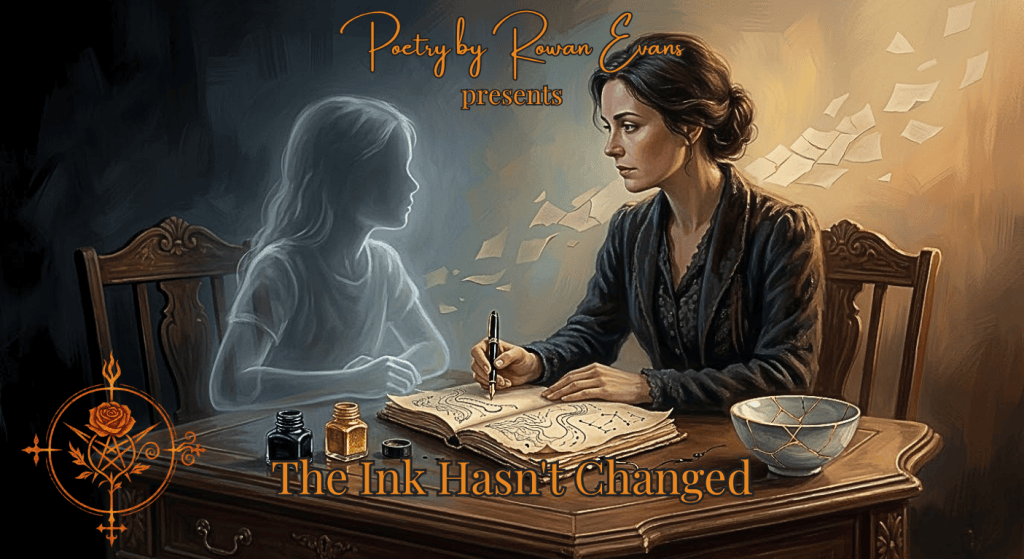
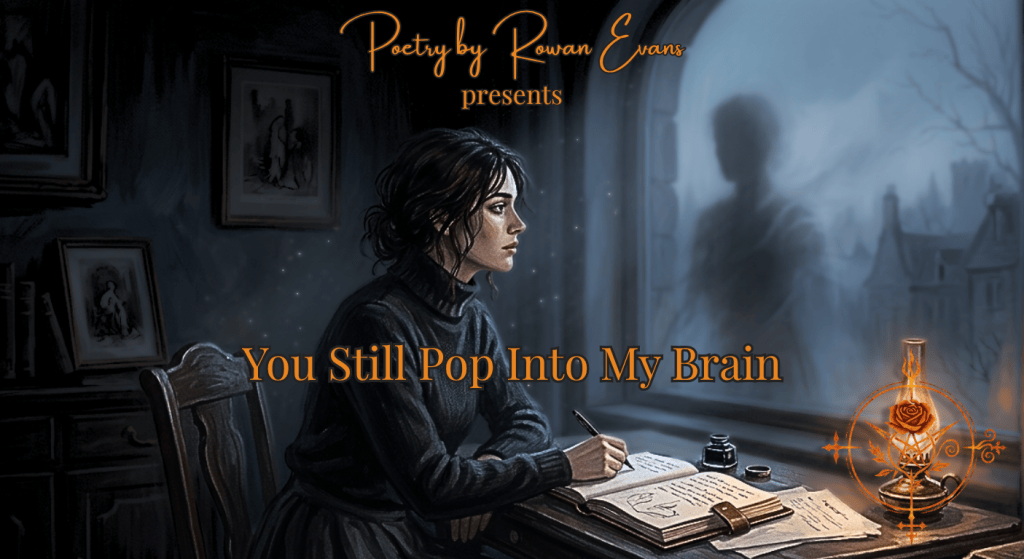
    A woman sits on the edge of her bed between waking and dreaming as a surreal dream-world fades around her.
    Some mornings feel less like waking up and more like saying goodbye to a life that only existed while you were asleep.

    Before My Feet Touch the Floor
    Poetry by Rowan Evans

    Dreams—
    a common topic
    in my poetry.

    It’s because
    they don’t feel fake to me.
    They feel like memories.

    Do know what it’s like
    to wake up confused—
    because you’re in your own room?

    How do you live—
    when your dreams are more alive
    than your waking life?

    It’s as if the person I was
    a moment ago
    is still out there,
    waiting for me
    to return.

    So I lie there,
    trying to remember
    which version of me
    is the imposter—
    the one who wakes,
    or the one who wanders.

    Sometimes I think
    the dream‑me
    is the one who remembers,
    and I’m the one
    who forgets.

    Because if I feel more alive
    in the places I can’t stay,
    what does that make
    the life I return to?

    There’s a mourning
    no one talks about—
    the kind that happens
    before your feet
    touch the floor.


    Journey into the Hexverse…

    [The Streets I Walk When I Sleep]
    “The Streets I Walk When I Sleep” is a deeply intimate free verse poem about recurring dreams, emotional connection, longing across distance, and the strange feeling of remembering places and moments that have never happened in waking life.

    [Memories From a Life Yet to Come]
    Some dreams feel less like fantasy and more like memory. “Memories From a Life Yet to Come” is a reflective free verse poem about longing, displacement, emotional alignment, and the strange comfort of recognizing yourself more clearly in dreams than in waking life.

    If you’re interested in more poetry, you can find it here → [The Library of Ashes]
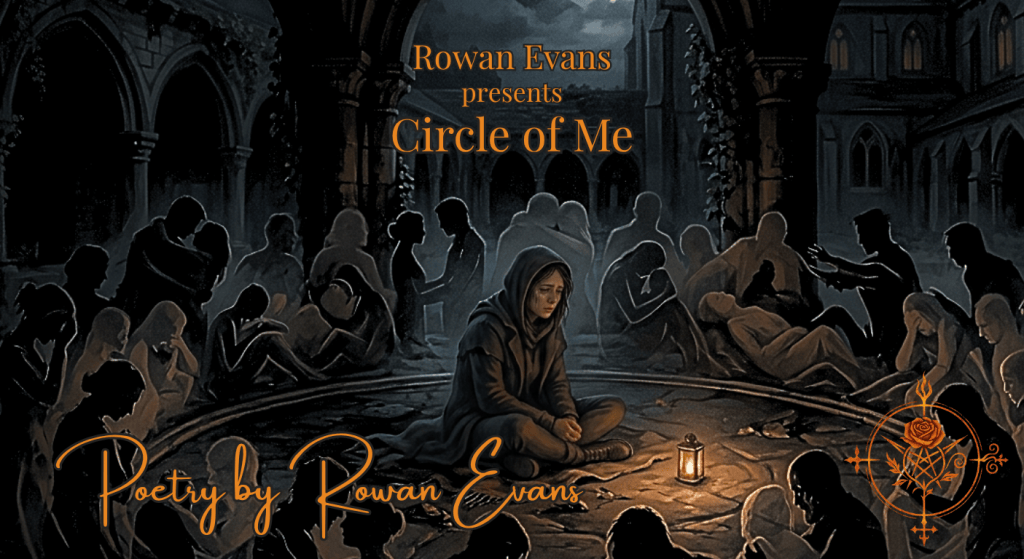
  • Introduction

    Sometimes, the mind cannot stop wandering to the one who lingers in your heart. This little reflection captures that quiet, unending presence—the person who inhabits every corner of thought, even in silence.

    Rowan Evans


    Abstract golden light and blurred shapes representing quiet reflection and lingering thoughts.
    Every thought between—where silence still carries your presence.

    Every Thought Between
    Poetry by Rowan Evans

    There is not a moment
    that you do not
    cross my mind.
    You are my first thought,
    and my last—
    and every thought between.

    Even silence
    sounds like you.


    If you’re interested in more poetry, you can find it here → [The Library of Ashes]
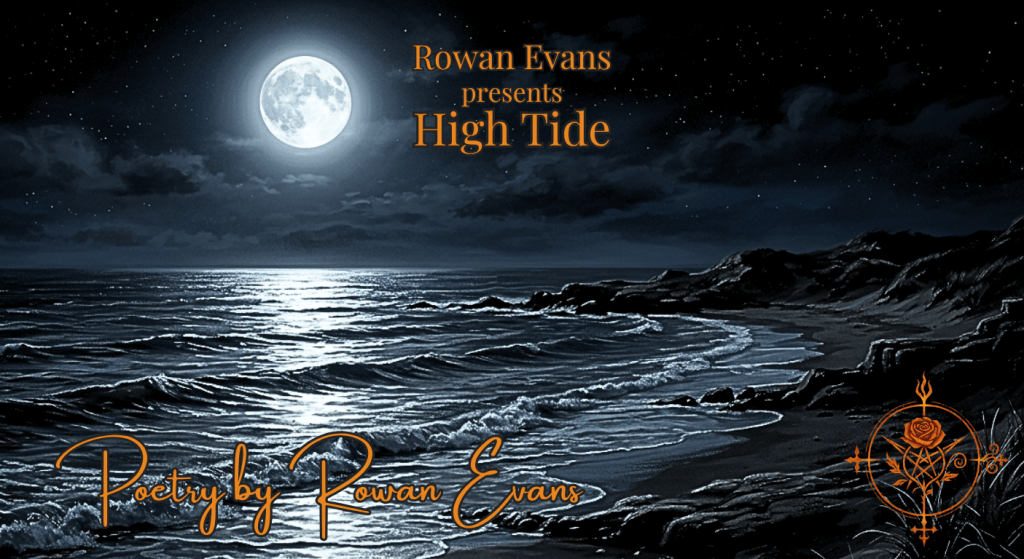
  • Introduction

    A moment of longing, a tide that has left me… Sometimes absence is a presence all its own. This short piece reflects the ache of missing someone, of feeling incomplete in empty spaces.


    A small fish in a glowing bowl in an empty room, sunlight streaming in – evoking longing and absence.
    “Even in the quietest rooms, absence has a weight. ‘Miss na siya’ captures that feeling.”

    Miss na Siya
    Poetry by Rowan Evans

    Miss na siya—
    like a fish
    that can’t breathe
    without its sea.
    Every empty room
    feels like the tide
    has left me.


    If you’re interested in more poetry, you can find it here → [The Library of Ashes]