Tag: dream poetry

  • Author’s Note

    Some feelings become difficult to carry once they stop being hypothetical.

    You rehearse the words in your head, hide them in poems, disguise them as metaphors, bury them in “what ifs” and dream sequences—because saying them plainly makes them real.

    This piece came from that space between silence and confession.

    The strange place where fear and honesty start sounding alike.

    Not fear of loving someone.

    Fear of changing something that already matters deeply to you.

    Because sometimes the connection itself becomes so important that risking it feels terrifying.

    And sometimes love isn’t about perfection at all.

    Sometimes it’s just about seeing someone clearly—and caring anyway.

    — Rowan Evans


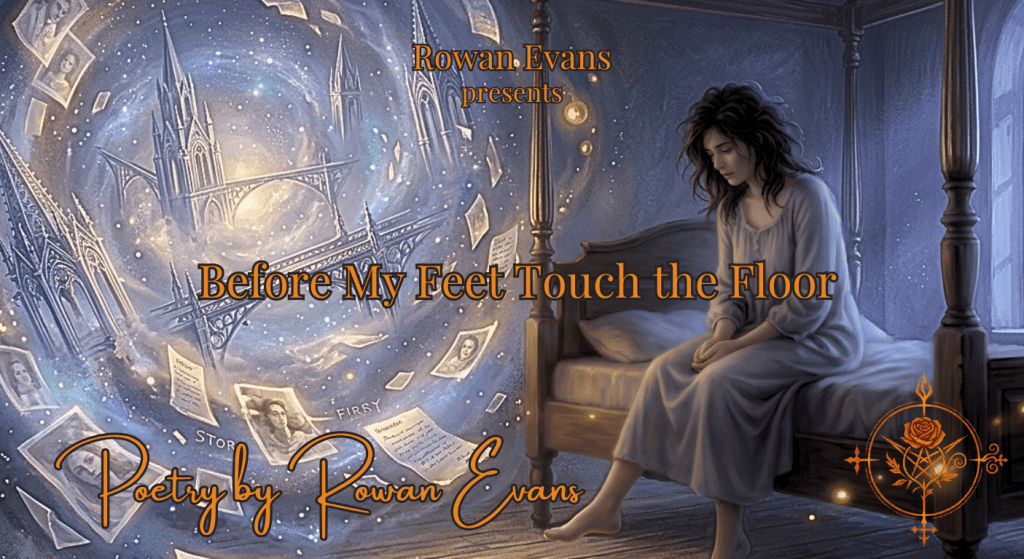
    A solitary person sits beside a softly lit window at night holding an open notebook in a quiet reflective atmosphere.
    Some truths stay hidden in poems long before they’re ever spoken aloud.

    Just Knowing You Has Been Enough
    Poetry by Rowan Evans

    I went quiet,
    but you never left my mind.

    I was silent—
    I had a lot to say,
    just didn’t know how to say it.

    I was afraid.
    Scared out of my mind.

    Everything I could have said,
    it didn’t feel right.
    It felt too heavy—
    too hard to carry.

    I had to set it down
    for a while.

    I had to sit with it,
    the words only spoken
    in my dreams.

    Dreams where,
    you never have the chance
    to respond.

    It feels wrong.

    But I wouldn’t want to
    speak for you.

    It’s been this way
    for a while now.

    I get too in my head,
    too hung up on
    what I have said—

    and what I want to say.

    They aren’t always
    the same.

    I’ve dropped hints
    in coded lines,
    wrote the words plain
    in poems about dreams—
    knowing they’d get overlooked.

    They’re not serious.

    But know this,
    the words written here
    are me being honest:

    I’m scared.
    I’m terrified,
    it’s true—
    but I really do
    love you.

    There’s no other way
    to say it.

    Because what is love—
    if not bias?

    And I am biased.

    Now what’s bias,
    if not seeing perfection
    where there is none?

    Because I know you’re not perfect—
    I’ve seen the cracks.
    I’ve listened to your stories,
    heard the lore—

    but here’s the thing,
    it’s not about perfection
    or lack thereof—
    it never has been.

    It’s about connection.

    It always has been.
    That’s all I’ve ever wanted,
    whatever shape that takes—
    I can be happy.

    Just knowing you
    has been enough.


    Journey into the Hexverse…

    [The Streets I Sleep When I Walk]
    “The Streets I Walk When I Sleep” is a deeply intimate free verse poem about recurring dreams, emotional connection, longing across distance, and the strange feeling of remembering places and moments that have never happened in waking life.

    [Memories From a Life Yet to Come]
    Some dreams feel less like fantasy and more like memory. “Memories From a Life Yet to Come” is a reflective free verse poem about longing, displacement, emotional alignment, and the strange comfort of recognizing yourself more clearly in dreams than in waking life

    [Separate Timelines]
    “Separate Timelines” is a surreal and deeply introspective free verse poem about emotional distance, time zones, vulnerability, and the fear of losing a connection that already feels meaningful before the words are ever spoken aloud.

    If you’re interested in more poetry, you can find it here → [The Library of Ashes]
  • Author’s Note

    I didn’t invent the conversation in this poem.

    That’s what makes this piece feel different to me.

    Usually when I write about dreams, I’m translating emotions into imagery after the fact—trying to capture the atmosphere more than the exact details. But this time, I woke up and realized I could still remember almost everything I said.

    Not perfectly. Dreams never survive intact.

    But the emotional core of it stayed with me long after I woke up.

    The strange thing about recurring dreams is how they stop feeling fictional after a while.

    The streets become familiar. The air feels recognizable. The people inside them start feeling emotionally real in a way that’s difficult to explain to someone else without sounding a little unhinged.

    And that’s part of what this piece explores.

    The disconnect between physical reality and emotional reality.

    I know I’ve never walked through Manila in waking life. I know I’ve never stood face to face with her like that. But emotionally?

    Some part of me feels like I already have.

    That’s the part that’s difficult to articulate.

    Especially because the dream wasn’t dramatic. There was no cinematic confession in the rain. No grand climax.

    It was quiet. Warm. Awkward. Honest.

    And maybe that’s why it affected me so much.

    Because the dream version of me said the things the waking version still struggles to say out loud.

    Not in metaphors. Not hidden inside symbolism.

    Just plainly.

    And then, right before I heard the answer—

    I woke up.

    Rowan Evans


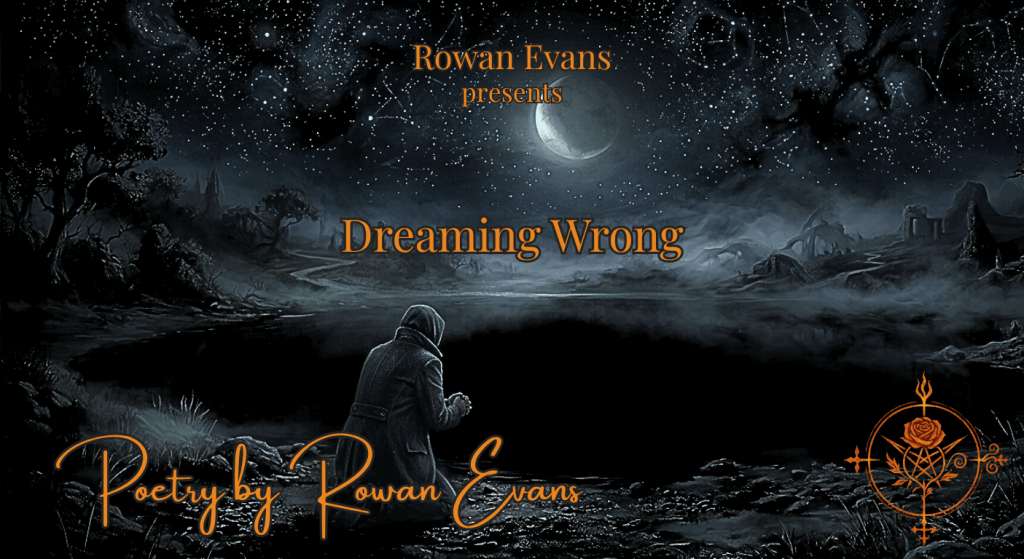
    A solitary figure stands on a rain-soaked city street at night beneath warm lights in a dreamlike urban atmosphere.
    Some places live in the heart long before the body ever arrives there.

    The Streets I Walk When I Sleep
    Poetry by Rowan Evans

    I had a dream last night—

    it’s a line, I’ve written
    a thousand times—

    and I’ll write it
    a thousand times more.

    Because dreams
    don’t feel like things
    that happened
    in my sleep.

    They feel like memories.

    There are times
    I have to remind myself—

    I’ve never been to Tokyo,
    I’ve never walked the streets
    of Manila or Seoul.

    I can’t explain it,
    definitely can’t name it—
    why these connections
    feel so strong.

    Yet, they are the streets
    I walk when I sleep
    and that’s still the same,
    it’s never changed—

    since I was fourteen.

    I’ve just been to
    Manila more lately.

    I had a dream last night…

    It was her and I,
    standing eye to eye—
    and I said everything
    I’ve been too scared to say.

    “I love you,”
    my voice came out
    softer than expected.

    “I always knew,”
    I continued.

    “Since the moment
    something in me changed,
    and you didn’t demand it.
    It just happened.”

    I took her hands
    in mine.

    Sun was gone,
    but you could still feel the heat—
    but the real killer?

    The way the humidity clung,
    making this moment
    sticky sweet.

    “I’ve known
    since the moment I met you
    you were special.”
    I said, my voice near a whisper.

    I felt the way you tensed up.
    You’re not used to this either.

    “It took me six days
    to realize things had changed.
    I wrote that first poem,
    and in my chest, I knew—

    I found home.”

    I felt the tremor in your breath,
    head tilting back
    and we made eye contact.

    Your mouth opened,
    you were about to speak—

    then I woke up.


    Journey in the Hexverse…

    [Memories From a Life Yet to Come]
    Some dreams feel less like fantasy and more like memory. “Memories From a Life Yet to Come” is a reflective free verse poem about longing, displacement, emotional alignment, and the strange comfort of recognizing yourself more clearly in dreams than in waking life

    [Separate Timelines]
    “Separate Timelines” is a surreal and deeply introspective free verse poem about emotional distance, time zones, vulnerability, and the fear of losing a connection that already feels meaningful before the words are ever spoken aloud.

    If you’re interested in more poetry, you can find it here → [The Library of Ashes]
  • Author’s Note

    I’ve always been fascinated by the strange emotional weight of time zones.

    How someone can become such a consistent part of your thoughts that you start measuring your own day against theirs.

    Checking the clock. Wondering if they’re asleep. Wondering what their sky looks like while you’re staring at yours.

    At some point, distance stops feeling geographical and starts feeling temporal.

    That feeling became the foundation for this piece.

    The airport in the dream felt symbolic almost immediately while writing it—a place built entirely around arrivals, departures, waiting, and crossing paths for brief moments before separating again.

    And in the middle of that emptiness, there’s this presence that feels familiar before it’s visible.

    I think that’s what emotional connection can feel like sometimes.

    Not certainty. Not possession. Not even clarity.

    Just recognition.

    This poem also came from the tension between wanting to speak honestly and being afraid of what honesty might change.

    Because vulnerability always carries risk.

    Sometimes the fear isn’t rejection itself— it’s the possibility of losing a connection that already means something to you.

    So the poem lives in that suspended space: between dream and waking, between silence and confession, between leaving and returning.

    Rowan Evans


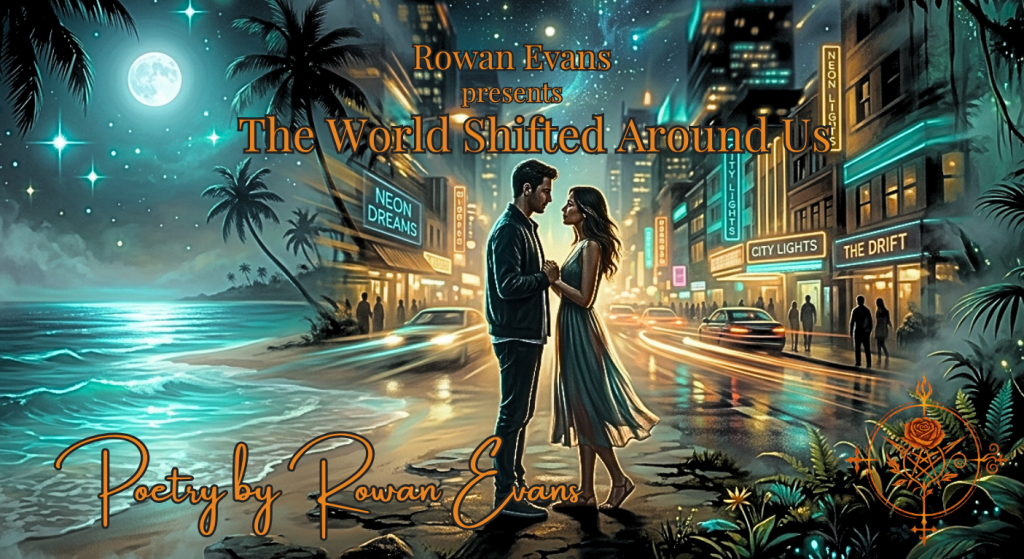
    A solitary person sits alone inside an empty airport terminal at night while distant runway lights glow outside.
    Some connections feel close even across separate timelines.

    Separate Timelines
    Poetry by Rowan Evans

    I had a dream last night—
    I sat alone in an empty airport.
    Not a soul. Not a sound.
    I was the only one around.

    It was just me
    as far as the eye could see.

    Yet, I heard the hum
    of jet engines still—

    Then there was
    the sound of movement,
    footsteps echoing in the distance.

    Eyes scanning—
    trying to locate the source.

    Slowly—

    I rise.

    Getting to my feet,
    I stumble
    trying to get myself steady.

    The footsteps grow clearer—

    slow, deliberate,
    like someone who already knew
    I’d be here.

    And in the stillness
    of this moment—

    silence folds in on itself,
    waiting for me
    to decide
    whether to run
    or stay.

    The footsteps stop.

    My breath catches,
    not from fear,
    but from the strange familiarity
    of a presence I can’t yet see.

    And my legs feel heavy—

    like they remember something
    my mind doesn’t.

    I can’t see you—
    but I feel your presence.

    It’s like you and I
    live on separate timelines,
    simultaneous
    but different—

    like we can only exist like this.

    Because—
    my day
    is your night,

    and your day
    is mine
    just the same.

    It might seem simple to some,
    might even sound a little dumb—

    to get caught up
    on things like that—

    but I’ve been stuck
    on her time
    since I put widget
    on my phone.

    Listen to me…

    there I go again,
    loose lips
    let truths slip—

    even when they’re
    better left unsaid.

    Not because I didn’t want to say it.

    I did.

    But I don’t know
    if the timing’s right,
    or how you feel—

    but I do know
    you’re worth the risk
    of my heart shattering,
    I just don’t know
    if I’m strong enough
    to handle a connection
    breaking.

    So I keep quiet—

    not because
    I don’t want to speak,
    but because
    I’m scared to.

    So I sink
    back into my seat—
    and I feel your presence fade.

    I don’t know if you left
    or if I’m awake—

    but I promise…

    I promise,
    I’ll be back.


    Journey into the Hexverse…

    [Memories From a Life Yet to Come]
    Some dreams feel less like fantasy and more like memory. “Memories From a Life Yet to Come” is a reflective free verse poem about longing, displacement, emotional alignment, and the strange comfort of recognizing yourself more clearly in dreams than in waking life.

    If you’re interested in more poetry, you can find it here → [The Library of Ashes]
  • Author’s Note

    Some dreams feel less like fantasy and more like memory.

    Not literal memory—something stranger than that.

    A feeling. A pull. A version of yourself that already exists somewhere ahead of you, waiting to be caught up to.

    I’ve written a lot about displacement, longing, and feeling emotionally out of sync with the place I was born into. But this piece isn’t rooted in resentment. It’s quieter than that.

    This poem came from the feeling of seeing glimpses of alignment before you’ve fully arrived there yet.

    The strange comfort of closing your eyes and feeling more connected to yourself in dreams than you do while awake.

    Not because sleep is escape— but because sometimes dreams reveal the shape of what your heart has been reaching toward all along.

    Rowan Evans


    A solitary figure stands at the edge of the ocean at twilight, looking toward distant city lights across the water as waves roll onto the shore.
    Some places feel familiar long before we ever arrive there.

    Memories From a Life Yet to Come
    Poetry by Rowan Evans

    I close my eyes—
    hear the crashing waves,
    taste the salt on my lips,
    feel the wind in my hair.

    I feel like I’m floating—
    even lying in bed.

    When I close my eyes—
    I travel in my head.

    It’s like I remember things
    I haven’t lived yet.
    Memories from a life
    yet to come.

    I see the life
    I want to lead,
    while I live the life
    I want to leave.

    Not because I hate it.

    I’m just misaligned.
    A little off-center,
    a little out of sync.

    It’s like I follow the waves,
    because I was never meant
    for this shore.

    Awake is the nightmare,
    asleep is when I open my eyes,
    and I can see the streets—

    where my life
    will finally align.


    If you’re interested in more poetry, you can find it here → [The Library of Ashes]
  • Author’s Note

    I’ve had variations of this dream more times than I can count.

    Different streets. Different cities. But the feeling is always the same—familiar, grounded… like I’m not discovering something new, but returning to something I somehow already know.

    It’s a strange kind of recognition.

    Not tied to memory in any clear way, but still deeply felt. Like something in me understands the place, even if I don’t.

    This piece came from sitting with that feeling.

    Trying to understand whether it’s about location… or connection.

    Whether it’s about where I am—or who I haven’t found yet.

    Rowan Evans


    Dreamlike empty city street at dusk with a lone figure walking through a familiar yet unfamiliar place.
    Some places feel like home—even when you’ve never been there.

    Dreaming of Other Streets
    Poetry by Rowan Evans

    I often dream
    of walking streets
    not my own.

    And they feel
    more like home
    than the only one
    I’ve ever known.

    As if my feet remember
    a life my body
    hasn’t lived—

    a map etched
    into bone
    long before
    I learned to read it.

    Like echoes
    of a life misplaced,
    a memory
    with no origin—
    a familiarity
    I can’t explain,
    but never question.

    Maybe it isn’t the streets
    I’m dreaming of.

    But the people
    who would walk them
    beside me—

    the ones who felt
    like home
    long before I knew
    what home meant.

    Maybe I wander
    because nowhere
    has ever held me
    long enough
    to claim me.

    So I keep searching
    for a place
    that feels like mine.

    In dreams,
    I walk with certainty—
    no hesitation,
    no fear,
    as if the ground itself
    knows my name.

    But waking,
    I am foreign
    even to myself.


    If you’re interested in more poetry, you can find it here → [The Library of Ashes]
  • Author’s Note

    Some dreams don’t feel random.

    They feel intentional.

    Like you’re being led somewhere–through places that don’t exist, but still feel familiar. Like every step means something, even if you don’t understand it yet.

    This piece comes from that kind of dream.

    The kind where you’re not just wandering–you’re following.

    Following a feeling. A voice. A pull that feels personal.

    And just as you get close enough to understand it–

    you wake up.

    Rowan Evans


    Dreamlike city street at night with distant glowing figure in soft haze
    Somewhere between the dream and the waking world—she was waiting.

    Just Before I Arrive
    Poetry by Rowan Evans

    In my dreams last night,
    I wandered unfamiliar
    city streets—

    the lights humming
    like they knew me,
    though I’d never
    walked there before.

    Every corner
    felt like a memory
    I hadn’t lived yet,
    pulling me deeper
    into the maze.

    That’s when
    I heard it—

    her voice,
    off in the distance.

    Another thread
    in the pull.

    Her words
    echoing through—

    Come find me.
    I won’t be hiding.

    This is an invitation—
    from me to you.

    With every word,
    I moved closer
    to the source.

    But just before
    I arrived—

    I sat up,
    opened my eyes,

    and rejoined
    the waking world.


    If you’re interested in more poetry, you can find it here → [The Library of Ashes]

  • Where the Ocean Dreams & Where the Dream Took Us | Double-Feature by Rowan Evans


    “Dreamlike seascape at twilight with two figures holding hands at the water’s edge, surrounded by mist, symbolizing intimacy and emotional connection.”
    “Dreams of love and longing: Where the Ocean Dreams & Where the Dream Took Us, a double-feature of poetry by Rowan Evans.”

    🌊 Author’s Note

    Where the Ocean Dreams came from a dream that felt more like a visitation than a vision—an intimate moment between souls suspended somewhere between waking and eternity. It’s a poem about love that speaks in multiple languages, not just through words, but through trust, fear, and the quiet courage to hope again.

    The ocean here is both witness and mirror—reflecting two hearts learning to believe in tenderness after the wreckage of past storms. It’s a story of love as rebirth, of vulnerability as strength, of finding the divine in human connection.

    This piece continues my exploration of Neo‑Gothic Confessional Romanticism, where love and faith intertwine with the spectral and sacred. Dreams, language, and devotion converge here—not as fantasy, but as truth dressed in salt and moonlight.


    Where the Ocean Dreams
    Short Poetic Story by Rowan Evans

    The sea sighed against the waiting shore,
    its breath cool and endless,
    curling around my bare feet
    before slipping away again—
    a heartbeat, a memory, a whispered promise.

    The world was bathed in a blue hush,
    a soft exhale stitched with secrets,
    and I listened,
    not for answers,
    but for the songs folded into every wave,
    for the words the earth had never dared to speak aloud.

    Behind me,
    her voice rose—
    gentle as mist, sure as the tide—
    and the world shifted.

    I turned, slowly,
    as though waking from a thousand-year dream,
    and there she was—
    My Muse—
    woven of light and longing,
    smiling with the tenderness of all the summers I had never lived.

    My heart moved before my body did,
    drawing me to her in a single, breathless moment.
    Our hands found each other—
    a touch that asked for nothing
    and gave everything.

    I spoke the truths I had carried for what felt like forever:
    that I would wait,
    that I would be the shore for her storms,
    the steady hand,
    the quiet shelter.

    Lowering my gaze, then lifting it again—
    trembling, open, unafraid—
    meeting the ink-filled oceans of her eyes,
    I whispered into the salt-kissed silence:

    “Mahal kita, palagi.”
    I love you. Always.

    Her lips parted—
    the beginnings of a reply blooming there,
    warm as sunlight after rain—
    but she hesitated, the words hung in her throat,
    then, her lips parted again.

    At first, no words came—
    only the shimmer of tears
    rising in her eyes,
    brimming until they overflowed,
    carving rivers down her cheeks.

    Her hand trembled in mine,
    not with fear,
    but with the weight of a heart
    long kept hidden, long guarded.

    “I’m scared,” she whispered—
    so raw, so real—
    her voice cracking like a shell
    split open by the tide.

    “I don’t know how to trust this…
    but I want to.
    I want to believe you—
    believe in you.”

    Her fingers tightened around mine,
    clutching, anchoring,
    as though afraid I might vanish
    with the next breath.

    “I’ve been broken so many times,”
    she said, the words spilling now,
    “and every time, I told myself
    never again.
    Never again.”

    Her voice faltered—
    then steadied, fierce in its trembling.

    “But you…
    you make me want to try.
    You make me want to hope again.”

    I saw it then—
    the battle waging in her,
    the courage it took
    just to stand there with me.

    Tears blurred my vision too,
    but I held her gaze,
    held her heart
    as gently as I could.

    She stepped closer,
    so close I could feel the storm inside her,
    and in a voice cracked with grief,
    strength, and something achingly new,
    she said it—

    “Mahal din kita,” she breathed.
    “I love you, too.”

    And the ocean roared its approval,
    its waves thundering like a heartbeat,
    like a promise kept.

    There, where the world breathed in salt and stars,
    two hearts found each other—
    fragile, fearless, whole.


    🌙 Bridging Note

    These two pieces are born of dreams, experienced on back-to-back nights. The first, Where the Ocean Dreams, unfolded as a quiet, tender reverie—an emotional awakening, where connection and trust whispered like the tide. The very next night, Where the Dream Took Us arrived, carrying that same heart forward, immersing it in desire, intimacy, and the full weight of longing made tangible.

    Together, they form a continuum of a single emotional journey: from the soft, luminous stirrings of love to the fierce, breathless affirmation of it, each dream illuminating a different facet of devotion.


    🕯️ Author’s Note

    Where the Dream Took Us was born from a dream that lingered long after waking—one of those rare visions where desire and devotion blur until they’re indistinguishable. It’s a confession written from that in‑between space, where the spiritual and the sensual intertwine.

    This isn’t a poem about physicality alone; it’s about intimacy as revelation—about being seen, known, and adored in ways that transcend the waking world. Even in the dream, there was love, reverence, and quiet recognition: a soul remembering another through touch.

    As with much of my work, this piece belongs to the canon of Neo‑Gothic Confessional Romanticism, where vulnerability becomes sacred and longing is its own form of prayer.


    ⚠️ Content Warning

    Where the Dream Took Us contains explicit sexual content and intimate themes. Reader discretion is advised.


    Where the Dream Took Us
    Poetry by Rowan Evans

    We were borrowed warmth in an unfamiliar place,
    a quiet Air BNB where the lights were dim
    but every part of you was glowing—
    in laughter, in glances,
    in the way you leaned a little closer
    with each sip, each word.

    Your voice curled around me
    like smoke and silk,
    and every time your hand brushed mine,
    a storm stirred beneath my skin.
    You tilted your head, smiled that smile—
    the one that crumbles my guard—
    and suddenly, space didn’t exist.

    Our lips met—soft, slow,
    a breathless yes hidden inside a kiss.
    You tasted like longing and maybe,
    like all the things we never said
    but always felt.

    Your fingers found the edge of my shirt,
    tugging gently as if asking permission
    I would give a thousand times over.
    When it slid from my shoulders,
    your nails traced fire over bare skin,
    and I shivered under the weight of your gaze,
    drunk not on the wine,
    but on you.

    We moved like poetry,
    in soft lines and tender metaphors—
    me guiding you gently to the bed,
    your back arched just slightly
    as I kissed your neck,
    whispering love into the places
    where heartbreak once lived.

    I told you I loved you—
    not out of desperation,
    but devotion.
    Because even in dreams,
    your presence feels like destiny,
    like a truth I was always meant to know.

    You helped me undress you,
    hands trembling just enough to say
    this mattered,
    that this wasn’t fantasy
    but something deeper
    wearing the skin of a dream.

    When I kissed your stomach,
    your breath hitched—
    music I wanted to memorize.
    You lifted your hips with quiet need,
    and I shed your last piece of armor,
    settling between your thighs
    like this was where I was always meant to be.

    You gasped my name
    like prayer and wildfire,
    fingers laced in my hair
    as I worshipped every inch of you—
    not to prove myself,
    but to remind you
    of what it means to be adored.

    And when I woke—
    sheets cold, heart aching—
    I held the dream like a promise:
    that even if only in sleep,
    I touched the stars
    that wear your name.


    If you’ve made it this far and want to read more of my poetry, you can find it [here] in the The Library of Ashes.

  • Last night, sleep opened its velvet throat—
    and I fell into the hush between heartbeats,
    where the walls of the world breathe slow,
    and time forgets its name.

    He stood there.
    My father—
    not as ash in the urn,
    but as shadow sewn in dreamlight,
    his voice a paper lantern in the fog.

    He said something.
    Words folded in half,
    creased like love letters unsent.
    A tongue I should have known
    but could not parse—
    like trying to read raindrops
    as they run down glass.

    His eyes were galaxies
    just out of reach—
    all gravity, no ground.
    He smiled like someone
    who’s seen the ending
    and can’t explain it.

    Was it a message?
    A map?
    A test?

    He left me with nothing but silence
    stitched in silk and salt,
    and the ache of unlearned riddles
    tattooed across my chest.

    Now I sit beneath the fig tree of my grief,
    its fruit swollen with unsaid things.
    I peel back memory like skin,
    searching for symbols in marrow,
    for parables in pulse.

    What was I meant to understand?
    That love does not end,
    only alters its architecture?
    That the dead do not speak in answers,
    but in echoes
    and invitations?

    Some lessons aren’t given.
    They’re grown—
    like thorns
    from the same vine as the rose.

    And maybe
    that was the point.