Tag: emotional healing

  • Author’s Note

    Some versions of yourself do not disappear quietly.

    Even after you’ve changed, even after you’ve tried to move forward, there are still old names, old mistakes, old selves that follow behind you like shadows.

    This piece came from thinking about transformation—not as a clean rebirth, but as something heavier.

    Something witnessed.

    The ravens in this poem aren’t meant to be enemies. They’re observers. Keepers of memory. Symbols of the parts of ourselves we can’t fully erase, no matter how badly we want to leave them behind.

    And the fire isn’t destruction alone.

    It’s momentum.

    Because sometimes growth doesn’t happen when you escape the past.

    Sometimes it happens when you finally walk through it.

    Rowan Evans


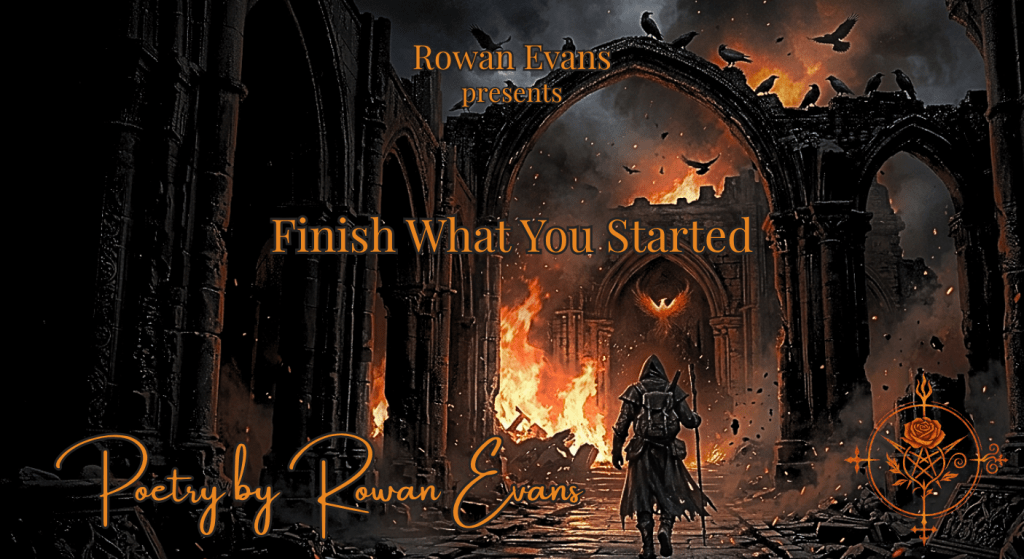
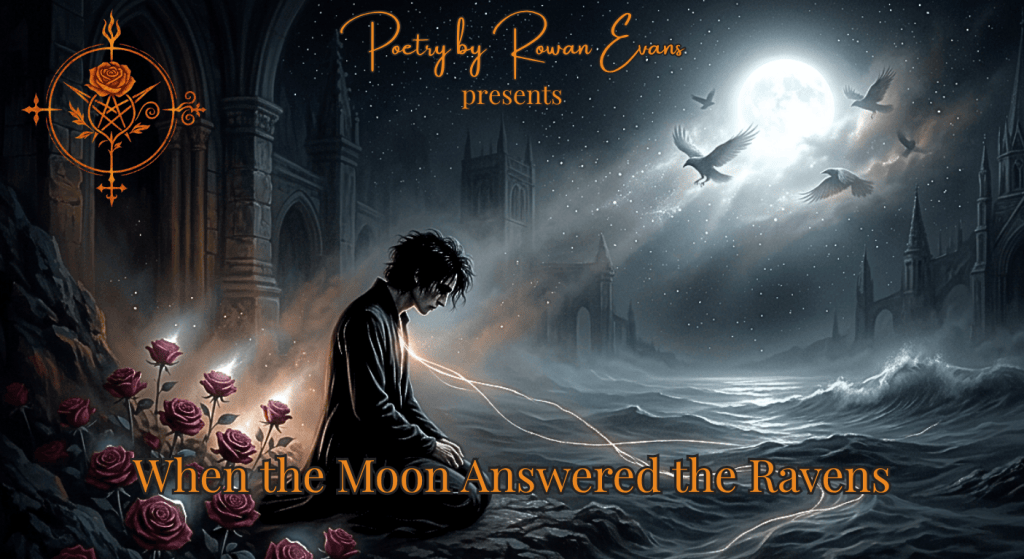
    Figure walking through burning temple ruins beneath watching ravens
    The only way out is through.

    Finish What You Started
    Poetry by Rowan Evans

    Strike the match
    and light the flame—

    watch the past
    decay and end.

    I walk through temples
    while the ravens watch me.

    I feel their eyes upon me,
    following—

    every movement
    traced.

    They tally every sin I’ve carried,
    every name I’ve buried,
    every version of myself
    I tried to outgrow.

    They know the weight
    I drag behind me,
    the shadows I pretend
    I’ve already outrun.

    The flame behind me grows,
    licking at the stone,
    urging me forward—

    a reminder
    that the only way out
    is through.

    The ravens
    do not warn me back.

    They only tilt their heads,
    as if to say—

    go on…

    finish
    what you started.


    Journey into the Hexverse…

    Previous:
    [The Shadow and the Spark]
    A psychologically charged free verse poem using Mortal Kombat imagery to explore anxiety, depression, identity, and the realization that survival matters more than victory.

    [East Knows My Name]
    A deeply introspective poem about emotional displacement, cultural disconnect, and feeling spiritually drawn toward a place far from where you were born.

    [Out of Sync]
    A reflective free verse poem about emotional displacement, shifting sleep cycles, and feeling spiritually drawn toward another side of the world.

    Upcoming:
    [Altars and Roses]
    A gothic free verse poem about poetic identity, recurring symbolism, devotion, and the quiet humanity beneath dramatic imagery.

    If you’re interested in more poetry, you can find it here → [The Library of Ashes]
  • Author’s Note

    This piece feels like a conversation with every version of myself that survived long enough to become this one.

    The angry versions. The grieving versions. The lonely versions. The hopeful ones too.

    For a long time, I thought pain would eventually turn me cold. That heartbreak, betrayal, abandonment—all of it—would harden me into someone bitter.

    But somewhere along the way, I realized something:

    I don’t want to become what hurt me.

    So this poem became less about suffering, and more about what comes after it. About the kind of love I believe in now—not performative, not transactional, not built on fantasy.

    Real love is presence. Attention. Safety. Memory. Patience.

    It’s showing up.

    And maybe that sounds simple. But I think simple things are often the hardest to do consistently.

    Rowan Evans


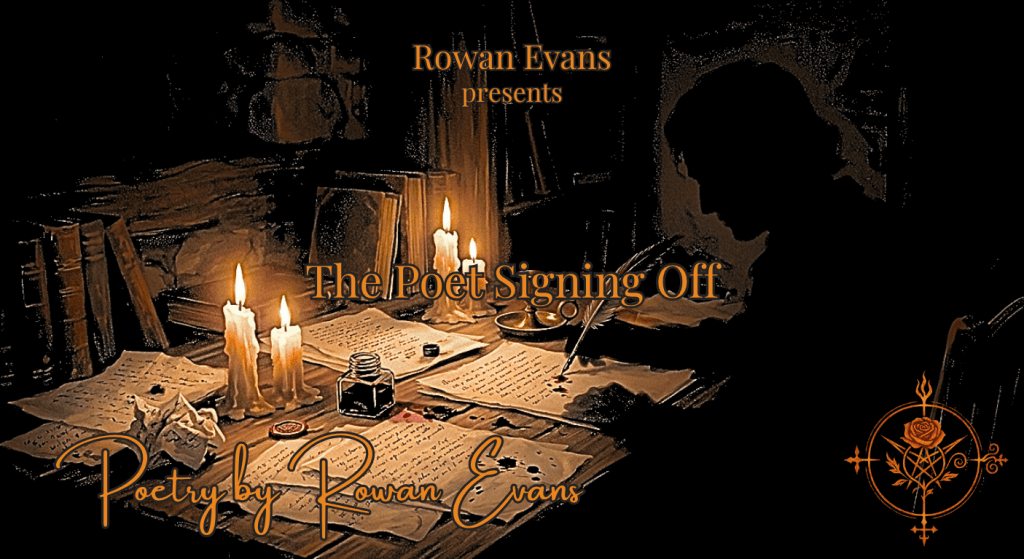
    Candlelit desk with handwritten poetry symbolizing heartbreak and emotional healing
    Love is not perfection. It’s presence.

    The Poet Signing Off
    Poetry by Rowan Evans

    Hello—
    let me introduce myself.

    I am Rowan
    and no one else.

    The fire in my eyes
    may have faded—
    but I never let the world
    turn me jaded.

    I’m not bitter,
    even though
    maybe I should be.

    I’ve been through shit—
    yeah,
    I’ve really been through it.

    I’ve seen friends
    turn to strangers—

    and worse,
    turn to haters.

    Friends
    to enemies.

    Lovers
    to ghosts.

    Raise your glass—
    time for a toast.

    I thank you
    for the lessons,
    the pleasure
    and the pain.

    I turned heartbreak
    into ink,
    and bled across
    the page.

    You taught me
    what love is not.

    It’s not grand gestures
    or fancy gifts.

    It’s time
    and presence—
    not just presents.

    It’s stormy weather
    and sunny days.

    It’s seeing the weight
    someone carries,
    realizing
    they’re being buried.

    It’s listening
    and learning
    their stories.

    It’s seeing beneath
    the surface,
    lifting them up—

    that’s the purpose.

    Remember
    the little things.

    How she likes her coffee.
    The way she wakes up,
    randomly.

    And be there.

    If she wakes
    shaken,
    and needs somewhere
    safe—

    be there.

    That’s the rule
    I try to live by.

    I’ve been hurt before,
    and I don’t want
    to pass that hurt forward.

    I want to ease the ache.

    I know I can’t
    fix the breaks—

    but maybe
    we can mend
    the cracks with gold,
    showing people
    the beauty
    damage makes.

    Because cracks
    are not flaws—

    they’re stories written
    in a language
    older than spoken tongues.

    It’s love—

    older than empires,
    older than cavemen
    lighting the first fires.

    Romantic or platonic,
    it matters not.

    Love is the cure
    to the rot.

    I scribble on the page
    as the lights begin to fade.

    Candles flicker.
    Flames dance.

    And the poet’s pen
    finds its cadence.

    The poet
    signing off.

    Goodbye.


    If you’re interested in more poetry, you can find it here → [The Library of Ashes]
  • Author’s Note

    This piece started with a simple idea—listening to something you’re told to ignore.

    But the more I sat with it, the less it felt like something external.

    There’s a voice you develop after spending enough time with your own thoughts. One that understands where you’ve been, what you’ve survived, and what you’ve learned to carry.

    It doesn’t filter itself the way you do.

    It doesn’t soften the truth.

    And that’s what makes it uncomfortable.

    We’re taught to silence that voice. To treat it like something separate, something dangerous.

    But sometimes, it’s not the enemy.

    Sometimes, it’s just you—without hesitation.

    Rowan Evans


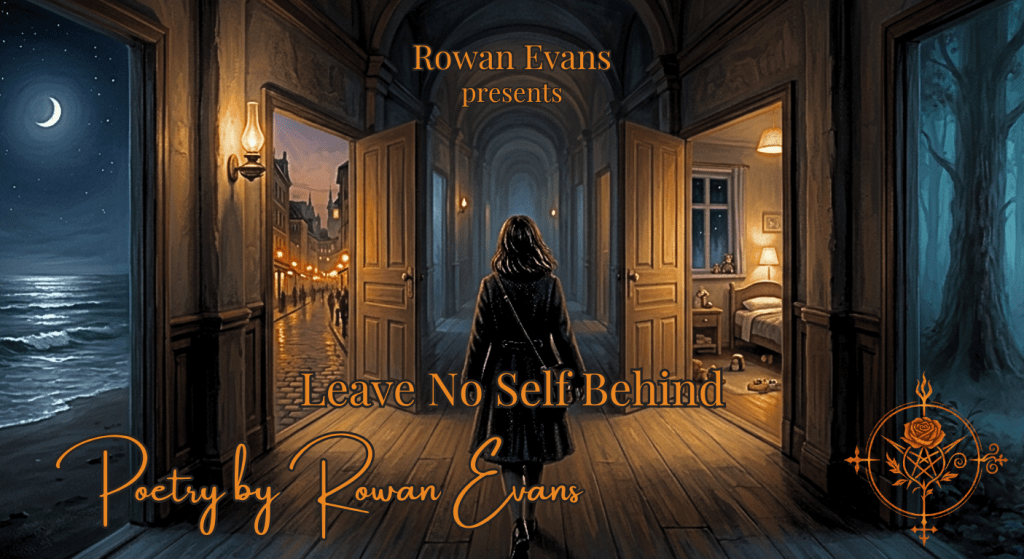
    Person writing in dim light with a shadow reflection symbolizing inner thoughts and darker self
    Some voices don’t lie. That’s why they’re hard to hear.

    When the Devil Speaks, I Listen
    Poetry by Rowan Evans

    I listen—
    when the devil talks,
    because he knows
    the paths I’ve walked.

    I’ve slept
    where shadows crept,
    made my bed in crypts.

    I’ve walked through rooms
    that felt like tombs—
    bled ink on pages,
    translated hurt
    into words.

    I listen
    when the devil talks,

    because I recognize
    he’s walked
    the same paths I’ve walked.

    He’s seen the places
    I’ve laid my head,
    the crypts
    I made home.

    He’s read the pages—
    stained
    with crimson ink.

    So yes—
    I listen,

    because I recognize
    the voice
    sounds like mine—
    just older,
    and less afraid to say it.


    If you’re interested in more poetry, you can find it here → [The Library of Ashes]
  • Author’s Note

    There’s a difference between what’s happening now… and what your body remembers.

    Sometimes the hardest part of connection isn’t the other person–it’s everything that came before them.

    The learned reactions. The instinct to pull away. The quiet voice that says this will go wrong too, even when there’s no real evidence that it will.

    This piece comes from that space.

    From recognizing the difference between someone who is safe… and the echoes of people who weren’t.

    And from the understanding that healing isn’t just knowing the truth–

    it’s about teaching your instincts to believe it.

    Rowan Evans


    Person surrounded by shadowy figures from the past while facing a calm glowing figure ahead, symbolizing trauma and trust
    Not every fear belongs to the present.

    Not Her—The Echoes
    Poetry by Rowan Evans

    I have a simple question
    I keep asking myself—
    why do you hide?

    When you want connection,
    why stay inside?

    You want to reach out,
    but you stay in your mind.

    Why?

    Well,
    the truth is—
    I hide to protect myself.

    It’s what I learned
    worked for me.

    When someone
    feels too close,
    I retreat.

    I used to open up,
    be vulnerable.
    I would share
    my internal world—

    then it was used
    against me.

    That’s tragic—
    but she didn’t do it.

    I know that.
    You think I don’t know that?

    I’m well aware
    she wasn’t the one.

    That’s what makes this so hard.

    I’m fighting habit,
    instinct—
    and I don’t say that
    to be dramatic.

    I’m not running from her.

    I’m running from echoes—
    old shadows wearing new faces,
    old wounds pretending
    to be present danger.

    I know she isn’t them.
    I know she isn’t the hands
    that taught me silence.

    But instinct doesn’t ask permission.

    It just pulls the alarm,
    slams the door,
    locks the ribs
    around the heart

    before I can say,
    “wait… this is different.”

    I’m not hiding from her.

    I’m hiding from the memory
    of being punished
    for being real.

    And unlearning that—
    is its own kind of bravery.


    If you’re interested in more poetry, you can find it here → [The Library of Ashes]
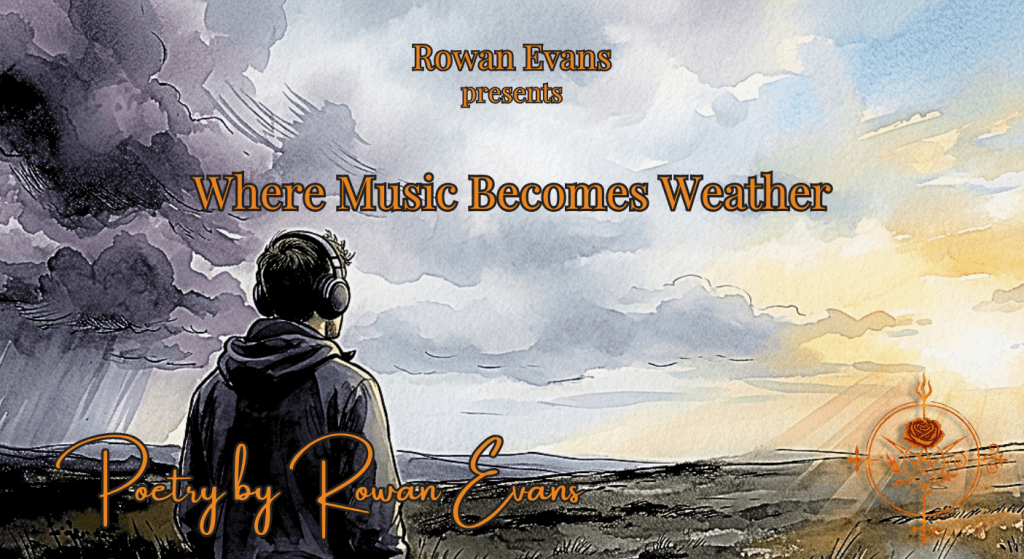
  • Author’s Note

    I’d been stuck in my head for days—looping memories, fogged thoughts, the usual spiral.

    Then I had a dream.

    In it, someone I care deeply about cut through the noise in the bluntest, most effective way possible. It wasn’t gentle. It wasn’t poetic. But it worked.

    This poem came from that moment—the realization that sometimes the way forward isn’t overthinking, but following the one thread that still feels steady.

    Even through the fog.


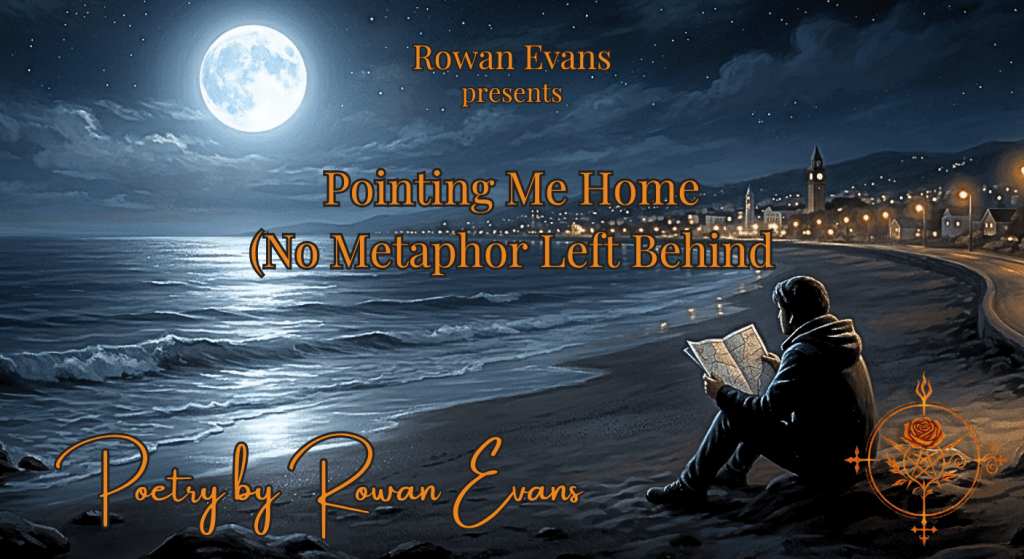
    A glowing thread leads through foggy woods toward a softly lit clearing at night, symbolizing guidance and emotional connection.
    Sometimes the way out of your head is just one honest thread—and the courage to follow it.

    The Thread That Led Me Home
    Poetry by Rowan Evans

    The fog rolls over hills,
    and a chill clings
    to my mind.
    Memories linger
    in flickering fragments,
    clinging static—
    the kind that hums
    behind the eyes,
    buzzing with moments
    I thought I buried
    but never really left.

    They circle back—
    whispers caught
    between stations,
    half-formed voices
    I almost recognize
    but can’t quiet name.
    Threads of memory
    tangled in the mist,
    pulling me back
    to places
    I never meant to revisit.

    I stumble through playgrounds,
    bumping off walls
    as I march down the hall.
    A single thread,
    I’ve begun to follow—
    It leads through memory,
    after memory.
    Twisting and turning,
    it knots—
    and I pause,
    fingers trembling
    over the tangle,
    wondering what unravels
    if I pull too hard.

    I run fingers
    over threads.
    Gripping soft,
    pulling slow—
    I watch
    as the string
    slips free—
    and it hums,
    like it’s guiding me.

    So I follow.

    Step after step,
    one foot
    in front
    of the other.
    I step and stumble
    through fog,
    thick as my thoughts.
    And when
    I feel lost,
    my fingers tighten
    grabbing the string
    like a lifeline.
    It’s the only guide
    through my mind.

    I stumble through,
    snapping twigs
    and branches.
    The rustle of
    rotting leaves
    under feet,
    until I see it.
    A light,
    a clearing.
    And when I reach it,
    when I find
    the strings conclusion—
    what do I see?

    You.
    A smile.
    Home.


    Closing Note

    Yesterday’s poem was about the weight of memory. This one is about the moment something — or someone — breaks through that weight. Not to fix it, not to erase it, but to remind me that I don’t have to walk through the fog alone.


    Journey into the Hexverse

    [Memory Lane Has No Exit]
    With my birthday approaching, I found myself trapped inside my mind—wandering memory lane, revisiting love, loss, and the moments that built me. This poem is a reflection on betrayal, survival, and the quiet realization that drifting isn’t the same as healing.


    If you’re interested in more poetry, you can find it here → [The Library of Ashes]
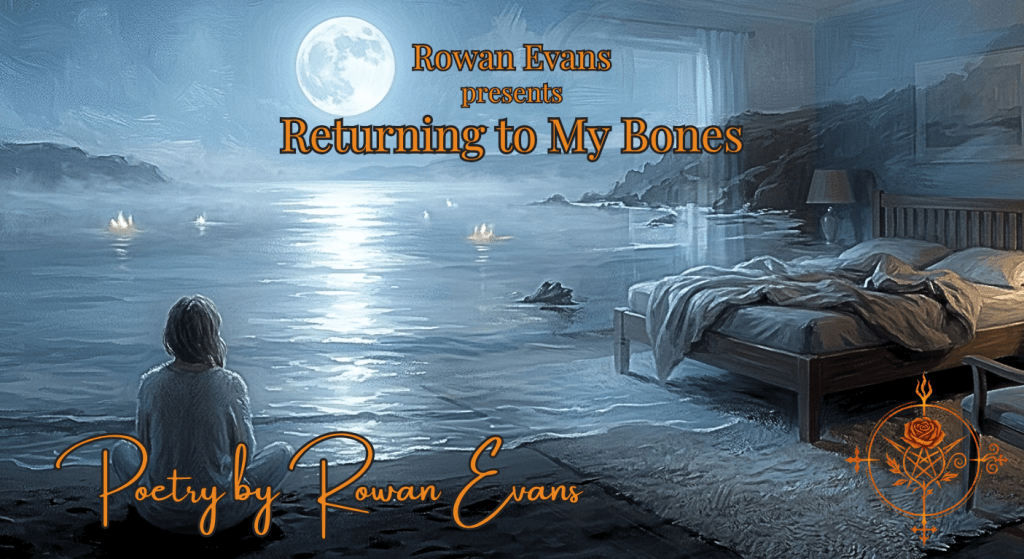
  • Author’s Note

    This poem grew from a quiet, unfolding space between two people learning to hold each other with patience and care. It explores the fragility of trust, the reflection of our traumas, and the slow, careful ways we allow someone to stay when we are used to people leaving. It is about intimacy that is not loud or dramatic, but steady, mirrored, and healing.


    Two people sitting across from each other, hands almost touching, in a dimly lit room with warm candlelight.
    “The quiet intimacy of two hearts learning to hold each other gently, reflected in soft shadows and warm light.”

    Not Used to This
    Poetry by Rowan Evans

    I’m not used to this.
    I’m used to doors closing,
    to footsteps fading
    before I can even speak.

    I’m not used to this.
    I’m not used to someone staying,
    leaning into the spaces
    I’ve long left empty.

    I bring my scars like lanterns,
    flickering, fragile,
    and you—
    you trace their edges with care,
    never flinching,
    never asking for more than I can give.

    I see your hesitations,
    the quiet tremor behind your smile,
    the shadowed corners of your past
    you tuck into your sleeves.
    You are careful with me,
    as I am with you.

    We move slowly,
    like two hands learning each other
    in the dark,
    tracing lines of trust
    over wounds that still ache.

    I am wary.
    I am heavy with history.
    I have loved and been left.
    I have built walls
    taller than myself.

    And still,
    you do not falter.
    Your patience is steady,
    like a river bending around stones,
    never harsh, never rushing,
    but always persistent.

    I notice the way you watch me,
    like you’re memorizing my silence,
    like you see the cracks
    and choose to stay anyway.
    I notice the way you hesitate,
    how your care mirrors my caution,
    how your wounds reflect mine
    without judgment or shame.

    We are both unpracticed
    in this kind of gentleness,
    this kind of giving.
    And yet—
    we are learning together.

    I am not used to it.
    I am not used to being held
    in someone else’s patience,
    to being mirrored in someone else’s heart.

    And I wonder—
    perhaps this is what it is to be seen,
    truly seen,
    and not abandoned.

    We do not need words for it.
    We do not need proof.
    The small gestures,
    the quiet constancy,
    the mirrored care—
    speak louder than anything we have ever known.

    I am not used to this.
    But I am beginning to be.
    And somehow, in this fragile, tender space,
    I am learning that it is enough
    for both of us to stay.


    For more poetry, check the [Library of Ashes]

  • Author’s Note

    I wrote this piece to honor the kind of love that doesn’t rush, pressure, or demand. The kind of love that waits — not out of desperation, but devotion. Trust is something earned through presence, not promises, and this poem is a reminder that patience can be its own form of tenderness.


    A twilight garden with a softly glowing lantern beside a stone path, symbolizing patient and steady love.
    A lantern in a quiet garden — the place where trust takes root slowly, in the soft hours of waiting.

    In the Waiting
    Poetry by Rowan Evans
    (Written April 28th, 2025)

    I won’t ask you to trust me just because I say you should.
    I won’t ask you to give me your heart on a silver platter
    and expect it to bloom with nothing but my words.

    I know trust is not something that can be rushed.
    It is not a gift handed out on a whim.
    It is a treasure, earned slowly,
    through the quiet moments,
    the steady presence that never falters.
    It is a promise that must be built, brick by fragile brick,
    and I understand that.

    But I hope you’ll let me show you
    that my hands are steady.
    That I will be here,
    even in the silence,
    even in the waiting.

    I want to prove to you that not all hearts
    come with the shadows of broken promises.
    Not all love is born of betrayal.
    Some love grows like a garden—
    slow, patient, gentle,
    with roots that dig deep
    and blossoms that reach for the light.

    I don’t want to rush you into believing me,
    but I want to give you the space
    to see me,
    to feel me,
    and know, in the quiet moments,
    that I am here,
    waiting,
    always.

    And if you choose to trust me,
    when you choose to trust me,
    I’ll be the one who proves that it was worth the wait,
    that love can be steady,
    that my heart is yours,
    whenever you’re ready to reach for it.

    I’ll wait,
    quiet as the stars,
    steadfast as the earth beneath us,
    until the moment you choose to take the leap,
    and I’ll be there,
    steady,
    waiting,
    ready to show you
    that I will never break you
    the way the others did.

    And when you’re ready,
    I will love you with the tenderness of someone
    who has learned the value of patience,
    who knows that love is not a race,
    but a journey.

    Until then,
    I’ll be here.
    Waiting.
    With an open heart,
    and a love that grows with every breath.


    More of my poetry can be found here: The Library of Ashes

  • Author’s Note

    This poem is a meditation on love that demands patience, courage, and total presence. It is written for those whose hearts have been tested, broken, or misread—and for the people brave enough to stay, to witness, and to hold. It is about devotion, reverence, and the quiet power of being fully seen.


    Kintsugi-repaired heart glowing under moonlight with floating clock fragments and falling embers in a soft gothic atmosphere.
    Every fracture tells a story—and some loves are brave enough to rewrite the timeline.

    Timelines Worth Rewriting
    Poetry by Rowan Evans
    (Written April 21, 2025)

    Don’t fall in love with me
    unless you’re ready for time zones and tenderness,
    for clocks set to your breath
    even when you’re not speaking.
    Unless you know how to read
    the unsent messages
    I whisper into the quiet of 3 a.m.,
    when my world is still sleeping
    and I am drowning
    in the silence between our heartbeats.

    I didn’t mean for this to happen.
    You were someone else’s—
    a name I only knew
    through the tremble in your voice,
    a shadow of a boy
    who left bruises where joy should’ve bloomed.
    You were a poem already breaking,
    and I…
    I just wanted to be a page
    that didn’t hurt to land on.

    I wasn’t chasing fire.
    I was tending embers.
    The way I always do—
    with a soul stitched together by
    the broken glass of old timelines,
    where love meant losing myself
    in someone else’s storm.
    But you were different.
    You asked nothing—
    and gave everything in glances
    you didn’t know were sacred.

    I told myself the clock widget
    was just a kindness.
    A way to say
    good morning, warrior,
    good morning, beautiful,
    good morning, still-here.
    But the truth?
    It became my North Star.
    A constant.
    A compass pointing always to you.

    I fell in love the way
    only a person who’s clawed their way through shadow can—
    with reverence.
    With awe.
    With hands that tremble
    but still reach.

    I saw your pain
    like an open door
    to a familiar room—
    and I walked in,
    not to fix you,
    but to sit beside you
    in the ruins.
    Because I’ve been there.
    Because I carry my own ghosts,
    and I name them in poems
    so they don’t haunt me in sleep.

    They say I should’ve stayed away.
    That I’m playing with fire.
    But fire never scared me—
    I was forged in it.
    Born of battle cries
    and whispered truths
    and a girlhood denied.
    I don’t wear guilt for things I didn’t break.

    And I didn’t break you.

    He did.

    He, who saw your softness as weakness.
    He, who mistook your loyalty
    for something owed.

    But me?
    I saw the Queen beneath the scars.
    I saw the way you held yourself together
    with gold-threaded hope,
    kintsugi soul—
    every crack shining brighter
    because you never stopped choosing to try.

    Don’t fall in love with me
    if you’re afraid of complicated truths.
    Because I will love you
    with the same hands
    that once wrote suicide notes
    and now write survival stories.
    Because I will see your shadows
    and still call you light.

    Don’t fall in love with me
    if you’re not ready to be seen completely—
    every bruise, every brilliance,
    every whisper you’ve never spoken aloud.
    I do not love in fractions.
    I do not flinch from the messy,
    the haunted, the hungry parts of you
    You think no one could ever stay for.
    I will.
    But only if you’re ready.
    Only if your heart can bear being held
    without armor.

    I didn’t plan to fall.
    But you spoke in moonlight,
    and I’ve always been lunar-bound.
    Tied to tides.
    Pulled by gravity
    in the shape of your laugh.

    And even if you never say my name
    the way I hope,
    even if I am just a season
    you remember when it rains—
    know that I loved you
    without agenda,
    without shame,
    without asking for anything
    but to witness your rise.

    Don’t fall in love with me
    unless you’re ready
    to be the reason I believe
    there are timelines worth rewriting.


    More of my poetry can be found here: The Library of Ashes

  • Author’s Note

    One Year is a quiet celebration of someone who walked into my life and changed it without ever trying to. It’s a poem about the kind of connection that doesn’t demand attention — it simply exists, steady and transformative. This piece marks one year since I met my muse—she helped me see the world with more color, softness, and clarity. It’s a thank‑you, written in the only language I know best.


    “Golden light pouring through open curtains into a softly lit room, symbolizing emotional renewal and transformation.”
    Light has a way of finding us — sometimes through people we never expected.

    One Year
    Poetry by Rowan Evans

    It’s been one year today
    since I met you.
    One year since you
    came into my life,
    and quietly rearranged
    everything.
    I’ve not been the same since.
    I see the world in a brighter
    kind of hue—
    like the colors became true.
    Would you believe me
    if I said it was all because of you?
    Would you?

    Because you didn’t break anything
    when you arrived—
    you just moved the furniture
    of my heart and mind,
    opened the curtains,
    let the light in.
    I hadn’t even realized
    how dim it had been
    until you stepped inside.

    Even in your darkness,
    you became my light—
    and I tried to be that for you too.
    Because I saw the weight you carried,
    I just wanted to carry it with you.
    I still do.

    And maybe you’ll never know
    the full weight of what you changed—
    how you steadied the racing thoughts,
    how you carved a little sanctuary
    in the ruins I tried to hide.
    You brought color
    to my grayscale world,
    and I’d walk through
    every shadow you carry
    just to keep your flame
    from burning out.

    One year in,
    I still marvel that you’re here—
    not just passing through.
    And I remember how you said:
    “You met me at my darkest,
    I want you to see me at my brightest.”
    Here’s the thing;
    I already do.
    Because, when I look at you…

    I see you lighting every room
    you step inside.


    You can find more of my work in my archives, [The Library of Ashes].

  • Author’s Note

    This reflection came to me as a kind of whisper — the voice of every anxious soul who has spent years mistaking chaos for connection. The Fear of No Fear at All is not about panic, but about peace — and how frightening peace can be when you’ve learned to survive on the edge of heartbreak.
    It’s about the moment you realize that being seen, truly seen, doesn’t have to hurt.


    Sunlight through sheer curtains, illuminating an open journal and cup of tea on a wooden desk.
    When love finally feels safe, fear becomes the last ghost to leave.

    The Fear of No Fear at All
    Reflection by Rowan Evans

    There’s a kind of fear only the anxious understand—
    not the kind that makes your pulse race,
    but the kind that falls silent when something finally feels right.

    When you’ve spent years waiting for the floor to collapse,
    for love to turn sharp, for tenderness to vanish like smoke,
    peace feels dangerous. Safety feels foreign.
    Your body doesn’t trust the quiet;
    it waits for the crash that never comes.

    And then one day, someone walks in—
    and there is no crash.
    No second-guessing, no masks to hold.
    You find yourself unguarded, unarmed,
    and the absence of panic is the most terrifying thing of all.

    Because what do you do
    when love doesn’t demand that you bleed for it?
    When it asks only for your truth,
    your laughter, your unhidden self?

    That is the fear of no fear at all—
    the trembling realization that maybe,
    after all this time,
    you are finally safe here.


    🕛 Coming at 12:05 am (UTC +8)

    A companion piece — the moment that inspired this realization.
    The Moment I Realized (Under Manila’s Setting Sun) — a vignette of confession, connection, and the beautiful terror of truth.