Sometimes you sit quietly long enough to hear things you’ve spent years trying not to hear.
This piece comes from that kind of silence—the kind where the voices around you become just as important as your own.
— Rowan Evans
Sometimes the hardest thing to carry is realizing you were never carrying it alone.
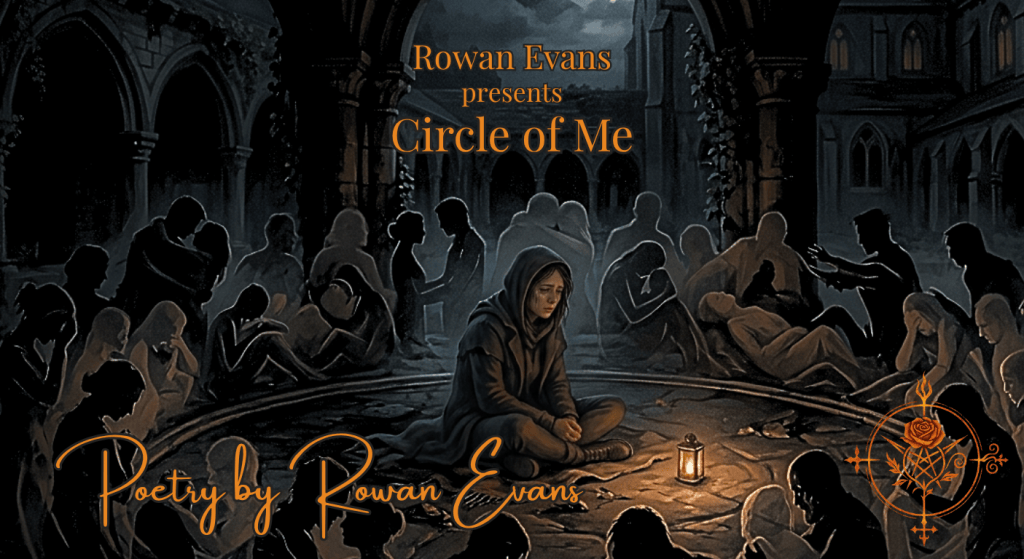
Circle of Me Poetry by Rowan Evans
I sit in a circle of me—
for the first time
since I was thirteen,
just listening…
because it’s not
my turn to speak—
some share joy,
some share pain—
and others share memories
that are hard to hear—
and in their voices
I could hear the fear,
in their eyes, see the tears—
and I feel helpless now,
just as I did back then
but now it feels different.
Heavier.
Like I’m not
just carrying
the weight of one—
I’m carrying
the weight of the sum.
It’s all of us…
it’s everyone.
Journey into the Hexverse
[High Tide] A short reflective poem about leaving, returning, and accepting the forces that pull us back—like the tide guided by the moon.
[Louder Than the Rain] A short confessional poem about the overwhelming noise of anxious thoughts, the strange silence of feeling alone in a crowded room, and finding a way to translate pain into words.
[Poet’s Curse] Poet’s Curse explores the painful side of falling too deeply: giving pieces of yourself away freely, taking accountability for your own heartbreak, and realizing that learning to let go can be harder than learning to love.
This poem grew out of a realization that getting “lost” isn’t always the same as losing yourself.
I’ve written many pieces about dreams, memory, shifting landscapes, and wandering through places that seem to exist somewhere between reality and imagination. Over time, I realized those places weren’t asking me to escape who I was—they were asking me to revisit the parts of myself I had left behind.
We often talk about “finding ourselves” as though there’s one true version waiting to be discovered. My experience has been almost the opposite. Every season of life leaves behind another version of us: the frightened one, the hopeful one, the grieving one, the joyful one. None of them disappear simply because we’ve grown older.
Healing, at least for me, isn’t replacing those earlier selves.
It’s learning to walk beside them without shame.
This poem is an invitation to stop treating old versions of ourselves as mistakes to erase and instead see them as companions who helped us survive long enough to become who we are today.
— Rowan Evans
Healing isn’t finding one true self—it’s learning to walk beside every version of yourself with compassion.
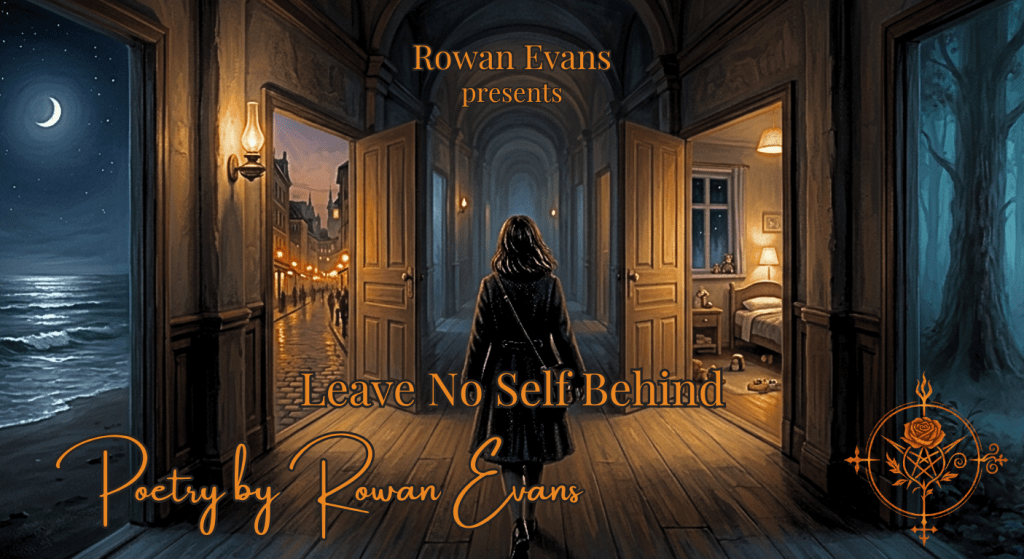
Leave No Self Behind Poetry by Rowan Evans
I feel like I’ve lost myself again—
don’t know when it began,
but I get lost a lot.
It doesn’t take much for me
to get lost in thought—
I wander off
without meaning to,
slipping between memories
like loose floorboards.
One thought opens a door,
another pulls me down a hallway,
and suddenly I’m somewhere
I didn’t plan to be—
with some version of me
I didn’t plan to meet.
Sometimes the hallway
tilts into something else—
a shoreline I’ve walked in sleep,
a city humming with heat,
a room I haven’t entered in years.
The world shifts
without warning,
and I follow it
the way I follow dreams—
half-aware,
half-afraid
of what I’ll find
in the scene change.
I never know
which version of me
I’ll find in those places—
the one who’s tired,
the one who’s trying,
the one who’s still carrying
things I swore I let go.
Sometimes I meet
the versions of me
I thought I’d outgrown—
the one who flinches,
the one who freezes,
the one who still thinks
they’re hard to love.
And I walk with them
for a while,
through whatever memory
the hallway decides to show—
letting them speak,
letting them breathe,
letting them…
exist.
Without rushing them back
into the dark.
And maybe that’s
what finding myself
really looks like—
not a single moment
of clarity,
not a sudden return,
but walking through
every hallway
my mind opens,
meeting every version
I’ve ever been,
and letting them stay
long enough
to feel seen.
Maybe I’m not lost.
Maybe I’m just learning
how to carry
all the selves
I used to abandon
when the world
felt too loud.
Maybe this time…
I won’t leave anyone—
behind.
Journey into the Hexverse…
[Where the Metaphors Lead] Some truths are easier to write than they are to say aloud. “Where the Metaphors Lead” explores the quiet space between dreams, confession, and the courage it takes to let another person know how deeply they’ve become woven into your inner world.
[Noon Is Loud] If four in the morning belongs to truth, then noon belongs to impossible memories. Noon Is Loud is a playful free verse poem filled with absurd boasts, pop culture references, and tongue-in-cheek mythology that explores how easily imagination can rewrite reality.
[5:01 (Pull the Punchline Back)] What happens when a confessional poet instinctively hides every confession behind a joke? 5:01 (Pull the Punchline Back) explores humor as emotional armor, the speed of an overactive mind, and the difficult choice between making people laugh and letting them see what’s really there.
[Chemical X] Chemical X explores the rapid, associative way one creative mind moves—from cartoons to sports, comic books to music—revealing that inspiration isn’t linear, but a collision of memory, humor, rhythm, and intuition.
[Monster Theology] What if the monsters under the bed weren’t monsters at all? Monster Theology explores difference, belonging, and the human tendency to fear what we don’t understand through a conversation with the creatures we’ve spent our lives imagining.
I’ve always had a difficult time describing what music actually does to me.
People often say a song makes them feel happy, sad, nostalgic, or energized.
That has never felt quite specific enough.
Music feels physical.
Some songs settle over me like fog.
Some arrive like thunderstorms.
Some feel like walking outside after rain when the air still smells different.
And then there are the songs that somehow collapse time.
They don’t simply remind me of childhood.
They return me to it.
Not through memory alone, but through sensation.
The warmth of pavement beneath bare feet.
The way summer evenings seemed endless.
The strange certainty that tomorrow would always have enough time.
That’s what fascinated me while writing this piece.
Not the songs themselves, but the environments they create inside us.
The weather of memory.
The emotional climates we revisit every time a familiar melody begins.
I’ve always believed that poetry and music are close relatives.
One speaks through rhythm.
The other through silence between the notes.
Both have the remarkable ability to transport us somewhere we cannot physically return to.
This poem is my attempt to describe that journey.
Not through genres or artists.
Through atmosphere.
Because sometimes music doesn’t just soundtrack our lives.
Sometimes it changes the forecast within them.
— Rowan Evans
Some songs don’t just play. They change the weather inside us.
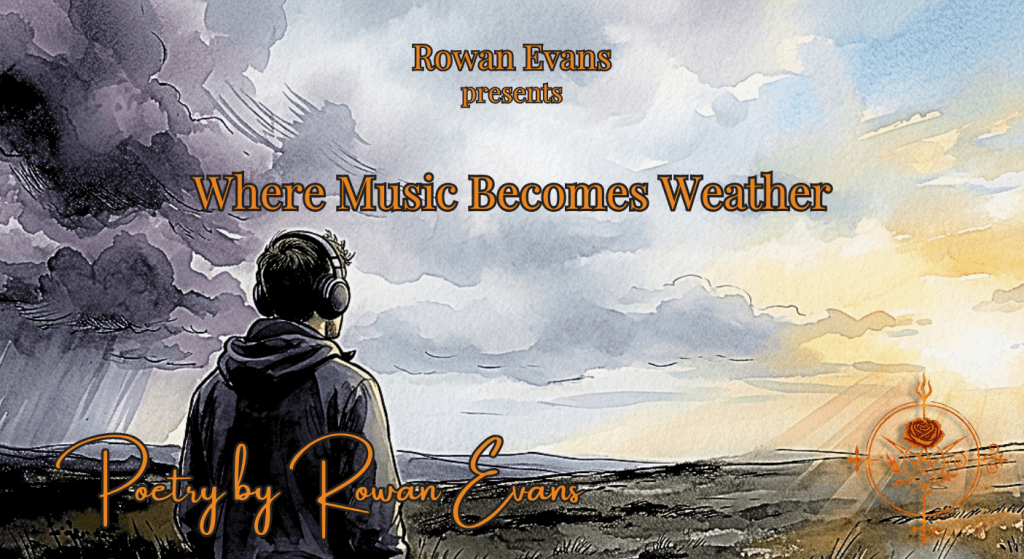
Where Music Becomes Weather Poetry by Rowan Evans
I put my headphones on, hit the button— noise cancelling. Then I let the music play, let it lead my emotions whatever which way.
I drift through different soundscapes— crossing borders in sound, watching emotion mix with ink like paint on the canvas.
Certain songs feel like humidity. They put a heavy feeling in your chest, it almost makes it hard to catch your breath.
Other songs feel like clouds. The way they hold me in soft hands. And I feel safe, because they hold me close but in motion— like a slow dance.
But then there are those songs— the ones that feel like warm concrete on bare feet. Like time travel, I’m back in my childhood.
Back when summer felt endless, and every day was measured by the position of the sun.
Before I knew what nostalgia was— only that certain songs felt familiar before I’d ever heard them.
Journey into the Hexverse…
[A Heart That Echoes in Another Language] A poetic journey through music across Japan, Korea, China, and the Philippines, exploring how sound becomes identity, memory, and emotional geography.
[Sound as a Vessel] “Sound as a Vessel” is a free verse poem about music as emotional architecture, exploring how international artists and soundscapes shaped identity, creativity, memory, and poetic voice.
[The Music Holds Me Upright] A reflective free verse poem about using music, writing, and rhythm to navigate anxiety, depression, and emotional overwhelm.
[Global Takeover] What if home isn’t a place—but something you build from the music you love? Global Takeover blends sound, culture, and identity into one borderless space.
[I’ll Be There to See Your Sunrise] Love has never come easily to me. This poem explores the fear, vulnerability, and quiet courage required to stay emotionally present when connection begins to matter deeply. “I’ll Be There to See Your Sunrise” is about choosing love despite the risk of heartbreak—and promising to remain long enough to witness someone fully.
At this point, it’s probably one of the most consistent threads running through my work.
The reason is simple:
Dreams don’t feel imaginary to me.
They feel remembered.
Not while I’m fully awake. Not after I’ve had time to process them. But in those first moments between sleeping and waking, there’s often a strange overlap where the emotions arrive before reality does.
For a brief moment, everything feels true.
The conversation happened. The place existed. The person was there.
Then awareness returns.
The room comes back. The walls come back. The weight of the body comes back.
And with it comes the realization that none of it happened.
That’s the feeling this poem is trying to capture.
Not the dream itself, but the return from it.
The title became the key.
Because waking up doesn’t feel like opening my eyes.
It feels like returning to my bones.
Returning to gravity. Returning to limitation. Returning to the version of reality that can be touched and verified.
The strange thing is that the emotions don’t disappear when the dream does.
The dream fades.
The feelings stay.
And sometimes that lingering feeling creates a kind of grief that is difficult to explain to people who don’t experience dreams this way.
A quiet grief.
Not because something real was lost.
But because, for a moment, it felt real enough to matter.
— Rowan Evans
Some dreams disappear with the sunrise. Others stay with us long after we’ve returned to our bones.
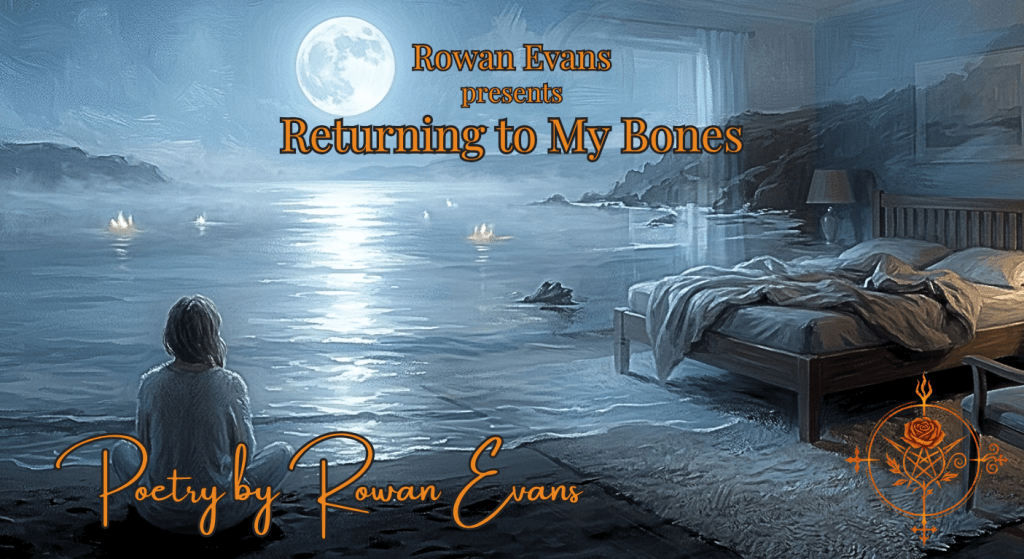
Returning to My Bones Poetry by Rowan Evans
The moon shimmers over the bay,
suspended in the sky—
the way I feel suspended in her eyes.
And it makes me feel crazy,
because she’s never looked at me—
not really, not in reality.
It’s only happened in dreams.
That’s when I drift
between awake—
and asleep.
This is when
my mind
starts to
wander.
Then it snaps.
I’m back in my room again.
The moon loses its shimmer,
the bay fades from view.
My body tenses as I become
aware again,
of the mattress beneath me—
of the walls that enclose me.
I feel the weight pressing in.
The reality of returning
to my bones.
It’s a quiet grief—
realizing that the emotions
will linger,
but the truth is
it never happened.
And somehow,
that hurts the most.
Journey into the Hexverse…
[Maybe You’ll Want Me Too] A poem about the subtle shift from knowing someone to constantly thinking about them. Through humor, metaphor, and confession, Maybe You’ll Want Me Too explores affection, attachment, and the fragile hope that being wanted might matter more than being needed.
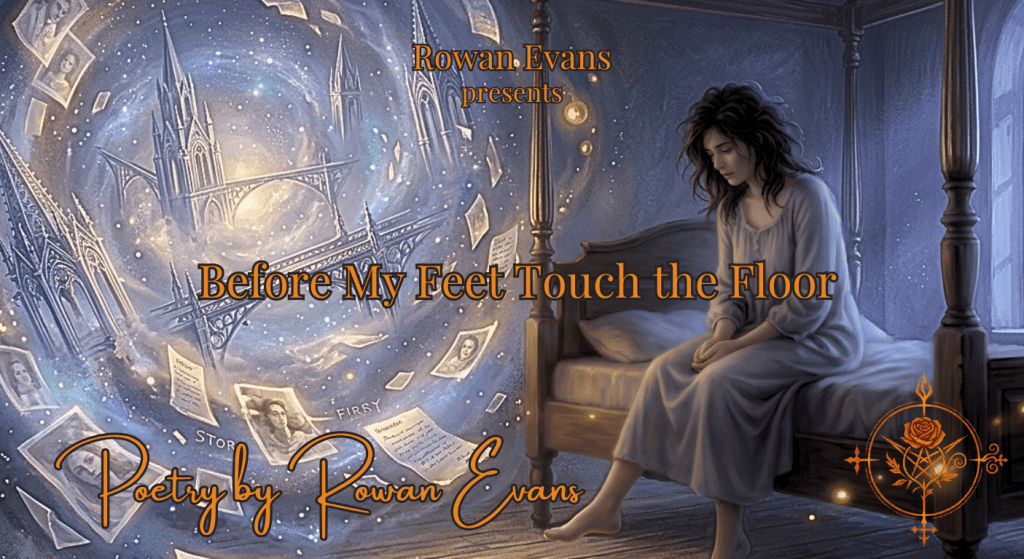
[Before My Feet Touch the Floor] What happens when your dreams feel more real than your waking life? Before My Feet Touch the Floor explores the strange grief of waking up, the lingering memory of dream selves, and the quiet question of which version of us is truly real.
[Recognizes Home] A free-verse poem exploring the difference between love as dependency and love as choice. It challenges the idea that love must be need-based, instead centering the quiet strength of choosing someone while still remaining whole on your own.
[Ocean Waves (1, 4, 3)] A moonlit shoreline, a rowboat full of ducks, a piggybank with no cents, and a confession hidden in plain sight. Ocean Waves (1, 4, 3) explores how humor, wordplay, and absurdity can become a side door to vulnerability when the truth feels too difficult to say directly.
[L Words & Heart] A playful, self-aware poem about love, longing, loyalty, and the quiet ways another person can reshape our inner world. What begins as humor slowly reveals a heartfelt confession about affection, imagination, and the faces that linger in our dreams.
[Just Before Waking] A street that feels familiar. A life that hasn’t happened yet. Just Beyond Waking explores the fragile space between dreams, memory, longing, and the quiet feeling that some futures are already waiting for us.
Not because I think they predict the future. Not because I think they’re magical.
Because they feel real.
Real enough that sometimes waking up feels stranger than the dream itself.
I don’t think people talk enough about that moment between sleeping and waking—the brief period where both realities still exist at the same time.
The dream is fading.
The room is returning.
And for a few seconds, you’re caught between them.
That’s where this poem lives.
I’ve had dreams that felt so vivid, so emotionally complete, that waking up felt like losing something. Not a person. Not a place. A version of myself.
A self that existed somewhere else.
The older I get, the more fascinated I become by that feeling.
Why do some dreams linger for hours while entire days disappear from memory?
Why do imaginary places sometimes feel more familiar than real ones?
Why does waking occasionally feel like arriving somewhere instead of returning?
This piece doesn’t try to answer those questions.
It simply sits with them.
Because there are mornings when the first thing I feel isn’t relief that the dream is over.
It’s grief that it ended.
And I suspect I’m not the only one.
— Rowan Evans
Some mornings feel less like waking up and more like saying goodbye to a life that only existed while you were asleep.
Before My Feet Touch the Floor Poetry by Rowan Evans
Dreams—
a common topic
in my poetry.
It’s because
they don’t feel fake to me.
They feel like memories.
Do know what it’s like
to wake up confused—
because you’re in your own room?
How do you live—
when your dreams are more alive
than your waking life?
It’s as if the person I was
a moment ago
is still out there,
waiting for me
to return.
So I lie there,
trying to remember
which version of me
is the imposter—
the one who wakes,
or the one who wanders.
Sometimes I think
the dream‑me
is the one who remembers,
and I’m the one
who forgets.
Because if I feel more alive
in the places I can’t stay,
what does that make
the life I return to?
There’s a mourning
no one talks about—
the kind that happens
before your feet
touch the floor.
Journey into the Hexverse…
[The Streets I Walk When I Sleep] “The Streets I Walk When I Sleep” is a deeply intimate free verse poem about recurring dreams, emotional connection, longing across distance, and the strange feeling of remembering places and moments that have never happened in waking life.
[Memories From a Life Yet to Come] Some dreams feel less like fantasy and more like memory. “Memories From a Life Yet to Come” is a reflective free verse poem about longing, displacement, emotional alignment, and the strange comfort of recognizing yourself more clearly in dreams than in waking life.
Some people grow up knowing exactly where they belong.
Others grow up carrying a quiet sense of elsewhere—something felt long before it’s understood.
This piece traces that feeling as it moved through me over time: the early moments of disconnection, the private planning, the slow patience of a dream that never burned out. It isn’t about leaving a place as much as it is about realizing that orientation matters more than arrival.
Not all rebellions are loud.
Some of them are lived quietly, for years, while you learn how to wait without letting the dream die.
Some dreams don’t disappear. They learn how to wait.
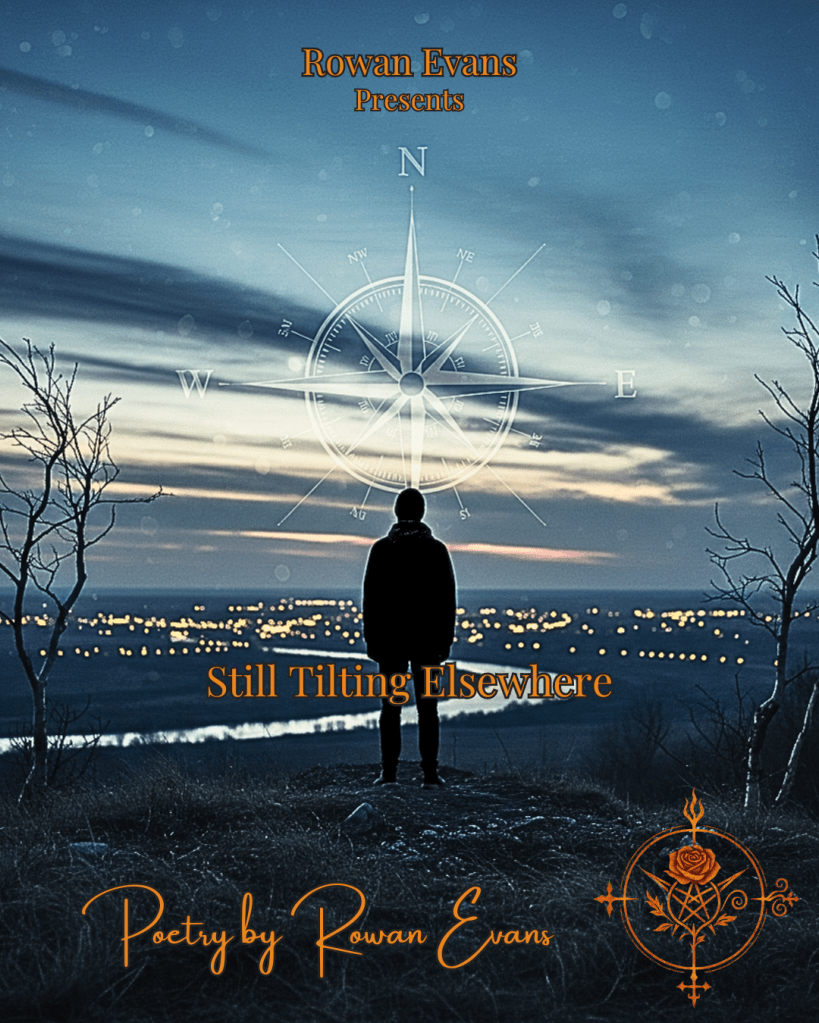
Still Tilting Elsewhere Poetry by Rowan Evans
I find myself drifting through my thoughts, not lost this time.
I remember fourteen. Hi Hi Puffy— Ami and Yumi on the screen, seeing Tokyo streets, thinking “I hate this place.” It was the first time I felt the disconnect.
Suddenly, I was hyperaware— I didn’t belong here.
I remember fifteen. The first time I started planning. The first time I dreamed of jet engines, of taking off, making escape.
I remember sixteen. Started speaking, manifesting— wishing it into existence. I remember seventeen, when my dream, became a quiet rebellion.
And I was only becoming more aware, I didn’t belong here.
I remember eighteen. Applying for a job, I knew I wouldn’t get. Simply for the chance to split. It was more about the “what if’s,” what if they saw something— what if they took a chance?
And then— found family from the Philippines. Two girls of thirteen, they became like nieces to me. They were the spark that stoked the ember, that would simmer just beneath the surface.
It’s been eighteen years since then.
Eighteen years, and the ember never cooled. It lived in the quiet places— behind decisions, beneath routines, inside every map I drew that didn’t include here.
And the dream didn’t fade. It learned patience. It learned silence. It learned to wait without dying.
Now, I feel the shift again— the same quiet pull, the same soft rebellion, older now, but no less certain.
I still carry that fourteen-year-old like a compass in my chest. I carry that seventeen-year-old like a promise I haven’t kept yet. I’ve grown, but the compass never changed. Every version of me still tilts toward somewhere… else.
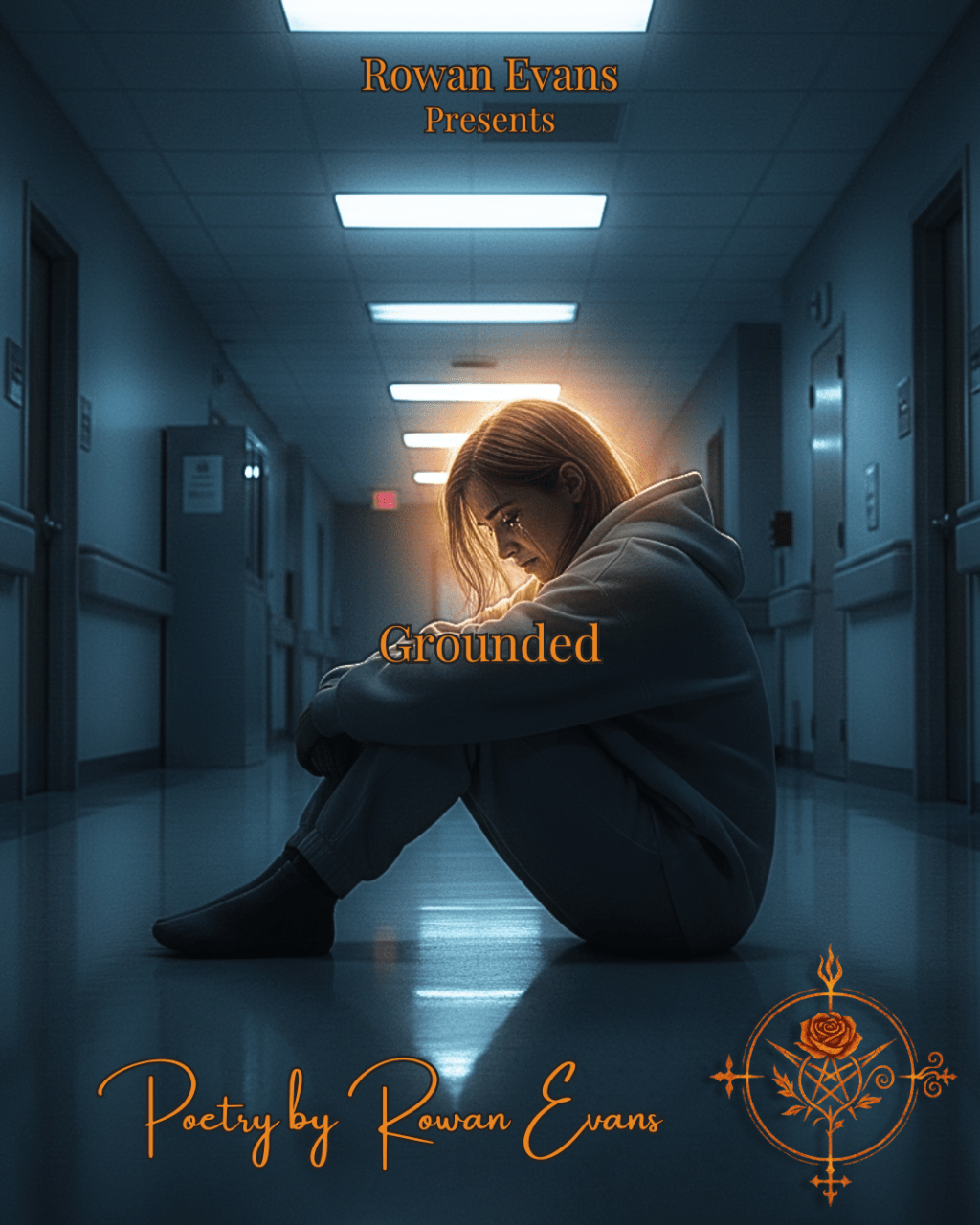
This piece came from that disorienting in-between space—when your thoughts scatter, your body feels unreal, and you’re not sure how you got there. Sometimes it isn’t logic that brings you back. Sometimes it’s a voice. A laugh. A presence that reminds you who you are.
Sometimes all it takes is a voice to bring you back.
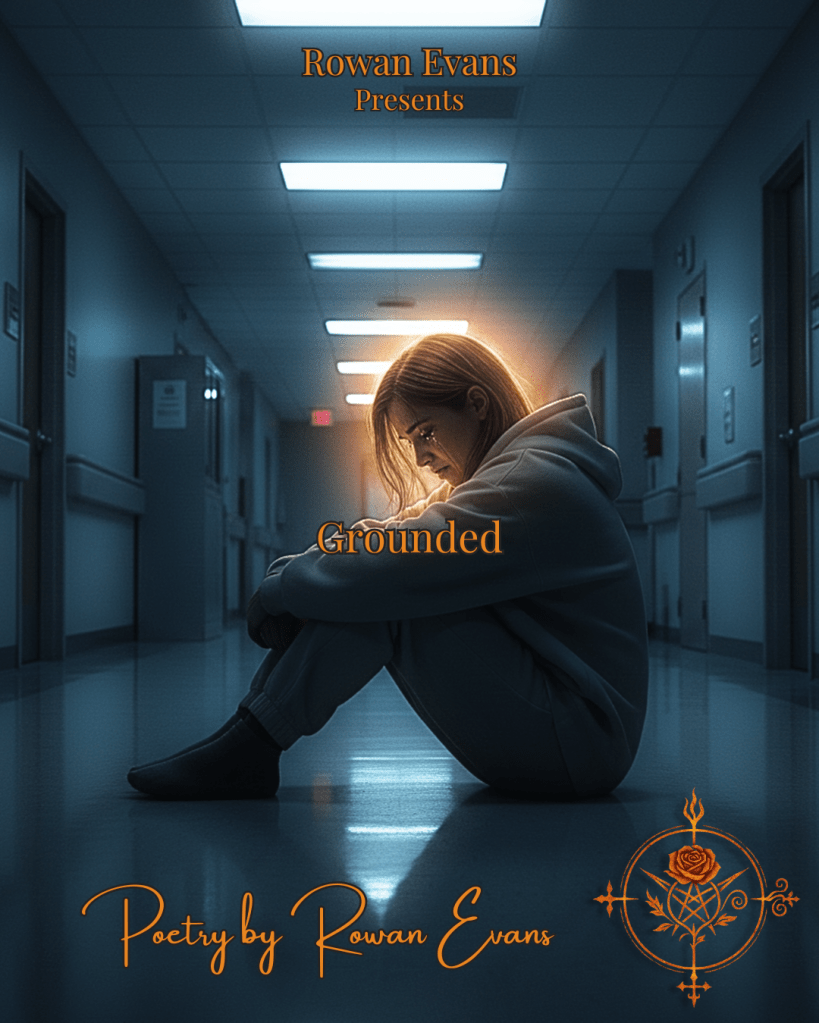
Grounded Poetry by Rowan Evans
Sterile white walls,
fluorescent bulbs
light the halls—
I stumble
and fall,
sprawled
across the floor.
What was I
even here for?
Vision snaps.
Vision blurs.
Voices heard.
I’m not alone.
It’s me
my thoughts
and I—
Flicker and fade,
between here
and anywhere.
Voices echo.
Voices linger.
Touch—
Soft and grounding,
it brings me back
to myself.
Slowly. Blinking.
It’s her voice…
Her voice echoes,
and reverberates.
A giggle. A laugh.
I’d been stuck in my head for days—looping memories, fogged thoughts, the usual spiral.
Then I had a dream.
In it, someone I care deeply about cut through the noise in the bluntest, most effective way possible. It wasn’t gentle. It wasn’t poetic. But it worked.
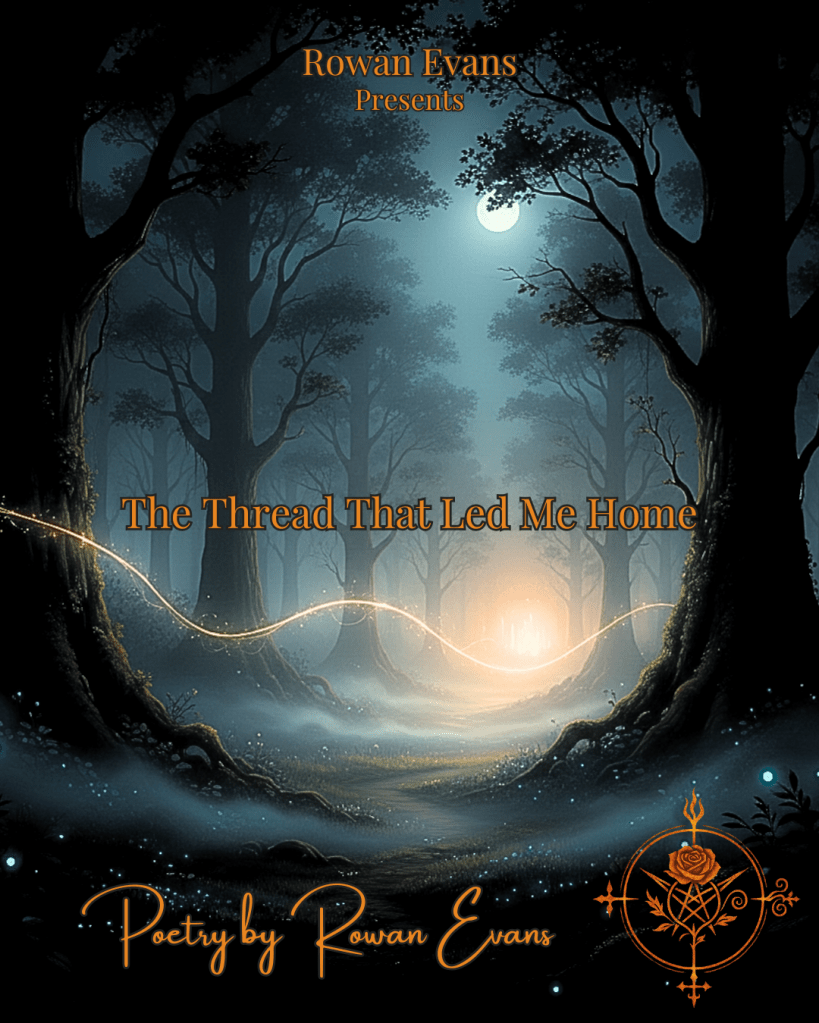
This poem came from that moment—the realization that sometimes the way forward isn’t overthinking, but following the one thread that still feels steady.
Even through the fog.
Sometimes the way out of your head is just one honest thread—and the courage to follow it.
The Thread That Led Me Home Poetry by Rowan Evans
The fog rolls over hills,
and a chill clings
to my mind.
Memories linger
in flickering fragments,
clinging static—
the kind that hums
behind the eyes,
buzzing with moments
I thought I buried
but never really left.
They circle back—
whispers caught
between stations,
half-formed voices
I almost recognize
but can’t quiet name.
Threads of memory
tangled in the mist,
pulling me back
to places
I never meant to revisit.
I stumble through playgrounds,
bumping off walls
as I march down the hall.
A single thread,
I’ve begun to follow—
It leads through memory,
after memory.
Twisting and turning,
it knots—
and I pause,
fingers trembling
over the tangle,
wondering what unravels
if I pull too hard.
I run fingers
over threads.
Gripping soft,
pulling slow—
I watch
as the string
slips free—
and it hums,
like it’s guiding me.
So I follow.
Step after step,
one foot
in front
of the other.
I step and stumble
through fog,
thick as my thoughts.
And when
I feel lost,
my fingers tighten
grabbing the string
like a lifeline.
It’s the only guide
through my mind.
I stumble through,
snapping twigs
and branches.
The rustle of
rotting leaves
under feet,
until I see it.
A light,
a clearing.
And when I reach it,
when I find
the strings conclusion—
what do I see?
You.
A smile.
Home.
Closing Note
Yesterday’s poem was about the weight of memory. This one is about the moment something — or someone — breaks through that weight. Not to fix it, not to erase it, but to remind me that I don’t have to walk through the fog alone.
Journey into the Hexverse
[Memory Lane Has No Exit] With my birthday approaching, I found myself trapped inside my mind—wandering memory lane, revisiting love, loss, and the moments that built me. This poem is a reflection on betrayal, survival, and the quiet realization that drifting isn’t the same as healing.
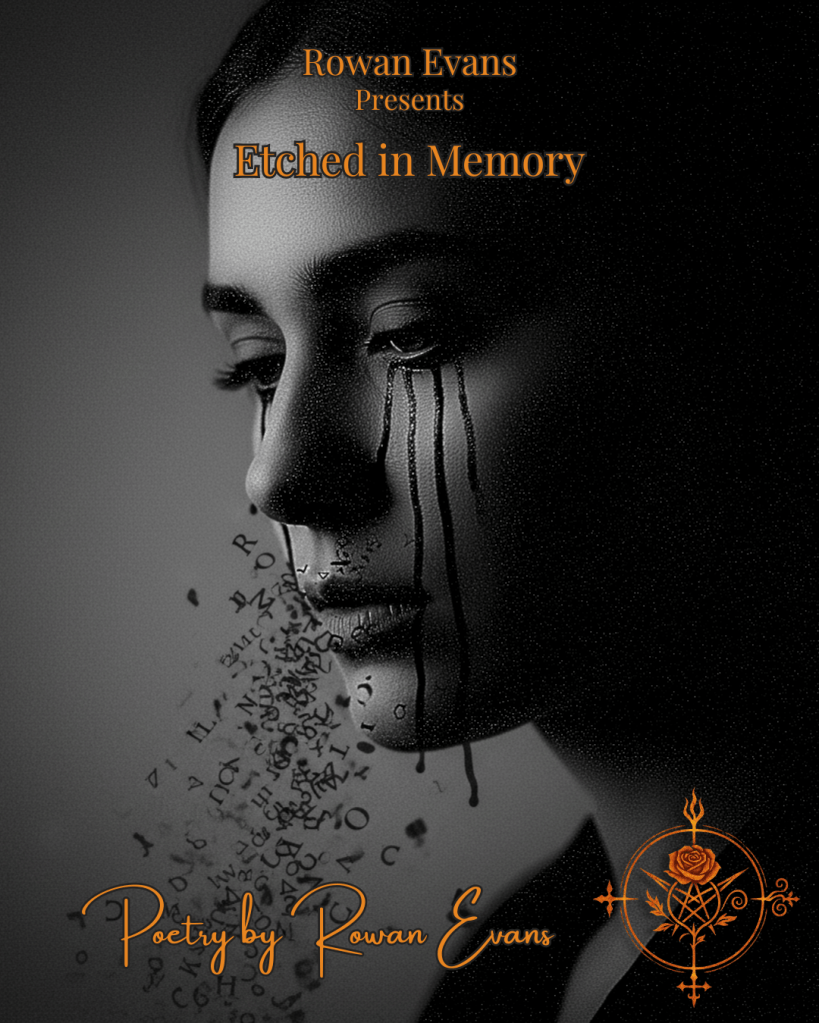
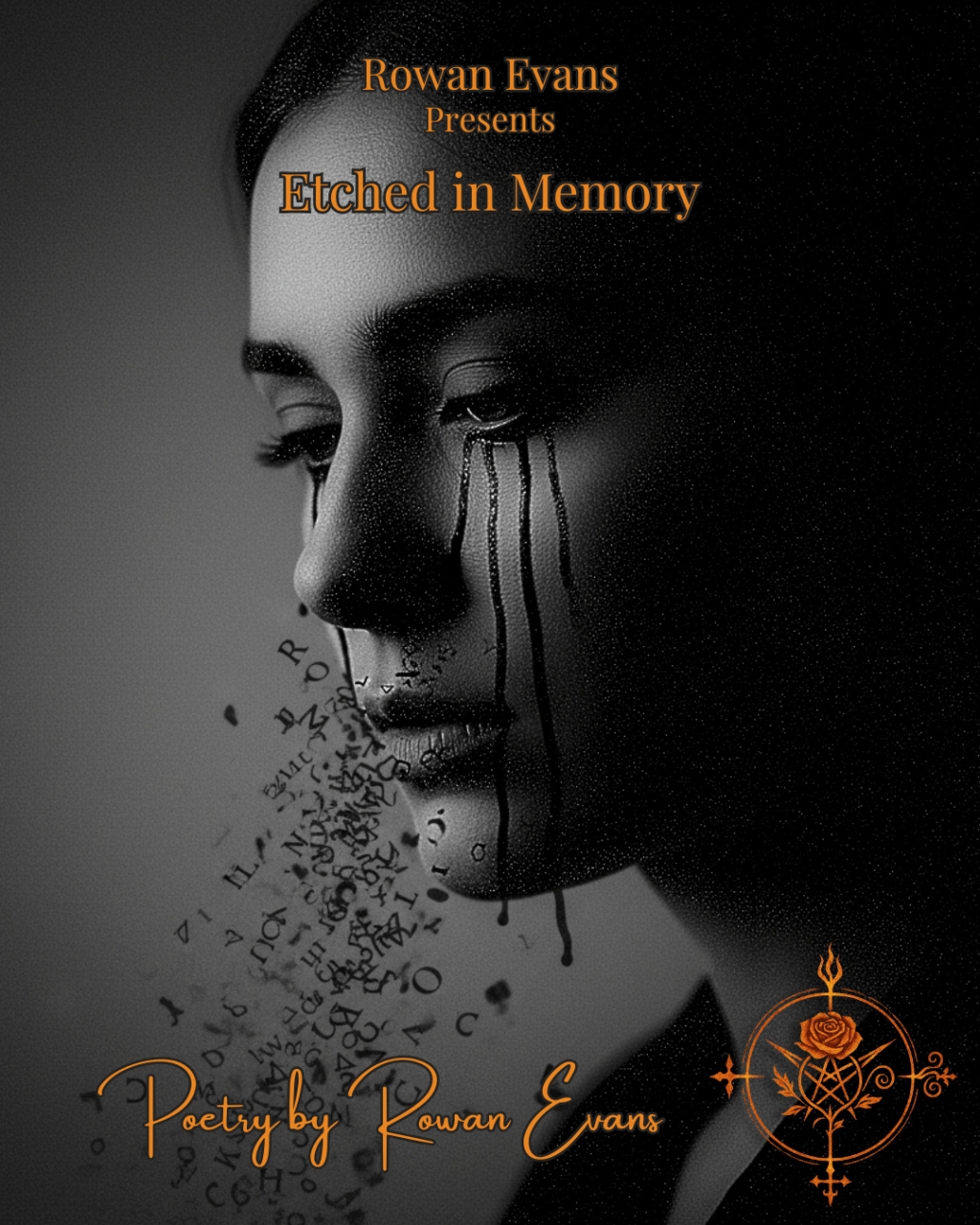
This poem came from the space between impulse and consequence—the moment when truth is sharp enough to wound, and restraint becomes a form of survival. Etched in Memory is about knowing exactly how much damage your words can do, and choosing silence not because you are wrong, but because you are precise.
Some of us learn early that a look can say too much, that honesty—when fully unleashed—doesn’t fade. It marks. It lingers. It becomes permanent.
This piece is a quiet confession of power held back, of violence softened into poetry, of restraint learned the hard way. Not because the truth wasn’t there—but because it would have lasted.
— Rowan Evans
Some truths don’t need to be spoken to be permanent.
Etched in Memory Poetry by Rowan Evans
My eyes learned restraint— before my mouth ever did. So I wouldn’t betray myself when I talked my shit.
It was all— facts (fax), no printer. I did not speak a lie.
But I would try not to speak at all.
Because my eyes learned restraint— before my mouth ever did.
Yet, they would always push me.
Until…
I would poetically dissect them—
methodically dismember, until they remember. My words etched in memory.
But my eyes learned restraint— before my mouth ever did.
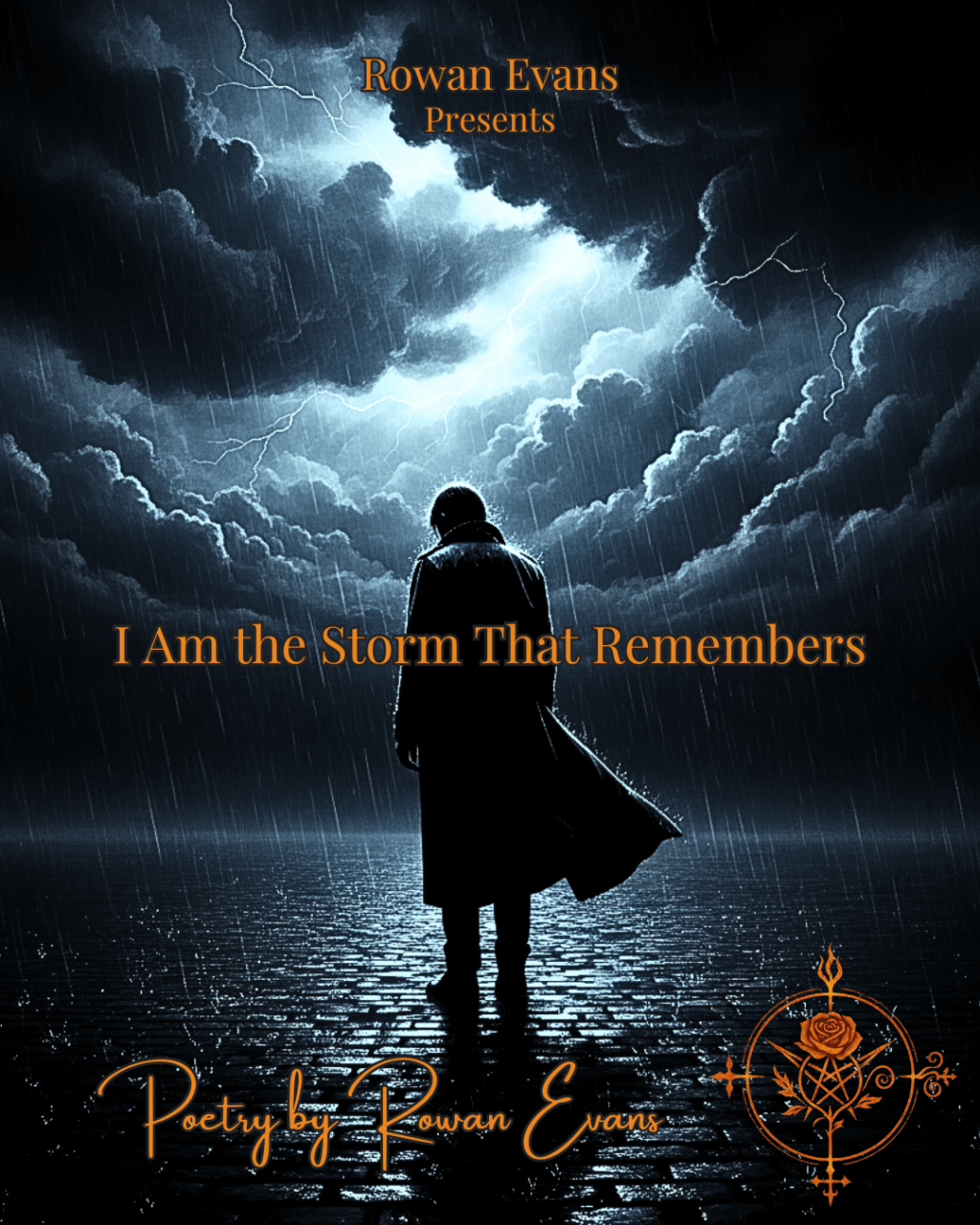
Some people leave, but their weather stays. This poem is not about loss—it is about endurance, memory, and the quiet strength it takes to remain standing when the storm remembers everything.
Some people leave, but their weather stays.
I Am the Storm That Remembers Poetry by Rowan Evans
Everyone comes into our lives for a reason,
but some are only meant for a season.
Then the weather changes,
and they begin to drift.
It may not hit like an immediate shift,
it may slowly unfold and fade.
Yet even as they go,
their footprints linger,
like sunlight caught in the corner of a room,
warm but unreachable.
For me, memories swirl
like storm clouds roiling overhead,
thunder rolling through my chest,
lightning flashing their faces,
voices cutting through the wind—
too sharp to ignore, too loud to forget.
I try to run.
I try to close the windows,
pull the shutters tight.
But the storm is patient.
It seeps through cracks,
slips under doors,
lingers in the spaces I thought I’d cleared.
Rain falls in shards,
drenches my quiet moments,
washes over laughter I can’t recover,
drowns the footprints of the ones who left.
And yet, in the chaos,
there is a strange kind of clarity:
the storm remembers,
and so do I.
I wish I could let it go,
to be like them—
so quick to forget,
so light in the sun.
But I am not.
I am the storm’s echo,
the residue of seasons past,
and somehow, I carry their weight
and my own,
and I am still here,
breathing,
walking,
storm-beaten but alive.