This piece isn’t about hatred for where I’m from. It’s about honesty.
For as long as I can remember, I’ve felt the pull of something beyond the shoreline I was born on. Not rebellion. Not fantasy. Just a quiet, persistent tide.
“Drawn to Sea” is both wordplay and truth – a recognition that sometimes the call we feel isn’t about escape, but alignment. I don’t believe other people are wrong for loving where they are rooted. I simply know that my roots may be meant for different soil.
Some of us don’t reject the shore.
We just hear another one calling.
— Rowan Evans
Some shores are inherited. Others call you by name.
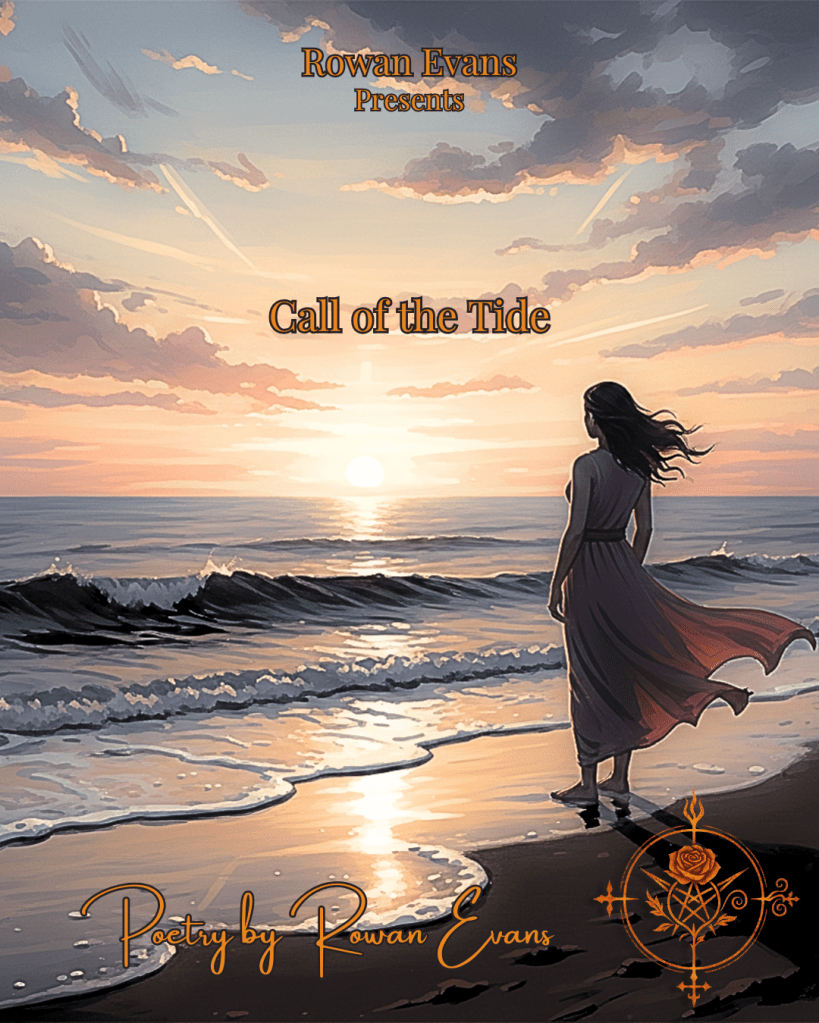
Call of the Tide (Drawn to SEA) Poetry by Rowan Evans
You can call me Moana
the way I’m drawn to SEA,
but there is no demi-god
helping me.
I must face the waves alone.
The waves of hate
from people in the place
they say,
I’m supposed to call home.
But I’m American
in label only.
My mind frame
does not align
with the anthem
in their sentiments.
I’m not saying
they’re wrong.
I’m just saying
I don’t belong.
This place is not home.
This shore was never my own.
I’ve felt the pull of tides
since my earliest days.
So I stand at the edge—
watching the horizon,
waiting for the water
to call my name.
When I was a kid, other children wished for speed, flight, invisibility and teleportation. I wished to understand.
This piece isn’t about wanderlust or escape. It’s about connection – the desire to meet people in the language they speak at home, in the rhythm that feels natural to them. I may not have superpowers, but I’ve spent years training my ear, listening with intention, and closing the distance in the ways I can.
Some bridges are built with ink. Others are built with effort.
— Rowan Evans
Some wished for flight. I wished for fluency.
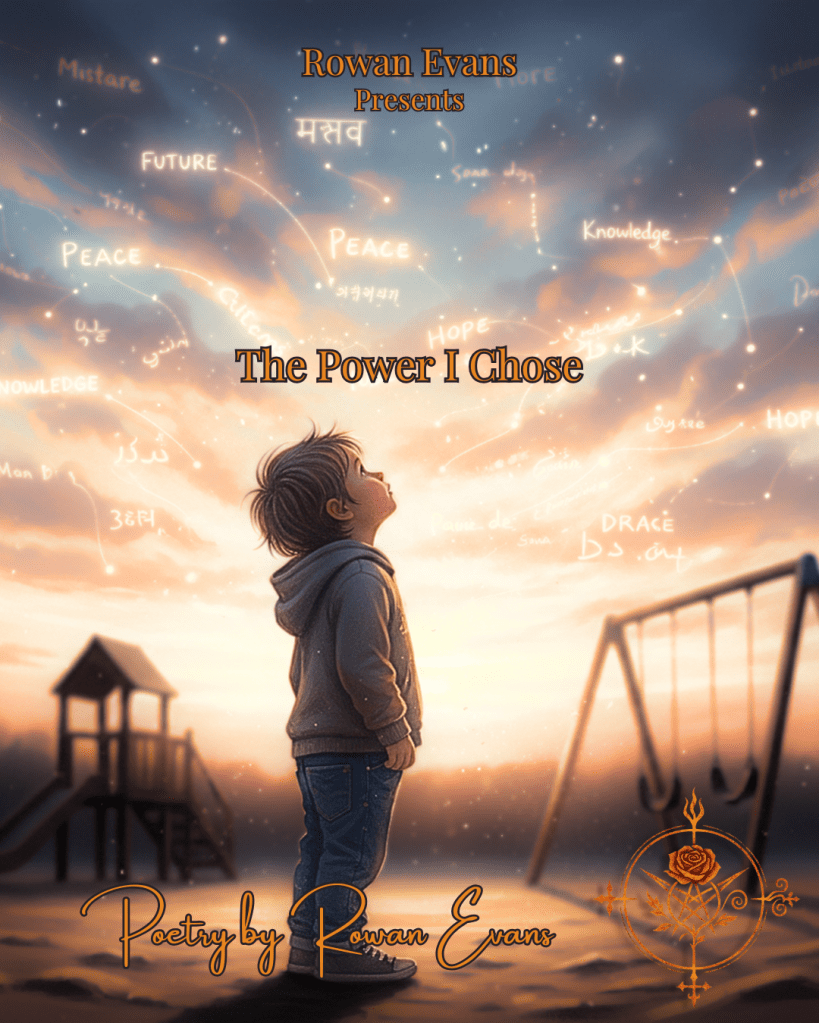
The Power I Chose Poetry by Rowan Evans
Let me take you back
to playground conversations—
when superpowers
were the topic at hand,
and kids were wishing
for flight, speed or teleportation.
Then there was me—
I wished for connection
and fluency, for no language
to be new to me.
I wanted my ears to pick-up
language and cadence,
and my mouth to repeat it
perfectly. I wanted,
no matter where
someone was—
I wanted to be able
to meet ’em,
to greet ’em
with the language
they spoke at home.
I pictured traveling
touching every corner
of the globe,
absorbing language,
perfecting cadence.
Living in a rhythm
not my own.
Now, the power
may not have been real,
but I’ve done
what I could
to train my ear.
Listen with intention,
until all language
felt the same.
And I may not know
what you’re sayin’,
but it no longer
feels foreign.
I’ll keep learning,
and opening doors.
Closing gaps,
connecting with souls—
As I continue to wander
this earth, in search
of a place to call home.
Until I feel the pull of roots,
I will continue to put
earth under boots.
I will continue to move,
never becoming static.
I’ve written around this feeling for years — in metaphors, in longing, in coded language about distance and departure.
This is the first time I’ve said it this plainly.
For most of my life, I’ve felt like a visitor in the place I was born. Not in a dramatic way. Not in a rebellious way. Just in a quiet, persistent way that never left.
This piece isn’t about anger. It isn’t about rejection.
It’s about finally naming what I’ve always known— that sometimes “home” is assigned to you, and sometimes it’s something you’re still moving toward.
— Rowan Evans
Sometimes the place you’re born isn’t the place you’re meant to stay.
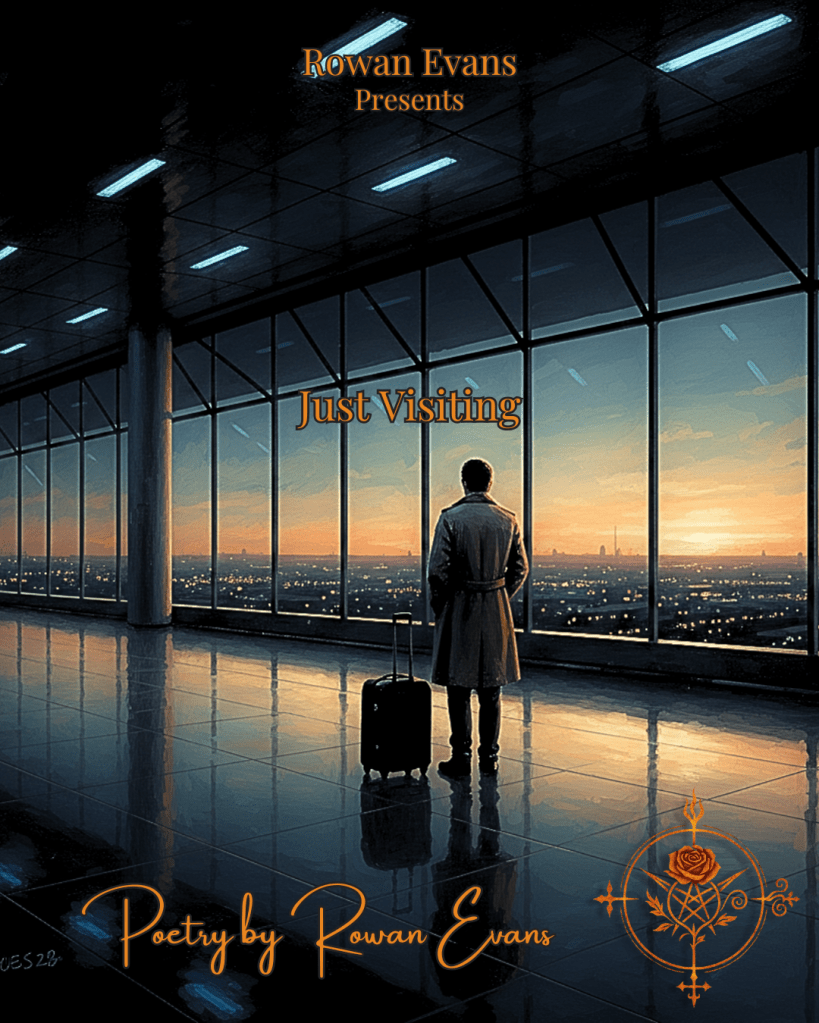
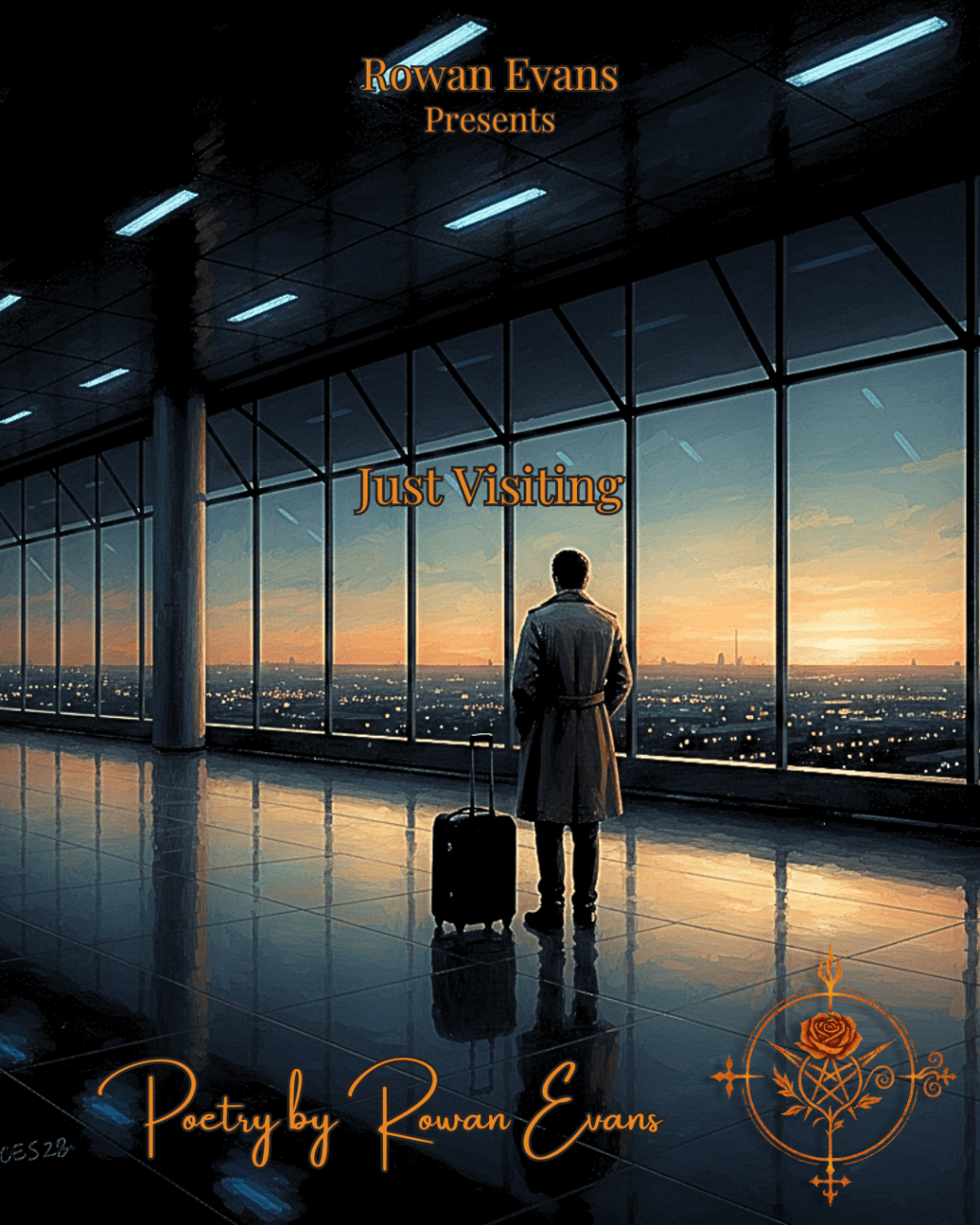
Just Visiting Poetry by Rowan Evans
I’ve been talking about it a lot lately, this feeling of wanting to escape that I’ve had since I was just a baby. I was forced to call this place home, because this is where I was born— it never felt like home, just a place I was visiting.
Every day in school— I’d recite the pledge, like a good little patriot should. But I didn’t believe in it, there was no allegiance in it.
They say they’re proud to be an American, well me? I’ve never been, because this is just a place to me. I’ve said it before, once in this poem alone— this place has never been my home.
And I’ve lived all across it. Never once have I have felt planted, no roots took hold. Felt like a tourist— in a place I was supposed to belong.
But I’ve known for a while now, my place is not within these borders. This place will never be home for me. But it will always be a part of me. (Sadly.)
This piece is about a feeling I’ve struggled to name for most of my life — a feeling that I have tried to explain more recently — a quiet but persistent disconnect that began when I was fourteen.
It isn’t about hating where I’m from. It isn’t about romanticizing somewhere else.
It’s about that internal shift — the moment you realize you feel unrooted in a place where everyone else seems firmly planted.
For years, I thought I was running away. Now I understand I’ve been moving toward something.
Whether that “home” is a city, a country, a person, or a version of myself I haven’t fully stepped into yet — I don’t know.
But I know this: I am not lost anymore. I am in motion.
— Rowan Evans
Sometimes home isn’t where you started. Sometimes it’s where you finally breathe.
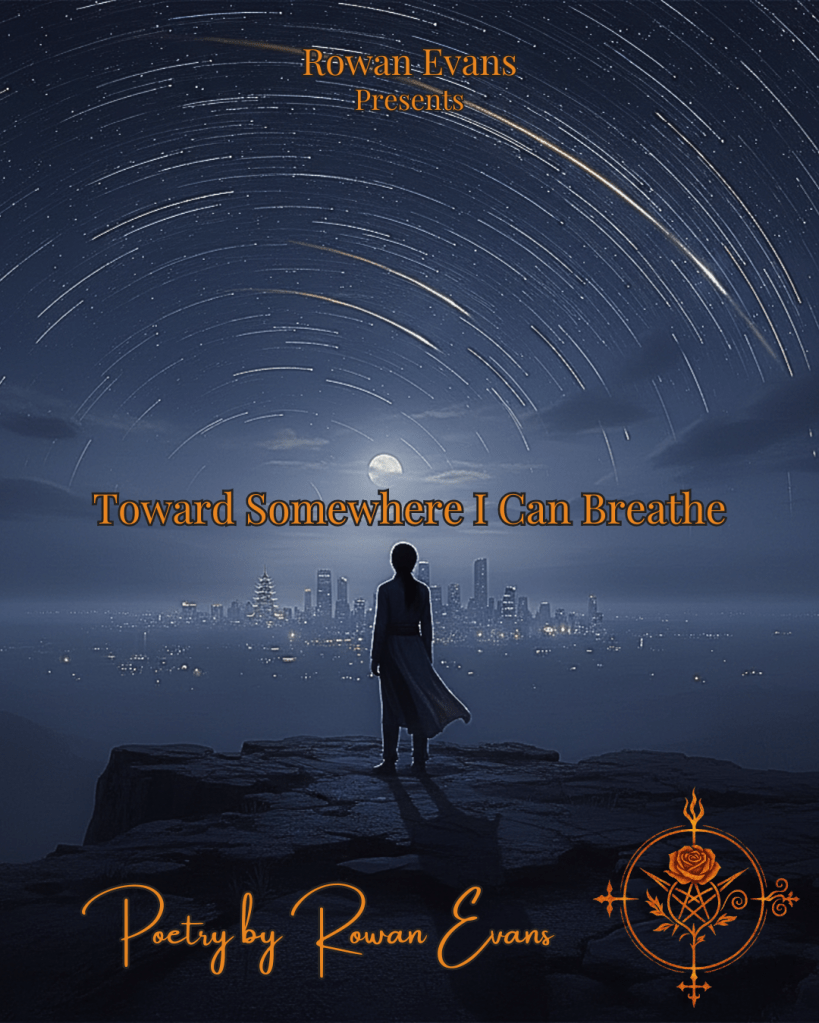
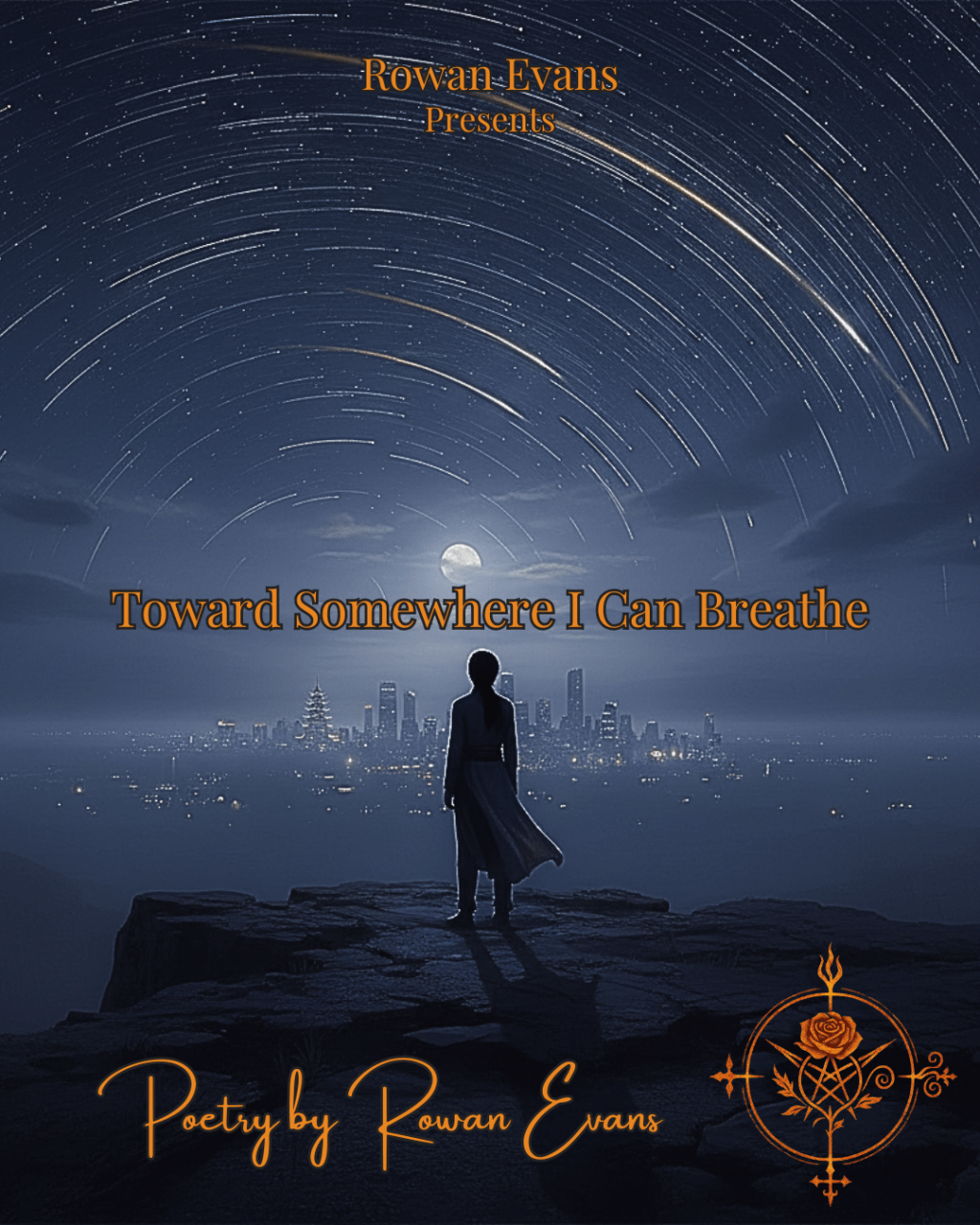
Toward Somewhere I Can Breathe Poetry by Rowan Evans
I’ve tried my whole life
to explain it.
This disconnect,
I’ve felt since
2004.
How can I make it
any more clear?
I just don’t belong here.
I’m going to try
and try to make it
make sense.
I was fourteen,
Hi Hi Puffy AmiYumi
on the screen.
But that’s not the important part.
Inside—
I could feel
threads fray,
and they
already existed
in decay.
But I learned quickly,
in 2007 exactly—
there is Filth in the Beauty,
and the reverse
can be the same.
That’s when
my view of the
world changed,
and became
cemented.
Something shifted,
vision cleared—
and everything
I missed before,
just appeared.
Where everyone
around me,
seemed rooted
in the here.
And I—
would close my eyes,
and wish upon
shooting stars.
I wanted out,
I wanted to leave,
go somewhere far.
I knew it would take time,
I needed things to align.
But now I know
what I’m moving toward,
what I’m working for.
I’m moving toward home.
A place, where I belong.
Maybe when I finally leave,
I’ll touch down in the Philippines
to walk Manila’s streets,
and finally be able to breathe.
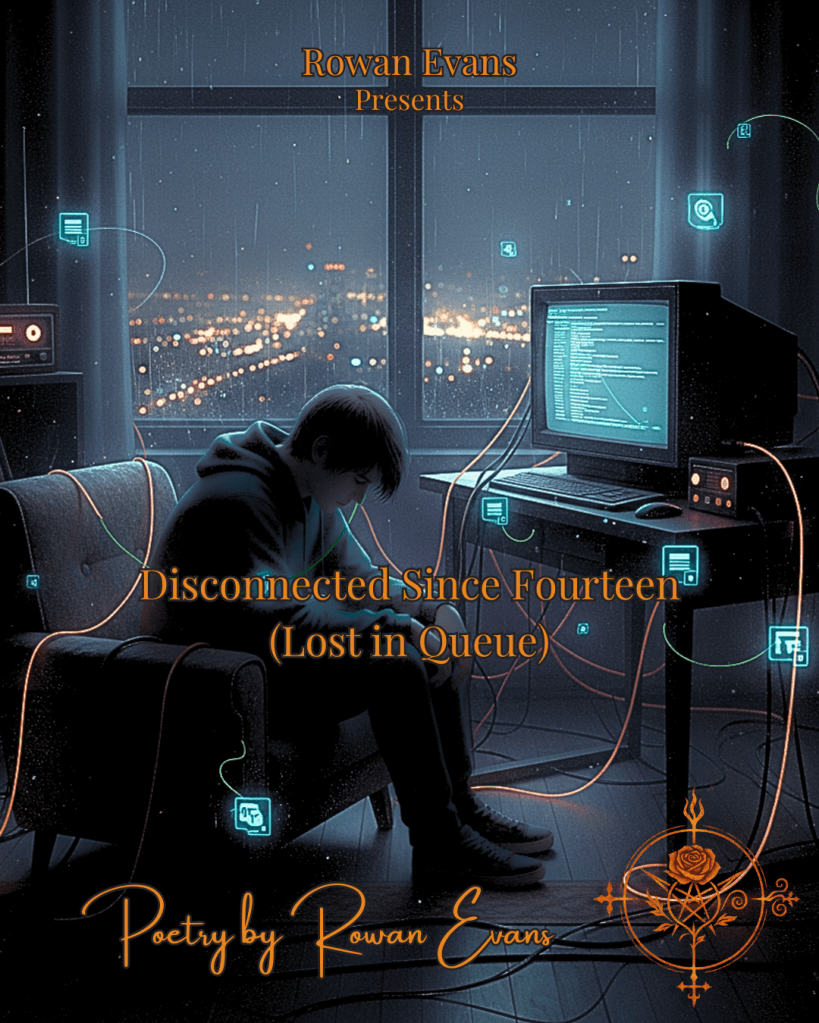
This poem traces the moment when disconnection stopped being temporary and started feeling structural. At fourteen, I didn’t just feel out of place—I felt offline. Like my signal never quite reached the world I was standing in.
The language of technology felt like the closest mirror for that experience: dropped signals, endless queues, systems that never respond. This isn’t nostalgia, and it isn’t blame—it’s recognition. Naming the feeling that followed me for years before I understood what it was.
Some people search for belonging. Some of us search for a connection that was never stable to begin with.
— Rowan Evans
Some disconnections start early—and never fully resolve.
Disconnected Since Fourteen (Lost in Queue) Poetry by Rowan Evans
I used to sit alone, lost in thoughts of far off places—far from… home.
I’d write about every one, write about them in my… poems.
The way longing bled into art, art bled the words from my heart. It was the truth spilling— feeling homeless, since I was fourteen.
Felt disconnected, like the Wi-Fi dropped. Mind static, dramatic, screaming like… dial-up.
Trying to connect to somewhere that never answers. Server overloaded, lost in queue— endless, connection loop.
I do not belong here. Everything feels wrong here.
Some people grow up knowing exactly where they belong.
Others grow up carrying a quiet sense of elsewhere—something felt long before it’s understood.
This piece traces that feeling as it moved through me over time: the early moments of disconnection, the private planning, the slow patience of a dream that never burned out. It isn’t about leaving a place as much as it is about realizing that orientation matters more than arrival.
Not all rebellions are loud.
Some of them are lived quietly, for years, while you learn how to wait without letting the dream die.
Some dreams don’t disappear. They learn how to wait.
Still Tilting Elsewhere Poetry by Rowan Evans
I find myself drifting through my thoughts, not lost this time.
I remember fourteen. Hi Hi Puffy— Ami and Yumi on the screen, seeing Tokyo streets, thinking “I hate this place.” It was the first time I felt the disconnect.
Suddenly, I was hyperaware— I didn’t belong here.
I remember fifteen. The first time I started planning. The first time I dreamed of jet engines, of taking off, making escape.
I remember sixteen. Started speaking, manifesting— wishing it into existence. I remember seventeen, when my dream, became a quiet rebellion.
And I was only becoming more aware, I didn’t belong here.
I remember eighteen. Applying for a job, I knew I wouldn’t get. Simply for the chance to split. It was more about the “what if’s,” what if they saw something— what if they took a chance?
And then— found family from the Philippines. Two girls of thirteen, they became like nieces to me. They were the spark that stoked the ember, that would simmer just beneath the surface.
It’s been eighteen years since then.
Eighteen years, and the ember never cooled. It lived in the quiet places— behind decisions, beneath routines, inside every map I drew that didn’t include here.
And the dream didn’t fade. It learned patience. It learned silence. It learned to wait without dying.
Now, I feel the shift again— the same quiet pull, the same soft rebellion, older now, but no less certain.
I still carry that fourteen-year-old like a compass in my chest. I carry that seventeen-year-old like a promise I haven’t kept yet. I’ve grown, but the compass never changed. Every version of me still tilts toward somewhere… else.
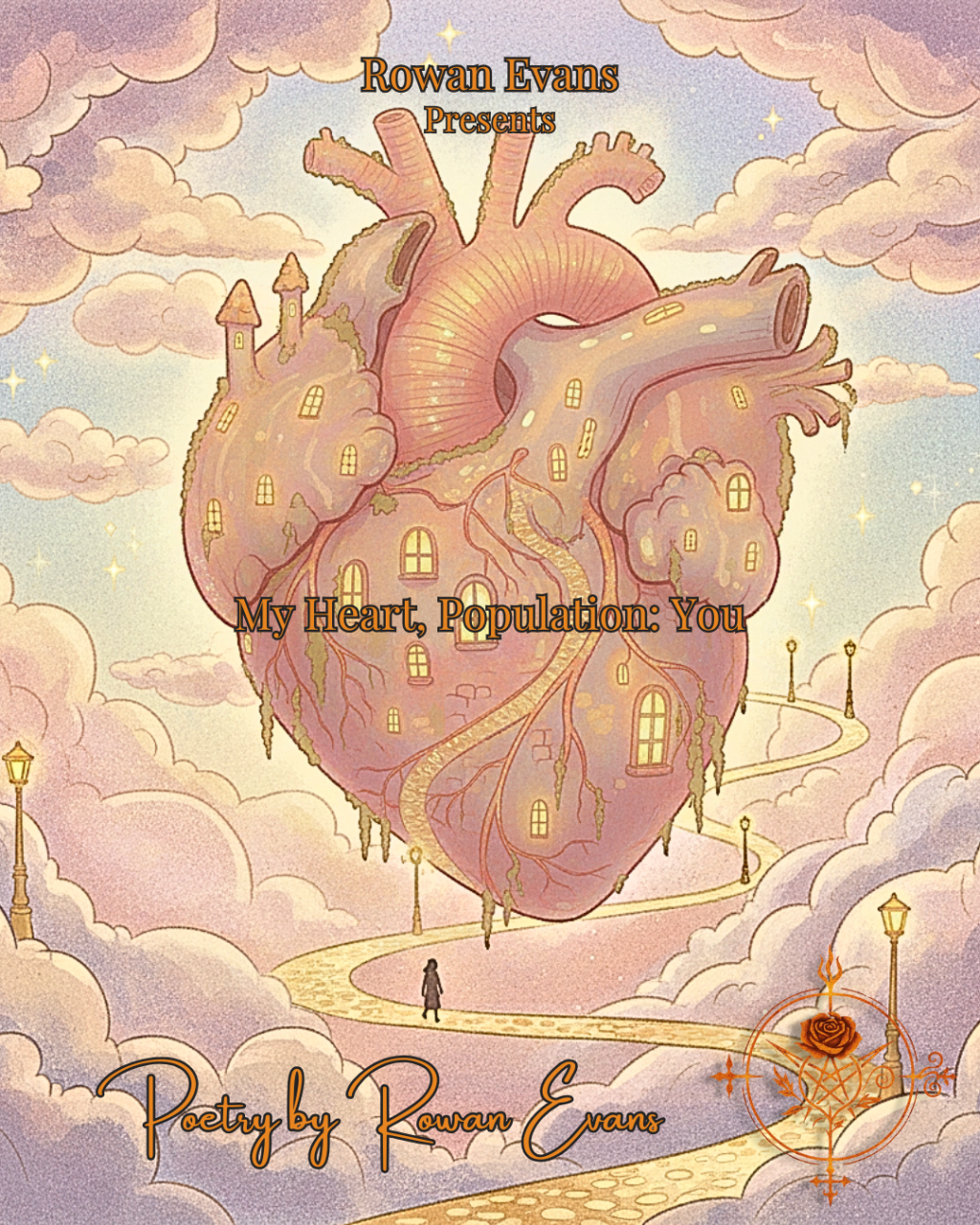
This poem was written in February of last year, during an earlier incarnation of a project that has since transformed into something entirely different. It comes from a gentler season of longing—one where love felt less like fire and more like shelter.
I’m sharing it now not because it fits where I am, but because it still tells the truth of who I’ve been: someone who loves in open doors and soft permanence, someone who believes devotion can be tender.
Some poems don’t belong to the book they were born for.
They belong to the timeline of the heart instead.
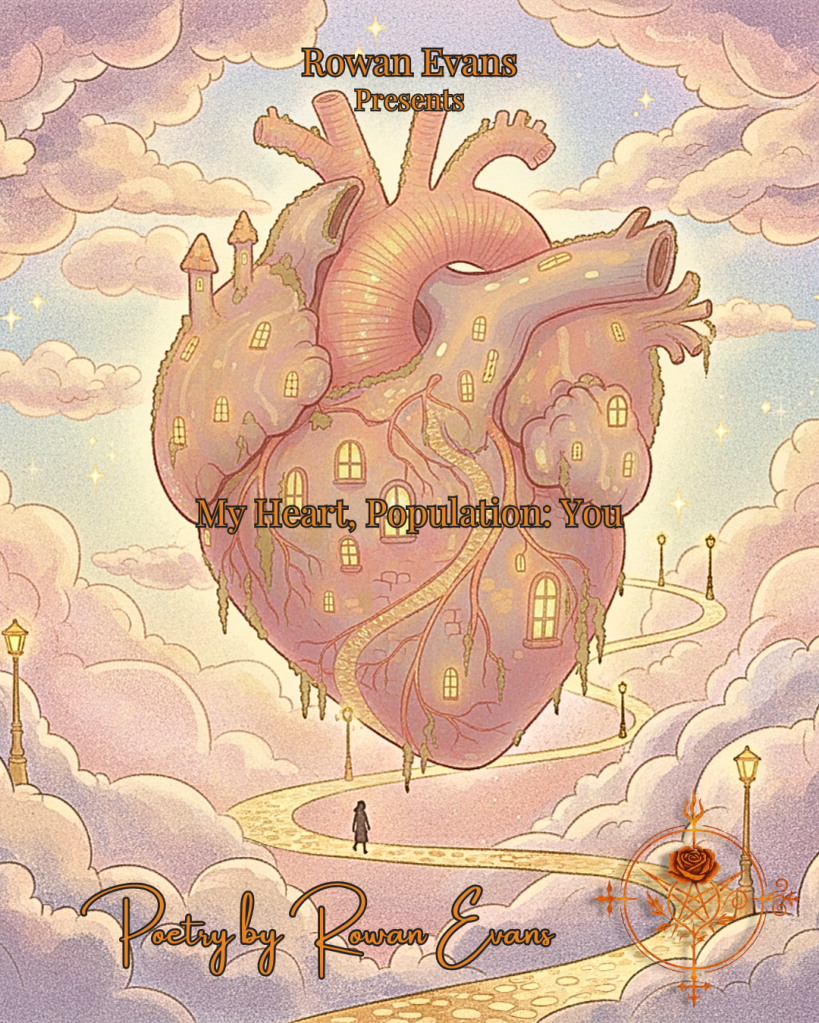
A heart that became a home.
My Heart, Population: You Poetry by Rowan Evans
You wandered in, no map, no key,
Yet claimed this land inside of me.
No walls were built, no toll to pay,
Just open roads that beg you to stay.
Your name’s engraved on every street,
A love so vast, so pure, so sweet.
Like ivy vines, you took your place,
Wrapped every brick in your embrace.
A cityscape of dreams anew,
Each heartbeat whispering of you.
No lease, no debt, no price to weigh,
Yet still, I’d pay in love each day.
A sunlit park where laughter rings,
A chapel where devotion sings.
My heart, once vacant, cold, askew—
Now thrives with life, population: You.
I have been struggling with my lack of cultural identity for a long time. Growing up in the United States, I was told it was a “melting pot,” but it never felt that way. Instead, it seemed like people were forced to abandon their heritage in order to fit into an identity that doesn’t exist. When I ask what “American culture” is, the answers I hear are hamburgers, hot dogs, the 4th of July, and the military. None of that feels like culture to me—only consumerism and violence.
I envy those who have songs, dances, rituals, languages, and stories passed down through generations. I don’t want to take anyone else’s story. I only want to feel the presence of my own. But too often I feel like a ghost wandering through borrowed traditions, searching for a home that doesn’t exist.
This poem is my confession of that ache.
— Rowan Evans
“Searching for roots in the fog of identity.”
Invocation
Come closer, reader— into the hollow where heritage should dwell. Hear the echo of silence, the yearning for roots that never took hold. Witness the ache of a soul adrift in a country that mistook conquest for culture, violence for pride. Step gently— this confession is not just grief, but a longing for home that has no name.
Inheritance of Nothing Poetry by Rowan Evans
I envy the ones whose blood carries stories— whose tongues remember what their ancestors sang in the shadow of temples, at the mouth of rivers.
I watch their rituals unfold, candles passed from hand to hand, dances older than empires, words carved in a language I will never taste. And I ache— not because they have it, but because I don’t.
What was left to me? Fast food wrapped in plastic, holidays gutted of holiness, flags worshipped instead of gods. I was taught to pledge allegiance to violence, to wars I never wanted, to victories built on graves.
My culture is gunfire. My anthem is grief. My inheritance— silence where a song should be.
I drift between borrowed myths, a pilgrim without a shrine, longing for a history that does not dissolve into slogans, or rot under the weight of conquest and forgetting.
I do not want to steal another’s story. I only want to touch my own— to feel it burn in my chest, to know the names of my dead and what they carried for me.
Instead, I stand at the threshold, watching others feast at a table laden with memory and meaning, while I starve on scraps of hamburgers and hot dogs— a parody of belonging.
Tell me, how do I rise from soil that has no roots? How do I call myself home when my home was built on erasure?
Benediction
May those who carry deep roots cherish them with reverence. May those who wander rootless know they are not alone in the ache. And may we who inherit silence still find ways to sing— to build new rituals from longing, to craft belonging from the ruins.
If you would like to check out more of my work, you can find it here… The Library of Ashes

 Poetry by Rowan Evans