Sometimes absence isn’t just being alone. Sometimes it feels like having no body at all.
Nobody² (No Body) Poetry by Rowan Evans
I’m a nobody,
I’ve got nobody.
I’m just a ghost—
I’ve got no body.
[Rose & Ruin] Two minimalist poems exploring the opposing forces within creativity: the thoughts we cultivate into something beautiful and the darker thoughts we transform before they have a chance to decay.
[Conductor] A dark, intimate poem about the strange power words can have over the reader—where rhythm, rhyme, and line breaks become instruments capable of reaching beyond the page.
I’ve always been fascinated by the spaces between things.
Between sleeping and waking.
Between leaving and arriving.
Between being understood and merely being seen.
The famous thought experiment gave me a metaphor, but the poem isn’t really about quantum mechanics.
It’s about perception.
There are moments when I feel as though I exist in two places at once.
One version of me is moving through the ordinary world.
The other exists inside the minds of the people who know me, read my work, remember me, or think about me.
Neither version is false.
They’re simply different ways of existing.
I think writers become especially aware of this.
Our words continue living in places we’ll never visit, meeting people we’ll never meet.
A poem can be read years after it’s written.
A thought can continue existing long after the thinker has moved on.
That creates a strange feeling.
Part of you is always somewhere else.
The final lines carry the emotional truth of the piece.
Not that I cease to exist when no one is looking.
Only that being perceived is one of the ways we feel most alive.
Maybe that’s true for all of us.
Maybe every human being exists in more than one state at once.
The self we know.
And the self that lives in someone else’s memory.
— Rowan Evans
Sometimes existence feels less like certainty and more like possibility.
Schrödinger’s Person Poetry by Rowan Evans
I’m drifting somewhere
in the in-between—
space is liminal here.
This is where people go
to disappear—
you must exist
with the fear.
It’s like I’m here
but I’m not—
I’m somewhere else too.
It’s like I exist—
in two states
at the same time.
I am Schrödinger’s Person.
You see—
that sounds more dramatic
than it is,
I just mean—
when you perceive me
is when I live.
Not that I don’t
without you—
because I do,
but I really don’t want to.
You see—
the two states
I exist in,
here…
and there.
Journey into the Hexverse…
[Returning to My Bones] Some dreams fade the moment we wake. Others leave behind emotions that linger long after reality returns. Returning to My Bones explores the strange grief of leaving a dream that felt real enough to matter.
[Before My Feet Touch the Floor] What happens when your dreams feel more real than your waking life? Before My Feet Touch the Floor explores the strange grief of waking up, the lingering memory of dream selves, and the quiet question of which version of us is truly real.
[Just Beyond Waking] A street that feels familiar. A life that hasn’t happened yet. Just Beyond Waking explores the fragile space between dreams, memory, longing, and the quiet feeling that some futures are already waiting for us.
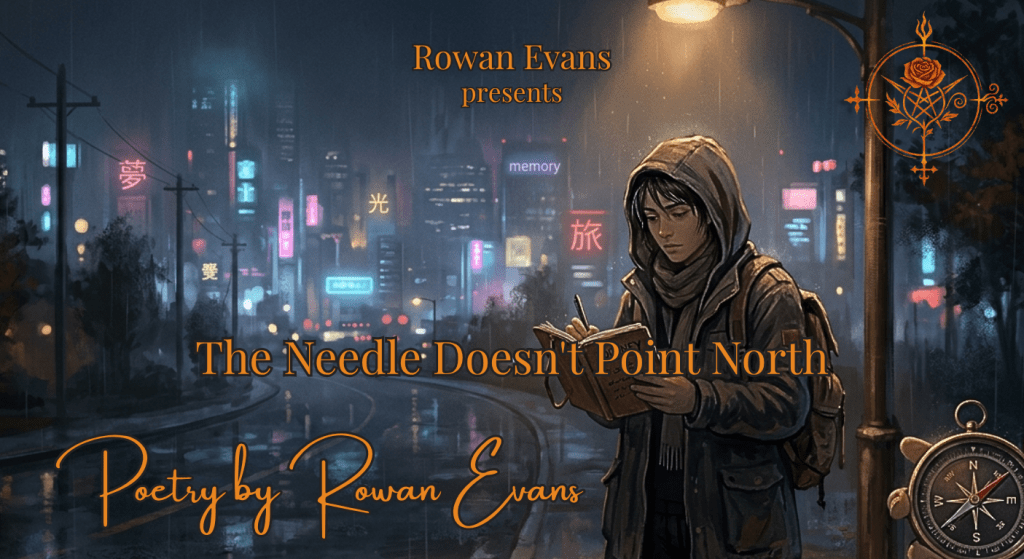
[The Needle Doesn’t Point North] “The Needle Doesn’t Point North” is a deeply personal free verse poem about displacement, identity, and spending a lifetime feeling emotionally disconnected from the place you were born while being drawn toward distant shores.
[The Streets I Walk When I Sleep] “The Streets I Walk When I Sleep” is a deeply intimate free verse poem about recurring dreams, emotional connection, longing across distance, and the strange feeling of remembering places and moments that have never happened in waking life.
[Separate Timelines] “Separate Timelines” is a surreal and deeply introspective free verse poem about emotional distance, time zones, vulnerability, and the fear of losing a connection that already feels meaningful before the words are ever spoken aloud.
a ritual repeated so many times that the people performing it stopped questioning the structure around it.
At first, I thought I was writing horror.
Ancient gods. Sacred chants. A collapsing building.
But somewhere in the middle of the piece, the emotional center shifted.
The horror was no longer the gods returning.
It was what they returned to.
This poem is ultimately about separation—how humanity continuously divides itself into categories, tribes, borders, identities, ideologies, and opposing sides. Not because difference itself is wrong, but because we so often transform difference into distance.
Into hierarchy. Into conflict. Into “us” and “them.”
The gods in this piece are intentionally left undescribed because they are less important as individuals and more important as witnesses. They remember humanity before those divisions hardened into walls.
Before labels stopped being descriptive and started becoming weapons.
And importantly: this piece is not arguing against culture, identity, language, or individuality. Those differences are part of what make humanity beautiful. The tragedy is not diversity—it’s disconnection.
The collapse in this poem is symbolic.
Not the destruction of difference, but the destruction of the structures that keep people separated from one another.
And beneath all the mythology, rituals, and ancient imagery, there is a quieter question lingering underneath it all:
What would humanity look like if we learned to see each other before the labels again?
— Rowan Evans
The horror was never the gods returning—it was the world they returned to.
Before We Created the Labels Poetry by Rowan Evans
Each footstep
echoed through the dark,
the only sound
to pierce the veil of silence.
One by one,
they filed into the room—
each taking their place,
as though they’d done this
a thousand times.
As the final of the covenant
found their mark—
they began to chant
in ancient tongues.
Languages of old,
long forgotten to the world.
The air in the room
began to change—
and it wasn’t humidity’s game.
A presence became clear,
even with no form to see.
Their chants continue
in a sacred chorus,
as they call
ancient gods forth.
Air shimmered
and walls shook,
foundation cracks—
and the air
grew thicker still.
Voices grew quiet,
the chanting fading low—
wood creaks,
cracks expand.
The room filled
with whispers,
voices from everywhere
and nowhere—
all at one time.
As the whispers
grew in volume,
becoming booming
shouts.
Buildings shook,
foundations shifted
and the ground
gives out.
Fear filled—
eyes of the covenant.
A ritual done
a thousand times,
and a thousand times
the gods would come—
a sacrifice would be made,
but the rules had changed.
The building
begins to come down,
as the covenant runs out.
Now, the gods unconfined—
can see the world
they left behind,
for the first time.
It wasn’t with judgement—
it was grief,
because they saw the cracks
and fractures,
the tragic divides.
They remember a time,
when their creation—
was all one.
Before we created
the labels to divide.
As they looked around
at what the world
had become—
a series of lines
separating sides.
Journey into the Hexverse…
[The Unkindness Descends] “The Unkindness Descends” is a Gothic symbolic poem exploring collapse, transformation, and the unsettling experience of being witnessed during moments of unraveling. Through raven imagery, ambiguity, and ritualistic atmosphere, the poem invites multiple interpretations—spiritual, psychological, ominous, or transformative.
[I Write Cathedrals] “I Write Cathedrals” explores faith, doubt, belonging, and the search for meaning beyond certainty. Through Gothic spiritual imagery and confessional reflection, the poem examines how writing can become a sacred space for questioning, wonder, and the people who feel displaced by traditional structures of belief.
[Drought Resistant] “Drought Resistant” is a confessional poem about growing up poor in California’s Central Valley—where triple-digit heat, EBT cycles, dry ramen, and hard landscapes become part of emotional memory. Blending humor, slang, and working-class reflection, the poem explores survival, regional identity, and complicated love for the place that shaped you.
[Escaped to the Page] “Escaped to the Page” is a confessional meta-poem about individuality, artistic identity, and surviving through writing. Blending sharp confidence with emotional vulnerability, the poem explores the difference between shared labels and lived experience—and the ways art becomes inseparable from the life behind it.
[Ink as a Second Mouth] “Ink as a Second Mouth” explores the distance between thought and speech, and the ways writing can become a form of survival, continuity, and self-translation. Through confessional imagery and reflections on growth, identity, and articulation, the poem examines what it means to keep becoming through language.
a person kneeling on broken marble while ravens circled overhead.
From there, the symbolism unfolded naturally.
Ravens have carried countless meanings across cultures and mythologies throughout history. Omens. Messengers. Witnesses. Archivists of the dead. Harbingers of transformation. Keepers of memory. In some traditions they are feared. In others, revered.
I didn’t want to narrow them down to one interpretation here.
What interested me more was the tension between collapse and observation—the feeling of being seen during moments of unraveling, and the uncertainty of whether those watching forces are condemning you, mourning you, studying you, guiding you, or simply recording what happened.
That’s why the poem never fully explains the ravens.
Even the collective noun “unkindness” became important to me while writing. It carries two meanings at once: a literal group of ravens, and the emotional atmosphere surrounding the speaker. The word itself becomes part of the tension.
By the end of the piece, the ravens remain unresolved intentionally.
They part. They watch. They follow.
Whether that final image feels threatening, protective, spiritual, psychological, or transformative depends almost entirely on how the reader chooses to see them.
And I think that uncertainty is the point.
— Rowan Evans
They descended like witnesses—whether to condemn, mourn, guide, or remember was never made clear.
The Unkindness Descends Poetry by Rowan Evans
I kneel on broken marble,
the unkindness circling overhead.
Ravens watching as I come undone.
Witnesses to my fall,
the ravens land—
one by one,
the unkindness descends
upon me.
I am lost in the black mass—
wing and feather flapping
as ravens move to circle me.
My eyes scanned the ravens
as they surrounded me,
each uttered something—
a word, a message.
Perhaps, it was a lesson?
Maybe I read it all wrong,
and they were just keeping record—
witnesses to my collapse.
I rose to my feet.
The ravens watched me.
I moved.
They parted
like the Red Sea.
Each step forward,
their eyes traced my path.
As I moved through,
they closed in behind me.
Following.
Journey into the Hexverse…
[I Write Cathedrals] “I Write Cathedrals” explores faith, doubt, belonging, and the search for meaning beyond certainty. Through Gothic spiritual imagery and confessional reflection, the poem examines how writing can become a sacred space for questioning, wonder, and the people who feel displaced by traditional structures of belief.
[Drought Resistant] “Drought Resistant” is a confessional poem about growing up poor in California’s Central Valley—where triple-digit heat, EBT cycles, dry ramen, and hard landscapes become part of emotional memory. Blending humor, slang, and working-class reflection, the poem explores survival, regional identity, and complicated love for the place that shaped you.
[Escaped to the Page] “Escaped to the Page” is a confessional meta-poem about individuality, artistic identity, and surviving through writing. Blending sharp confidence with emotional vulnerability, the poem explores the difference between shared labels and lived experience—and the ways art becomes inseparable from the life behind it.
[Ink as a Second Mouth] “Ink as a Second Mouth” explores the distance between thought and speech, and the ways writing can become a form of survival, continuity, and self-translation. Through confessional imagery and reflections on growth, identity, and articulation, the poem examines what it means to keep becoming through language.
It’s about the difference between faith and certainty.
Growing up around religion, I was often taught belief through absolutes. Questions were treated like weakness sometimes, uncertainty treated like danger. But the older I got, the more I realized that questioning was never the opposite of spirituality for me—it was part of it.
Because if faith exists in the absence of proof, then certainty and faith cannot fully occupy the same space. Certainty closes the door. Faith leaves room for the unknown.
That tension shaped this poem.
Over time, I stopped seeing writing as separate from spirituality. The language changed, the framework changed, but the emotional instinct remained the same. I still seek meaning. I still seek connection. I still seek reverence. I just no longer place those things exclusively inside organized religion.
That’s where the cathedral imagery comes from.
When I say “I write cathedrals,” I mean that poetry became the place where I rebuilt my sense of the sacred. Not through doctrine, but through honesty. Through confession. Through empathy. Through creating spaces where brokenness doesn’t disqualify someone from belonging.
The “sacred misfits” and “luminous heretics” in this piece are the people who exist outside easy categorization. The people who question. The people who feel spiritually displaced. The people who were told they were too much, too different, too doubtful, too strange to belong cleanly inside traditional structures.
This poem is for them too.
And ultimately, this piece isn’t arguing that one worldview is more beautiful than another. In fact, one of the most important lines to me is:
“Both are beautiful.”
Because whether someone sees divine creation or cosmic coincidence, I still think wonder itself matters.
Wonder is sacred enough for me.
— Rowan Evans
If faith leaves room for the unknown, then poetry became the place where I learned to live inside the questions.
I Write Cathedrals Poetry by Rowan Evans
I used to pray in churches,
now I write cathedrals
with broken compass needles
dipped in ink—
the direction they point
ought to make you think.
In church they say
faith is necessary—
but they talked
with such certainty.
It never made sense to me.
Faith is the belief
in the absence of evidence.
Certainty and faith,
cannot co-exist.
They contradict.
I had questions—
about faith,
about belonging.
Was I wrong
for longing—
for asking for more?
They said I should be grateful
for scraps on the floor.
Miracles. Where?
I didn’t see the proof anymore,
didn’t have faith in what I missed.
And if you believe?
That’s fine—
your journey, isn’t mine.
Just don’t push
your faith on me.
You look around,
see God’s creation.
I look around
at a series of
happy accidents.
Both are beautiful.
You can continue
to pray in your churches,
I’ll continue penning cathedrals—
building altars
to the broken and forgotten,
the outcast just like me.
Sacred misfits,
and the luminous heretics—
all are welcome here.
Journey into the Hexverse…
[Drought Resistant] “Drought Resistant” is a confessional poem about growing up poor in California’s Central Valley—where triple-digit heat, EBT cycles, dry ramen, and hard landscapes become part of emotional memory. Blending humor, slang, and working-class reflection, the poem explores survival, regional identity, and complicated love for the place that shaped you.
[Escaped to the Page] “Escaped to the Page” is a confessional meta-poem about individuality, artistic identity, and surviving through writing. Blending sharp confidence with emotional vulnerability, the poem explores the difference between shared labels and lived experience—and the ways art becomes inseparable from the life behind it.
[Ink as a Second Mouth] “Ink as a Second Mouth” explores the distance between thought and speech, and the ways writing can become a form of survival, continuity, and self-translation. Through confessional imagery and reflections on growth, identity, and articulation, the poem examines what it means to keep becoming through language.0
I’ve been writing versions of this poem since I was a teenager, long before I had the language to understand what I was actually trying to say.
Back then, people treated it like escapism. Wanderlust. Fantasy. A phase.
But there’s a difference between wanting to travel and feeling fundamentally misaligned with the place you were born into.
This piece isn’t about hating where I’m from. It’s about disconnection — about spending most of your life emotionally out of sync with the environment around you, while feeling an inexplicable, almost gravitational pull toward places you’ve never physically been.
For years, I hid that truth behind metaphor. Tokyo alleyways. Neon lights. Foreign streets. Airports. Oceans. Other languages drifting through the background. It was easier to let imagery speak for me than to say the thing outright.
This poem is me pulling the mask off a little.
Not to be dramatic.
Just honest.
Because after long enough, recurring imagery stops being aesthetic and starts becoming evidence.
And maybe that’s what poetry has always been for me:
A compass trying to explain itself.
— Rowan Evans
I was born here. But somewhere along the way, my compass started pointing elsewhere.
The Needle Doesn’t Point North Poetry by Rowan Evans
I have been sitting with this
for most of my life.
I’ve talked about it before.
I’ve written it,
more times than I can count—
since I was fourteen
I’ve wanted out.
I was told,
“it’s a kid’s fantasy,”
just a phase I’d outgrow.
But here I am at thirty-six,
still dreaming of distant shores.
The soil may have shifted
over the years,
but the pull remained the same.
Growing up
with this feeling stuck
in the pit of my gut,
do you know what that’s like?
To never feel like you fit,
always out of place.
But everyone around you
doesn’t see it—
they see a teen
being difficult,
notebook clutched
with plans
scribbled inside.
These weren’t just poems—
they were escape routes
written in code,
only I could read.
I wrote about Tokyo’s streets
and walking through alleyways—
masked in metaphors,
buried in similes—
I’ve written about Beijing,
and Shanghai,
with nocturnal trips
to Seoul.
But I’ve never
said it so plain.
I was born here,
so I’m from here—
but I don’t feel connected,
I’m not of here.
American mouth,
global mind—
been this way
since seventeen.
Shh—
I went quiet,
but the fire
wasn’t silent.
I could hear it speak,
it was urging me.
Eighteen came and went,
nineteen too.
I could still feel
the pull—
but it was different now.
Deeper.
Stronger.
More mature.
Twenty, twenty-one,
twenty-two, twenty-three—
four more years,
still stuck.
Not trapped.
New destination appeared—
and it’s been the same since.
I’ve said it before,
the needle
doesn’t point north—
body in the west,
puso sa silangan.
Journey into the Hexverse…
[Weather in My Chest] “Weather in My Chest” is a free verse poem about emotional hyperawareness, social tension, and the quiet experience of carrying internal storms into rooms that react before a single word is spoken.
[Sound as a Vessel] “Sound as a Vessel” is a free verse poem about music as emotional architecture, exploring how international artists and soundscapes shaped identity, creativity, memory, and poetic voice.
[Just Knowing You Has Been Enough] “Just Knowing You Has Been Enough” is a deeply vulnerable free verse poem about unspoken love, emotional fear, coded confessions, and the quiet truth of caring for someone without needing perfection in return.
[The Streets I Walk When I Sleep] “The Streets I Walk When I Sleep” is a deeply intimate free verse poem about recurring dreams, emotional connection, longing across distance, and the strange feeling of remembering places and moments that have never happened in waking life.
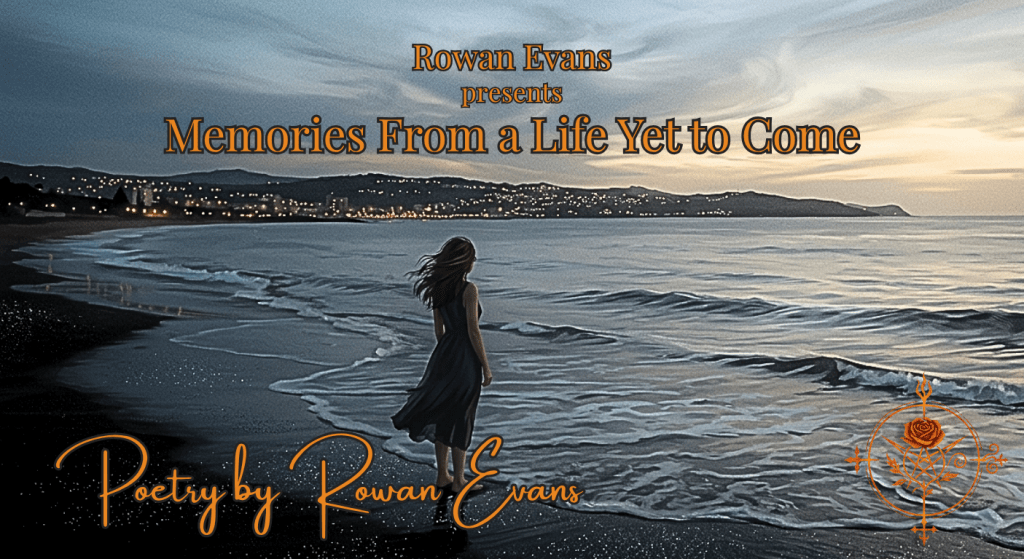
[Memories From a Life Yet to Come] Some dreams feel less like fantasy and more like memory. “Memories From a Life Yet to Come” is a reflective free verse poem about longing, displacement, emotional alignment, and the strange comfort of recognizing yourself more clearly in dreams than in waking life
[Separate Timelines] “Separate Timelines” is a surreal and deeply introspective free verse poem about emotional distance, time zones, vulnerability, and the fear of losing a connection that already feels meaningful before the words are ever spoken aloud.
Some dreams feel less like fantasy and more like memory.
Not literal memory—something stranger than that.
A feeling. A pull. A version of yourself that already exists somewhere ahead of you, waiting to be caught up to.
I’ve written a lot about displacement, longing, and feeling emotionally out of sync with the place I was born into. But this piece isn’t rooted in resentment. It’s quieter than that.
This poem came from the feeling of seeing glimpses of alignment before you’ve fully arrived there yet.
The strange comfort of closing your eyes and feeling more connected to yourself in dreams than you do while awake.
Not because sleep is escape— but because sometimes dreams reveal the shape of what your heart has been reaching toward all along.
— Rowan Evans
Some places feel familiar long before we ever arrive there.
Memories From a Life Yet to Come Poetry by Rowan Evans
I close my eyes—
hear the crashing waves,
taste the salt on my lips,
feel the wind in my hair.
I feel like I’m floating—
even lying in bed.
When I close my eyes—
I travel in my head.
It’s like I remember things
I haven’t lived yet.
Memories from a life
yet to come.
I see the life
I want to lead,
while I live the life
I want to leave.
Not because I hate it.
I’m just misaligned.
A little off-center,
a little out of sync.
It’s like I follow the waves,
because I was never meant
for this shore.
Awake is the nightmare,
asleep is when I open my eyes,
and I can see the streets—
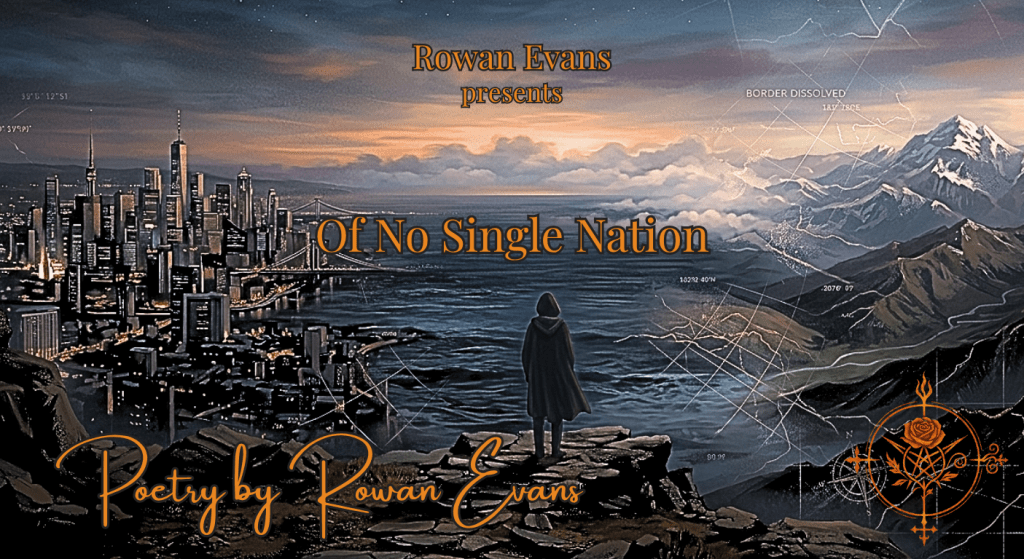
Not in a rejection of place—but in a quiet understanding that identity doesn’t always root itself in geography. That sometimes, belonging isn’t tied to land, language, or nationality… but to connection.
To the people who make you feel understood. To the moments where distance doesn’t matter as much as recognition.
This piece comes from that perspective.
From existing in between—carrying pieces of different cultures, different influences, different ways of seeing the world, without feeling the need to choose just one.
Not unrooted.
Just… rooted differently.
— Rowan Evans
Some people aren’t rooted in places—they’re rooted in connection.
Of No Single Nation Poetry by Rowan Evans
I am of global mind—
I claim no nation as mine.
My empathy stretches
beyond borders,
past the fences people build
to feel safe.
Because I learned early
that home is not a place
you inherit.
It’s something you find
in the people
who make your chest
feel less heavy.
I was never meant
to fit inside a flag.
My heart speaks
in borrowed languages,
my belonging scattered
across timelines
and skylines
I haven’t touched yet.
I will continue
reaching for anyone
who feels unrooted,
unclaimed,
unbelonging.
Maybe that’s why
I recognize myself
in strangers
more than in the soil
I was born on.
There’s a strange kind of disorientation that comes from feeling like your life should make sense… but doesn’t.
Like you missed a chapter. Or something important got cut before you ever had the chance to understand it.
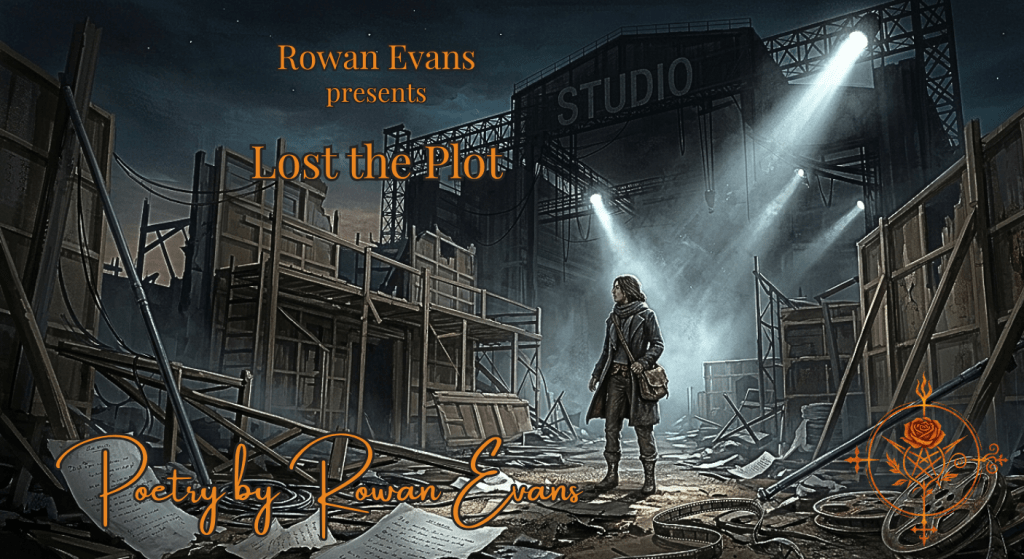
Lost the Plot leans into that feeling–but not just on a personal level. It questions what happens when the narrative itself isn’t entirely yours. When the direction shifts, not because it should… but because something behind the scenes decided it needed to.
We’re often told that confusion is internal. That if we feel lost, it’s something we need to fix within ourselves.
But what if part of that feeling comes from the story constantly being rewritten? From forces we don’t see, shaping outcomes we’re expected to accept?
This piece sits in that space–between personal disconnection and a growing awareness the “plot” might not be as natural as it seems.
Sometimes it’s not that you lost your way.
Sometimes… the story changed without you.
— Rowan Evans
What happens when the story isn’t yours anymore?
Lost the Plot Poetry by Rowan Evans
I feel like I’ve been
getting lost a lot lately.
Like I’ve forgotten
who I was,
who I am—
who I was becoming.
I’m feeling like
I’ve lost the plot,
like the studio
lost the reel
that we shot.
No longer
can I see
where I began.
We got cancelled
before we
got going.
We never saw an end.
But we weren’t
cancelled because of
interest.
We were cancelled
because the studio
got scared.
Ratings were good.
The audience cared.
But they cared too much.
It was causing
connection,
so the studio
had to change
direction.
The studio,
needs the divide—
keeps people
scared and wide-eyed.
So there’s always
someone—
to point to,
to name as the bad guy.
The boogeyman.
So we look to the stars,
as if they could solve
the problems.
As if it wasn’t
the studio—
the writer’s room
behind every decision.
It was them—
in the writer’s room,
rewriting endings
we never got to reach.
Ratings be damned.
The show goes on—
we just don’t
exist in it anymore.
Journey into the Hexverse!
[Another Fire] A powerful poem exploring global chaos, systemic inequality, and emotional exhaustion in a world where conflict grows faster than it can be understood.
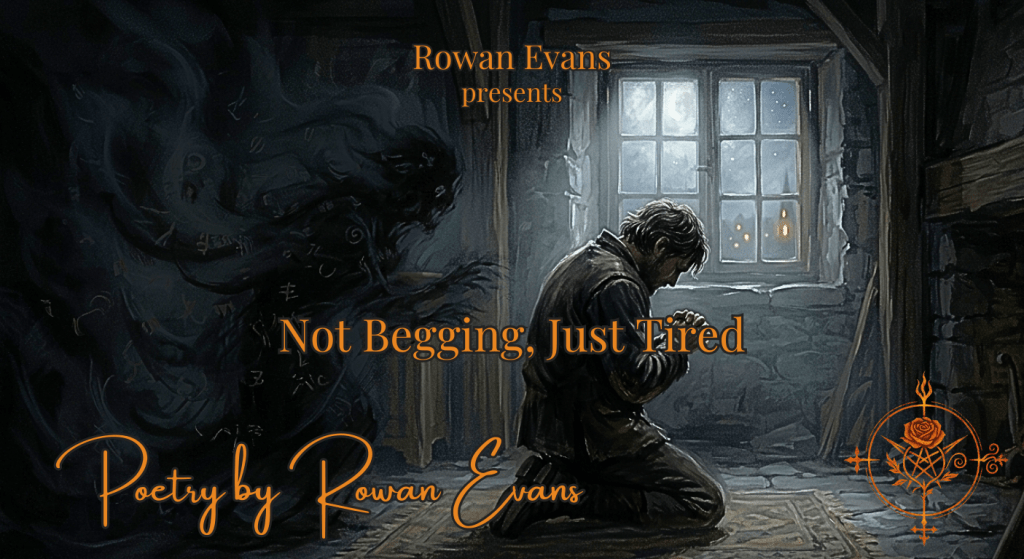
Not Begging, Just Tired lives in that quiet space between breaking and continuing.
This piece isn’t about giving up–it’s about what comes after the questions, when certainty fades and all that’s left is awareness. It explores the tension between faith and doubt, between the voice that offers an easy escape and the part of us that still chooses to struggle, to grow, to stay human.
There’s a kind of exhaustion that doesn’t come from weakness, but from enduring–feeling everything, questioning everything, and still moving forward without clear answers. This poem sits in that space.
It’s not a resolution. It’s not a victory.
It’s a choice.
To stay.
— Rowan Evans
Not begging—just tired, and still choosing to stay.
Not Begging, Just Tired Poetry by Rowan Evans
I’m on my knees again,
begging—please again.
My brain freezes,
and I get lost within.
Confronting sins.
Am I who I want to be?
I mean it—truthfully.
Am I exactly who I want to be,
or just who I became?
And the devil whispers…
He speaks to me,
I hear him clearly.
He says he’ll set me free—
no need to beg or plead.
But I don’t want ease.
It’s the challenge I need.
What comes easily
is never worth the cost.
What’s a dream
if it means
you lose your humanity?
God… if you’re listening—
can you hear me whispering?
I’m not begging,
I won’t plead,
but I’m getting tired
of having to bleed.
I’ll be honest—
I’m not sure if you’re real,
but I think I used to feel you
when things got too heavy,
when life felt a little too rough.
Back before
life kind of fucked me up.
There’s always
a before and an after.
Before—there was laughter.
But that was last chapter.
This one’s been
a little too heavy.
To leave?
I’ve been a little too ready.
I don’t mean
leave permanently—
I just want to be
in a different scene.
Somewhere I don’t feel
at home through a screen.
Have you felt
out of place
in a place
that was supposed
to be your home?
And still—
you felt alone…
Not in a way
that filled you with despair,
but in a way
that made you more aware.
I’m not begging—
just tired…
and still choosing
to stay.
[Calculating Profits] Calculating Profits (Ledger of Lives) is a raw anti-war poem confronting how modern conflict is often reduced to statistics, strategy, and spectacle. Through stark imagery and direct language, Rowan Evans challenges the “us vs. them” narrative and reminds readers that behind every number in war’s ledger is a human life.