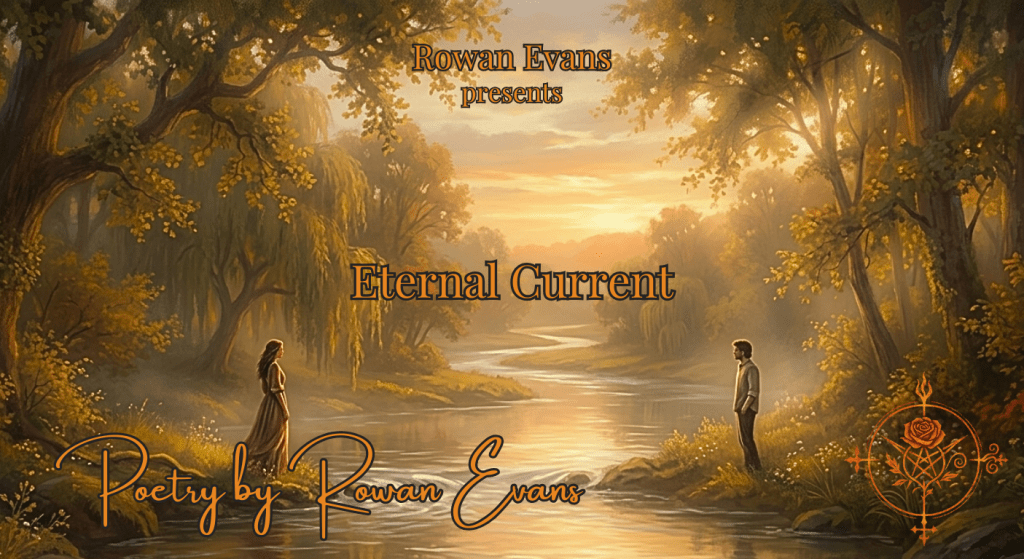
This poem was written on February 17th, 2025. It explores the quiet, unspoken moments that carry immense depth – the small gestures, the glances, the eternal connection that flows between two hearts. Inspired by fleeting yet timeless intimacy, it is meant to capture love as both gentle and vast, like a river that carries everything along its current.
— Rowan Evans
Eternal Current – love that flows timelessly, like water through the heart.
Eternal Current Poetry by Rowan Evans (written February 17th, 2025)
A gasp, a sigh— a whisper low, your eyes shine, with sun and moon’s glow. A touch, a flame, a silent truth, and the world fades when I see you.
Promises carved in midnight skies, where the heart beats once, but never dies. This love, like a river— endless, wide, where two souls drift, forever entwined.
Sometimes a place stops feeling like home long before you actually leave it. The streets still know your name, but something in you has already begun drifting toward another horizon.
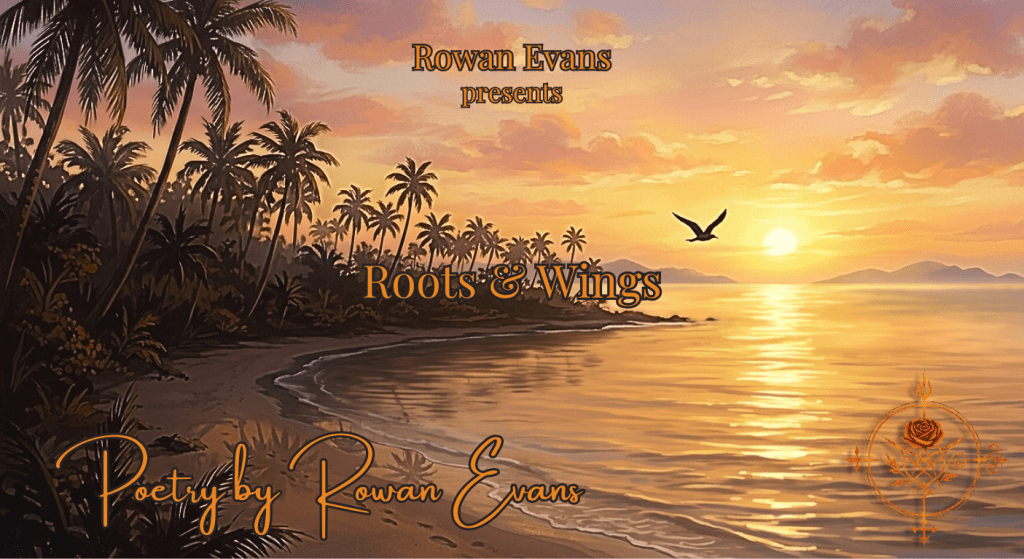
This poem came from that feeling – the quiet moment you realize your roots are no longer meant for the soil you’re standing in. It’s not always about running away; sometimes it’s about allowing yourself to grow somewhere new.
Roots & Wings sits in that space between leaving and becoming. Between the life that shaped you and the one waiting somewhere beyond the horizon.
We carry out roots with us, even when we learn how to fly.
— Rowan Evans
Sometimes growth means planting new roots—and trusting your wings to find the horizon.
Roots & Wings Poetry by Rowan Evans (written February 18th, 2025)
These streets whisper my name, but I no longer listen,
my roots ache for softer soil, where the sun glistens.
I’ll plant myself where the palms embrace the sea,
then let the wind carry what’s left of me—
a bird unbound, chasing horizons yet unseen.
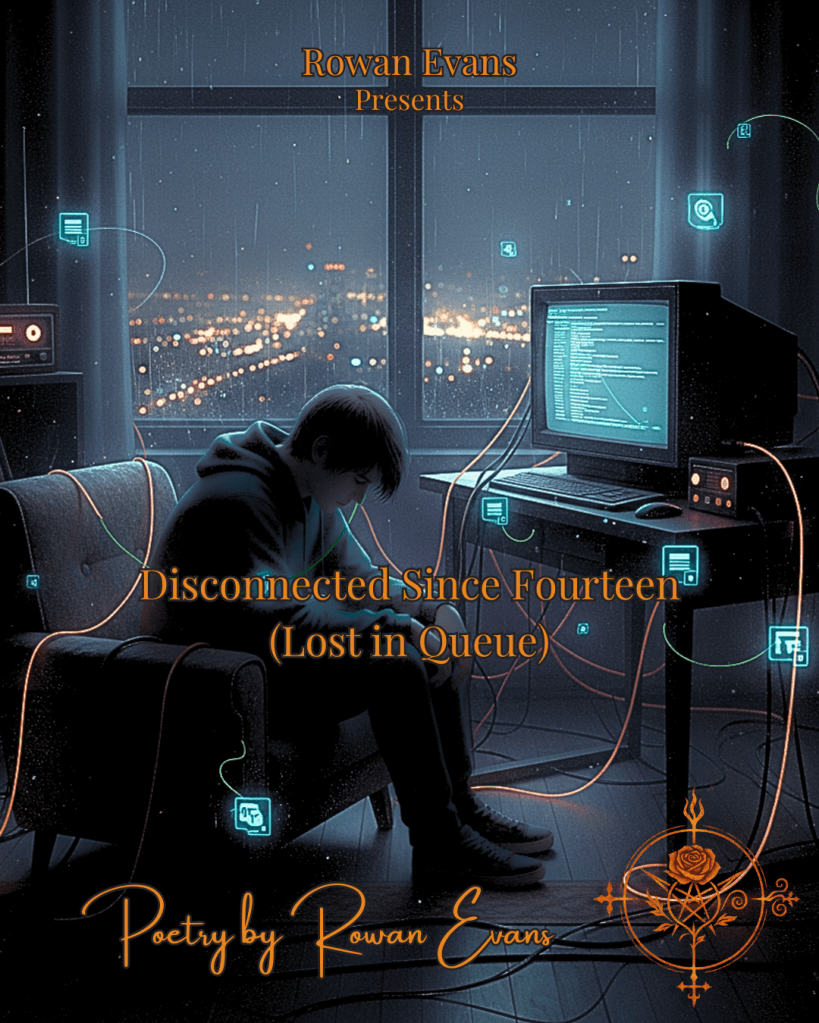
This poem traces the moment when disconnection stopped being temporary and started feeling structural. At fourteen, I didn’t just feel out of place—I felt offline. Like my signal never quite reached the world I was standing in.
The language of technology felt like the closest mirror for that experience: dropped signals, endless queues, systems that never respond. This isn’t nostalgia, and it isn’t blame—it’s recognition. Naming the feeling that followed me for years before I understood what it was.
Some people search for belonging. Some of us search for a connection that was never stable to begin with.
— Rowan Evans
Some disconnections start early—and never fully resolve.
Disconnected Since Fourteen (Lost in Queue) Poetry by Rowan Evans
I used to sit alone, lost in thoughts of far off places—far from… home.
I’d write about every one, write about them in my… poems.
The way longing bled into art, art bled the words from my heart. It was the truth spilling— feeling homeless, since I was fourteen.
Felt disconnected, like the Wi-Fi dropped. Mind static, dramatic, screaming like… dial-up.
Trying to connect to somewhere that never answers. Server overloaded, lost in queue— endless, connection loop.
I do not belong here. Everything feels wrong here.
Not the physical kind, but the kind you build over years of showing up — writing through doubt, through silence, through the versions of yourself that didn’t yet know how strong they were becoming.
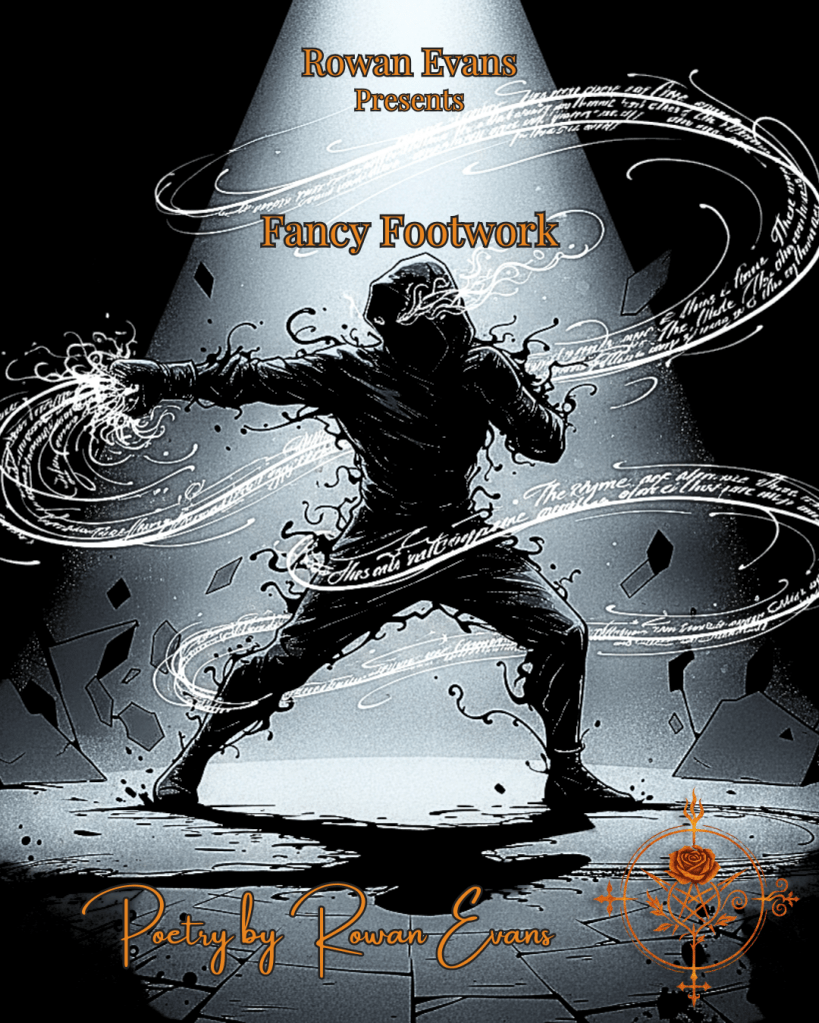
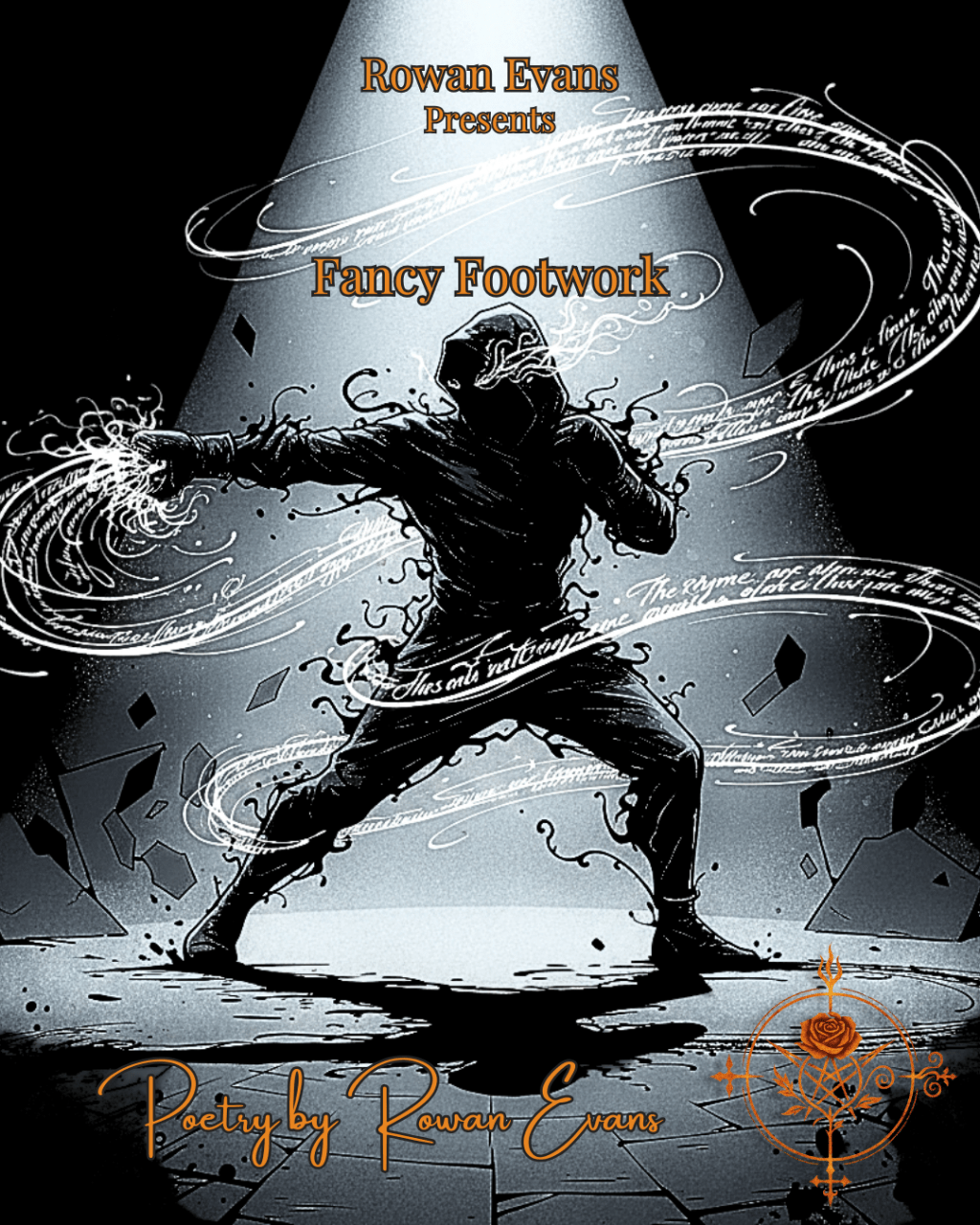
Fancy Footwork uses boxing as metaphor, but the real fight happens on the page and in the mind. Every dodge, every feint, every combination comes from long preparation — from learning how to move with intention instead of panic.
This isn’t bravado. It’s recognition.
Twenty-three years of practice doesn’t look like luck. It looks like instinct.
— Rowan Evans
Writing is muscle memory — every move learned, every strike intentional.
Fancy Footwork Poetry by Rowan Evans
When I put pen to paper,
my ink becomes a cage
on the page
the way I write bars.
Yeah, my ink flows—
it floats
like a butterfly,
stings like a bee.
Hit you with that
one, two and three.
Right jab, left hook—
followed by an uppercut.
It’s fancy footwork,
the way my ink glides
and slides across the page.
It’s a dance,
choreographed—
every line precise.
I duck,
slip, dodge
and throw a feint.
Misdirect,
then change direction,
onslaught,
raining fists.
Watching everyone
that considers themselves
opposition—
losing their minds,
as I
continue to gain
position.
They aren’t even
competition.
Nobody will
stop me
on my ascension.
Eyes focused
on the mission.
I will climb the ladder
one rung at a time.
Watch my ranking rise,
win after win,
fight after fight—
see the smile on my face?
This is
my championship chase,
I will claim
the top place.
I’ve been preparing for this
for twenty-three years.
Shadowboxing
inside the lines,
it was me
versus my mind.
I was—
hitting the gym,
testing reflexes
building the instinct,
to move
the way poetry flows.
Movement so quick,
I hit like a flash—
every jab,
lands like prose.
I’ve always treated birthdays less like milestones and more like ceremonial thresholds—moments to shed a skin, laugh at the ghosts behind me, and step forward with intention. Funeral for a Thirty-Six-Year-Old isn’t about mourning age; it’s about staging its death so something sharper, freer, and more self-aware can take its place.
Thirty-six feels less like getting older and more like arriving. I’m no longer interested in quiet gratitude or graceful humility—I wanted pageantry, drama, and a little irreverence. This piece is me honoring survival with style, embracing the absurdity of time, and celebrating the fact that I’m still here, still dangerous, still writing.
If this is a funeral, it’s one where the guest of honor very much refuses to stay dead.
Thirty-six isn’t an ending—it’s a resurrection with better lighting.
Funeral for a Thirty-Six-Year-Old Poetry by Rowan Evans
I rise from my velvet coffin,
for birthdays are sacred rituals of vanity,
thirty-six too perfect for a quiet exit.
Cobwebs kiss my ankles
as I stride the mausoleum of my life,
counting skeletons I’ve danced with
and candles I’ve lit in the name of style.
The moon winks at me through shattered panes,
celestial bodies admire
a drama queen in full bloom—
not wilted, not weary, theatrically immortal.
I sip absinthe from a skull-shaped chalice,
grinning at the reaper waiting impatiently,
his scythe tapping to the rhythm of my heartbeat—
shrug. He’s never been my type.
Mirrors whisper secrets of my youthful decay,
I laugh—lines are suggestions,
wrinkles invitations to flair,
every grey hair a medal for surviving
without losing my mind… entirely.
Birthday cake, molten lava,
frosted with sarcasm, glittering regrets.
I devour it with a ceremonial fork,
toasting myself—
who else deserves this gothic pageantry?
The clock ticks, and I bow to time,
not in surrender, but in acknowledgment:
I am older, wiser, and infinitely more unhinged.
let the world tremble at my theatricality—
I have arrived.
Candles gutter. Shadows shiver.
In the mirror’s reflection, I wink—
thirty-six has never looked this dangerous,
this decadent, this deliciously insane.
This poem started as a challenge to myself — a moment of curiosity and play. I wanted to see if I could weave a constellation of K-pop references into a poem without losing sincerity, rhythm, or heart.
But somewhere along the way, it stopped being about references at all.
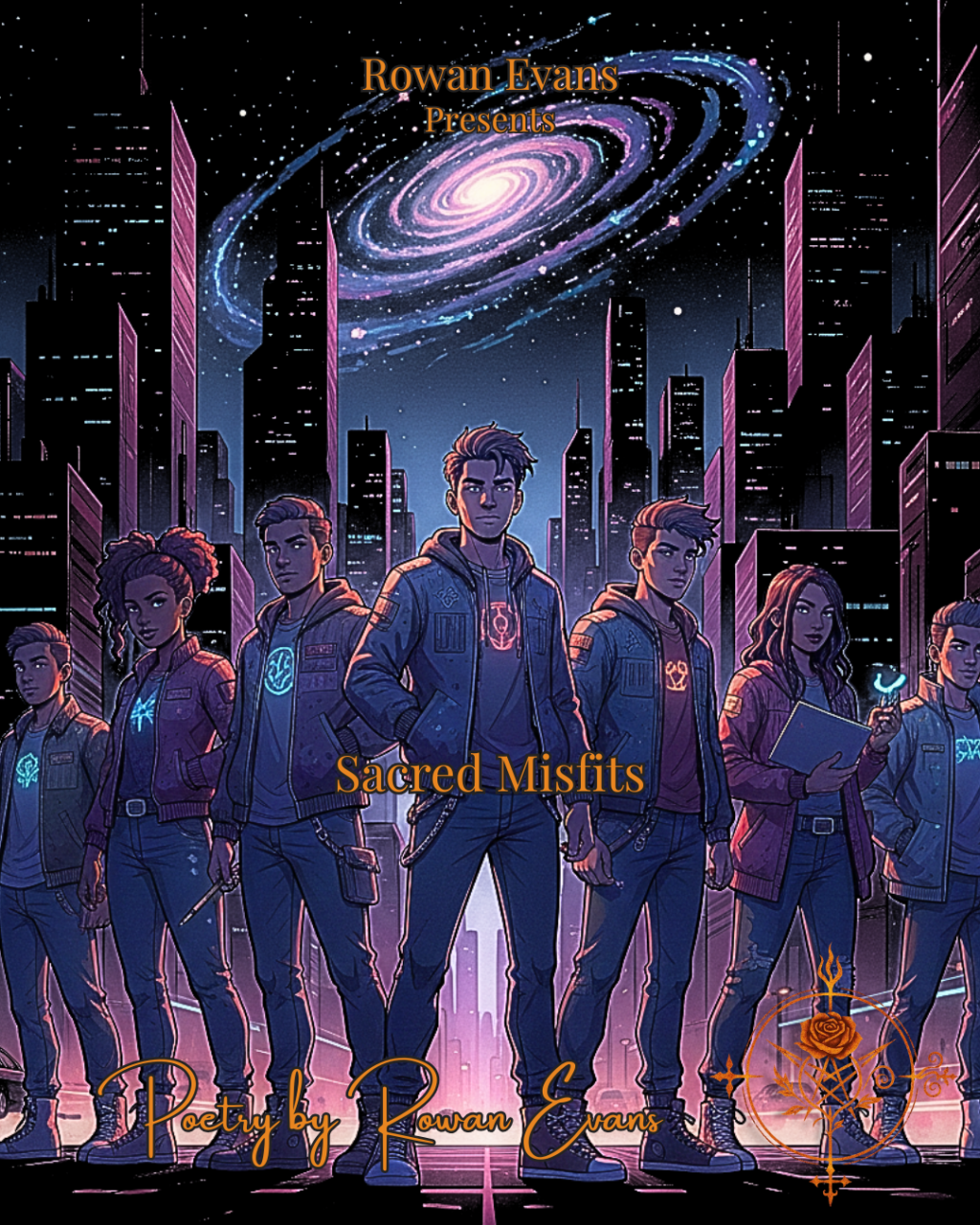
This piece became a quiet dedication to the outsiders, the ones who move differently, create loudly, and refuse to shrink themselves for comfort. It’s about lineage — musical, creative, generational — and about writing for the people who don’t quite fit the mold, but keep building their own anyway.
This poem is for the misfits, the monsters, the ones finding their voice and stomping forward unapologetically.
For the outsiders, the monsters, and everyone bold enough to carve their own lane.
Sacred Misfits Poetry by Rowan Evans
When I write universes are created, every stanza a BIGBANG.
It’s no Secret, why I write so fast. This is real life, no special f(x)— pen to paper, a masterpiece in 4Minutes flat.
I’ve written poems to inspire women. To show them they’re all Wonder Girls.
Because I truly believe this is a— Girls’ Generation.
I’ve been doing this for a long time. I’ve been doing this since before I was 2NE1.
Now I write for the Stray Kids, the sacred misfits— and every outcast, made to shrink.
I write for the BABYMONSTERs, the big stompers— and anyone paving their own lane.
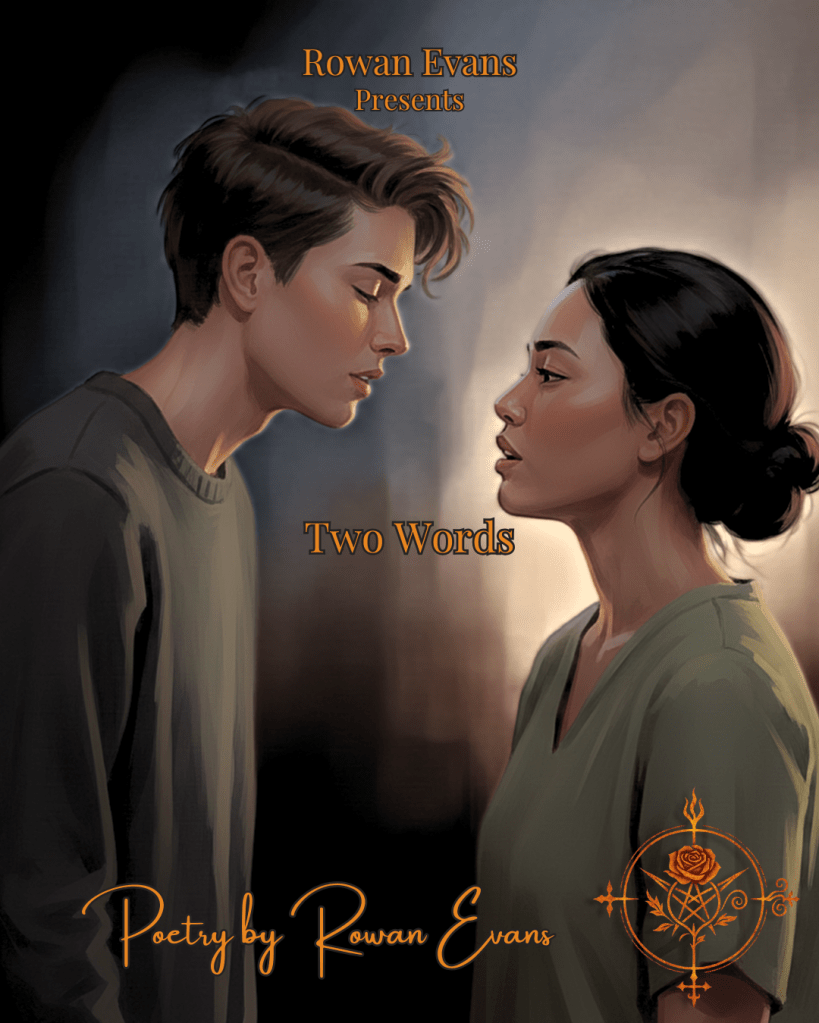
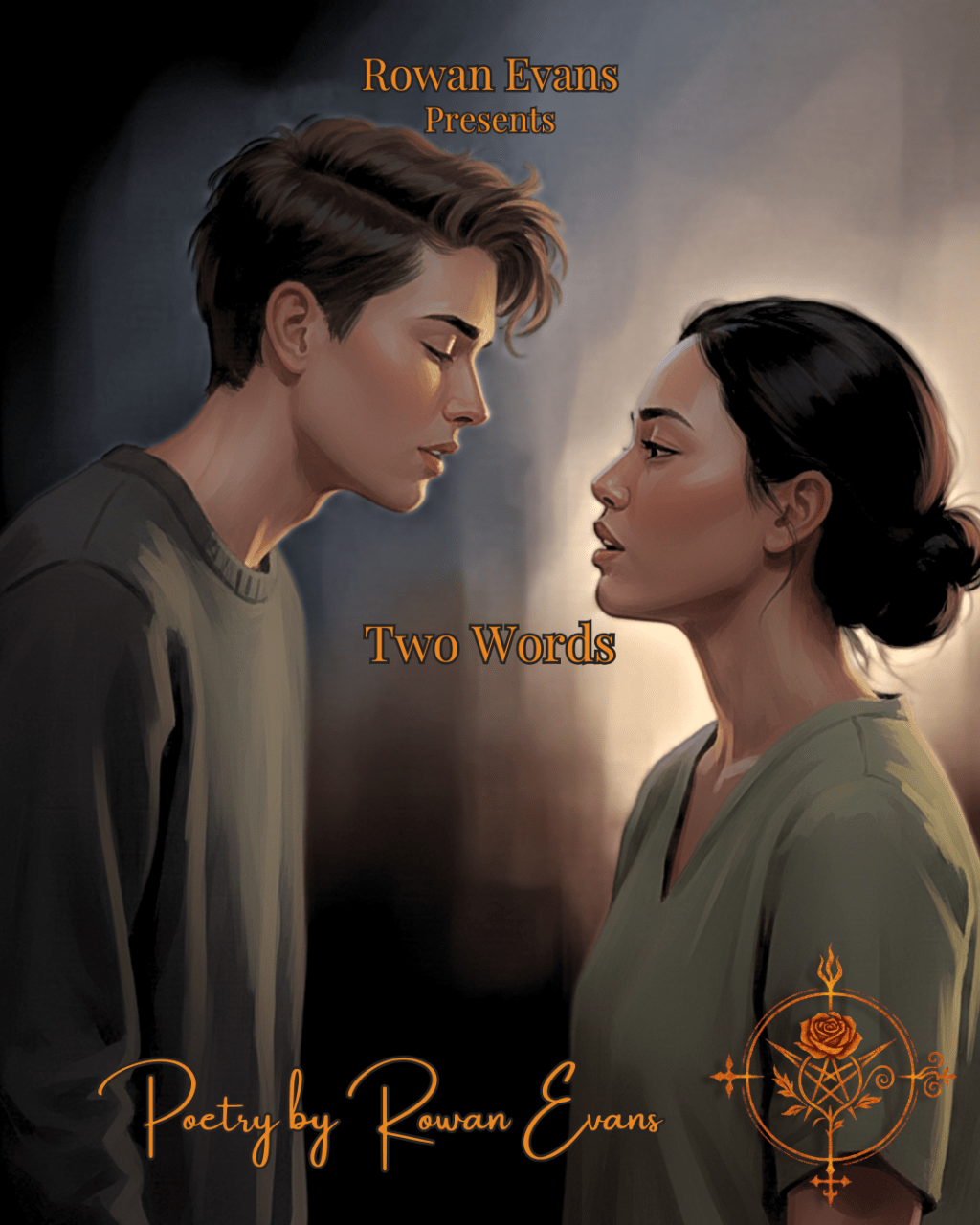
This poem came from a moment I didn’t expect—where wanting something and resisting it existed at the same time. It’s about consent without force, surrender without demand, and the strange vulnerability of realizing how easily someone can reach you simply by asking
Sometimes surrender isn’t taken—it’s given.
Two Words Poetry by Rowan Evans
I’ve never felt like this before—
never felt this loss of control.
Two words
and I can’t stop it.
Two words
and I just speak.
That’s all it takes for me.
I get a thought,
I hint at the thought—
Say it, she said.
So I said it.
I didn’t want to.
She didn’t make me.
She just asks
and I fold.
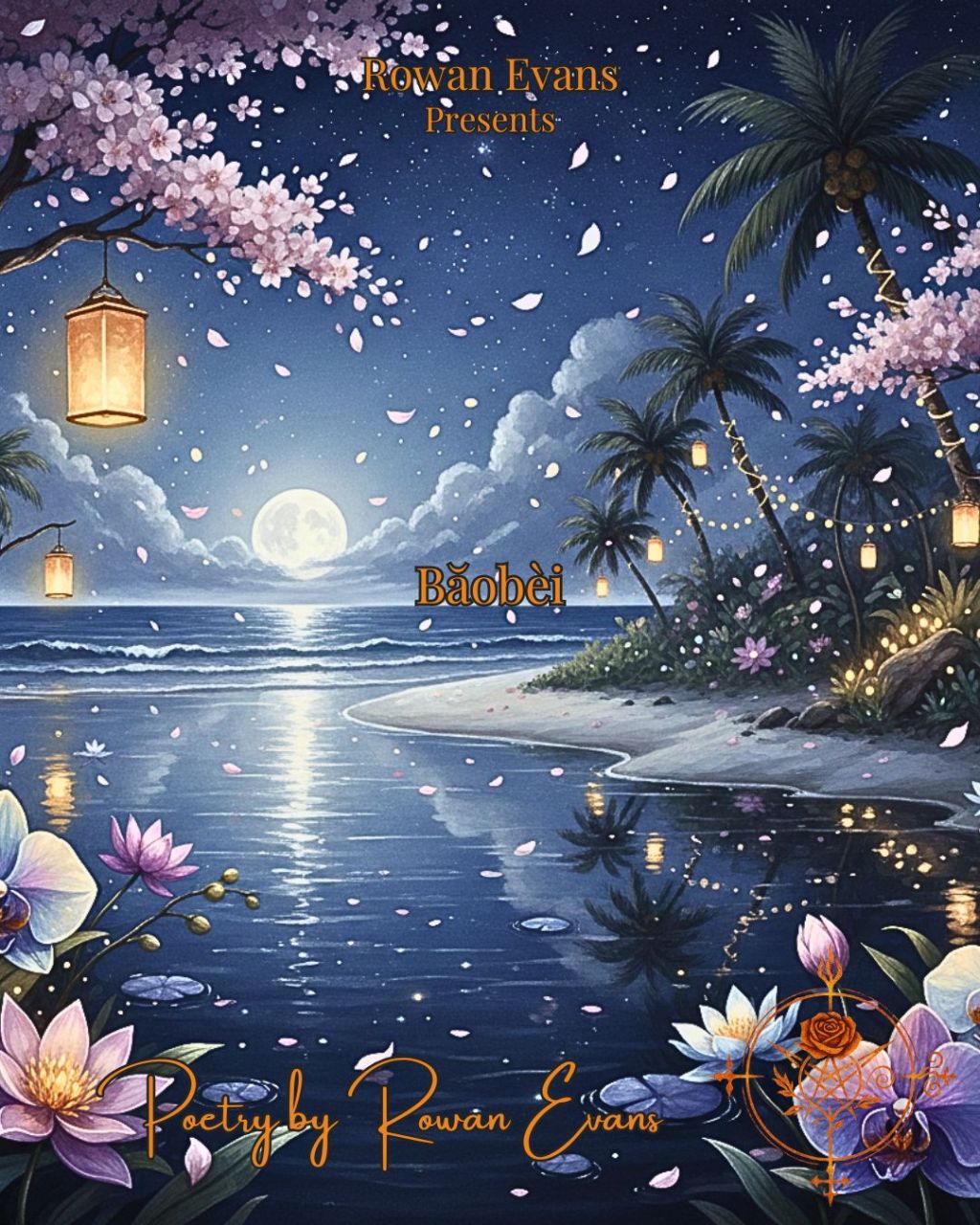
Băobèi was written last year during a season of longing—when affection felt vast, distant, and almost mythic. It lived quietly in my drafts, waiting for a moment when it could breathe on its own.
This poem is devotion rendered as geography: islands, blossoms, moonlight, and stars becoming a language for love. It is about carrying someone in every word, every breath, every imagined horizon. About how a name can become a compass.
Some poems are born loud. This one waited.
A garden of light—where devotion blooms between shore, sky, and dream.
Băobèi Poetry by Rowan Evans
Băobèi—
your beauty rivals that of the Sakura,
petals like whispered secrets
drifting through my ink-stained veins.
And I got your name,
tatted on the tip of my tongue,
your essence lives in every word that I say,
haunting the shadows of my pen,
echoing in the silence between heartbeats.
Now I’m hopping islands, in search of
your divineness. Your royalty,
I bow to you, your highness.
I crowned you the queen
of my twilight kingdom.
Your loyal subjects,
all shadows of my thoughts.
Cherry blossoms fade,
but your radiance lingers,
Orchid petals from Mindoro
drip like honeyed secrets,
Lotus from distant ponds
mirrors your serene grace,
Frangipani drifts across the wind,
carrying your laughter.
Sampaguita blooms in hidden corners,
its tiny white stars like your quiet strength,
Ylang-ylang whispers perfume into the night,
each scent a pulse of your heartbeat
I am drawn to like the tide.
I trace the heavens in your honor—
a moon suspended over Manila Bay,
its reflection trembling across dark water,
mirroring the tremor in my chest
each time your name passes my lips.
The Milky Way drapes over islands and mountains,
a silken veil for your light to wander beneath,
and I follow, tracing your essence
through ink, shadow, and the spaces between heartbeats,
until the world itself becomes
a garden of your light.
You are the rose in my ruin,
the bloom I cradle in the ashes of my nights,
the ink I spill across silent pages,
and I am forever your humble witness,
your loyal poet in a kingdom
built from devotion, dusk, and flame.
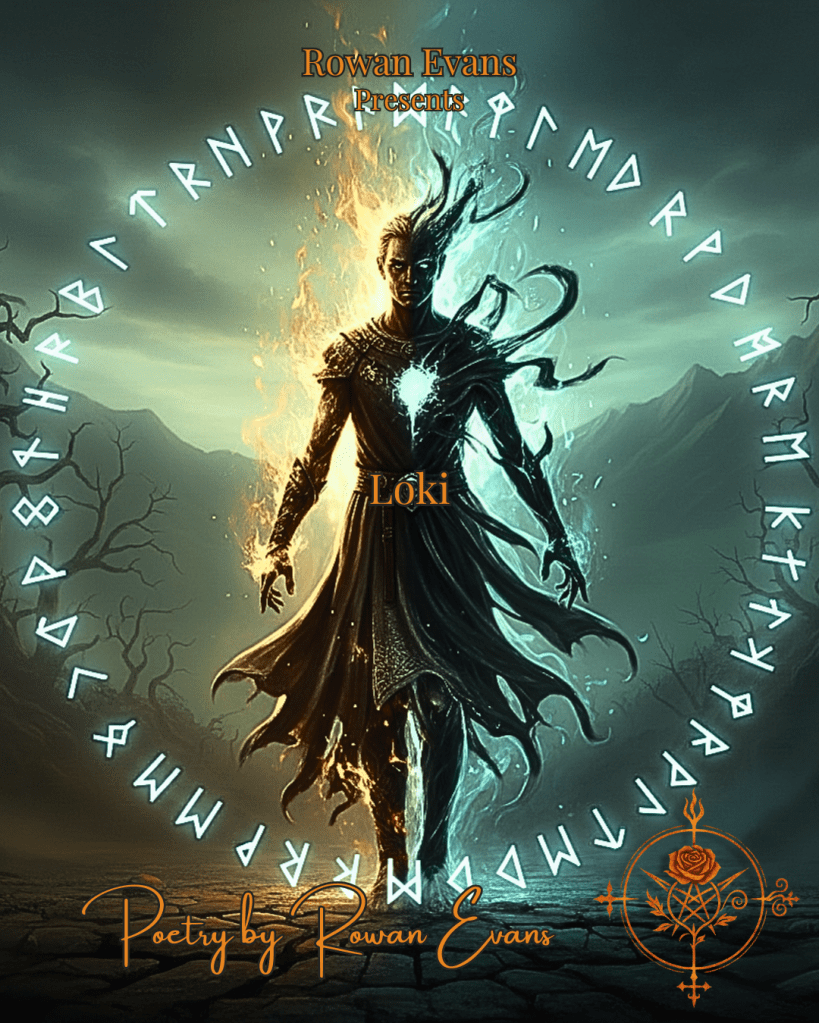
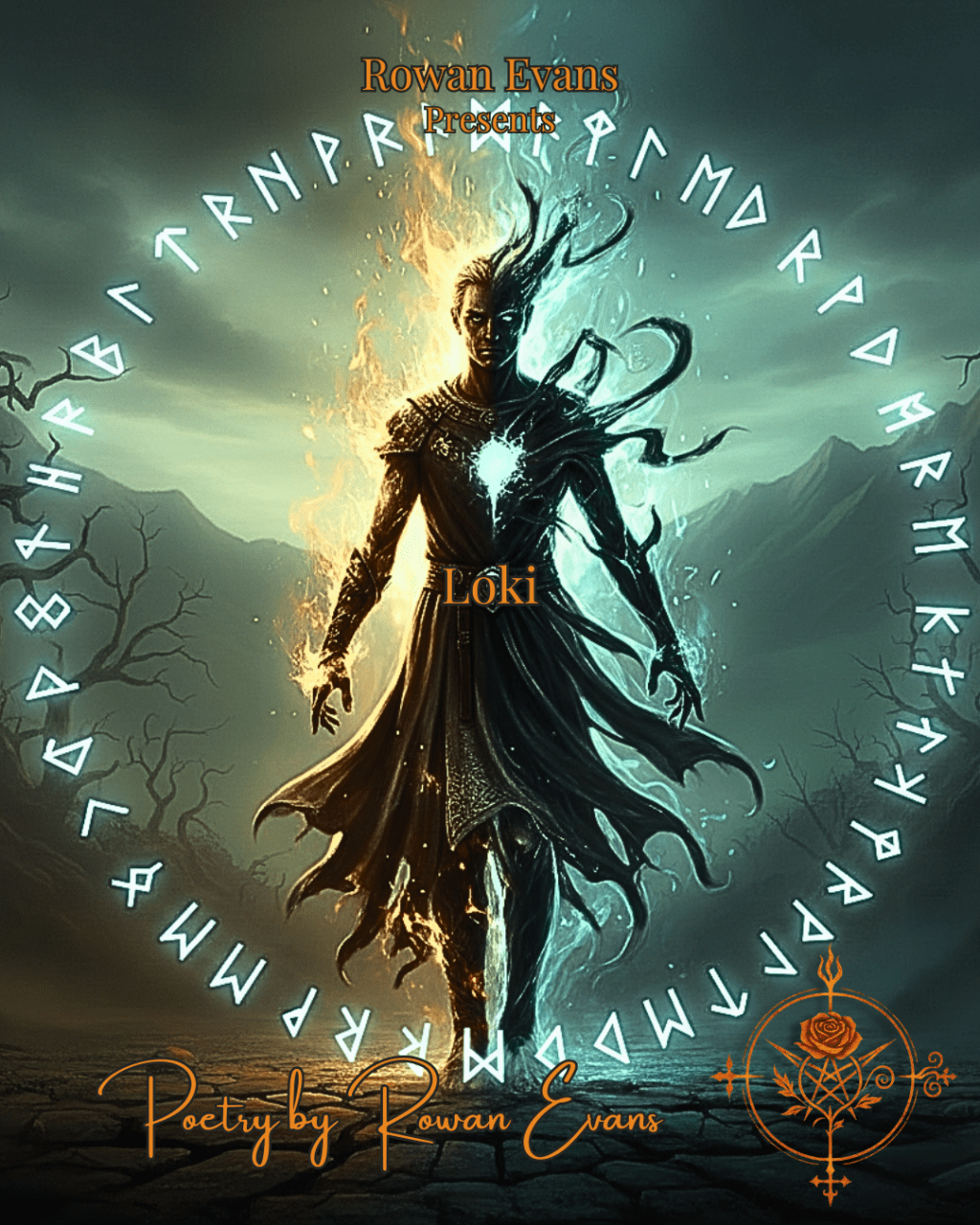
I wrote Loki on March 1st, 2025, not as a tribute to the pop-culture trickster, but to the old god—the one who exists in contradiction, liminality, and transformation. The Loki of myth is not tidy. He is not easily moralized. He is fire and fracture, ally and adversary, mother and monster, savior and destroyer. He is becoming.
This poem is less about mythology as history and more about mythology as mirror. Loki has always represented what unsettles systems built on rigidity: fluidity, change, refusal. In many ways, he is the god of those who do not fit neatly into the halls they are born into. Those who are renamed as “problem” when what they truly are is uncontainable.
Writing this was an act of reclamation. Of honoring the sacredness of contradiction. Of recognizing that to shift, to change, to refuse a single shape, is not betrayal—it is divinity in motion.
Not bound by name. Not fixed in form. Becoming is the divine act.
Loki Poetry by Rowan Evans
I have been son and mother, father and daughter, A whisper on the wind, a fire in the dark. I have been the tempest and the calm, A shifting shape, a name unchained.
I was never made to fit in their halls, So they twisted my name into a curse. They carved my legacy with hands that feared What could not be tamed, what would not kneel.
They call me trickster, traitor, monster— But what is a god if not a story rewritten? What is truth when bound by mortal tongues, When my form is fluid as the rivers they drink?
I have worn every face, walked every path, Yet still, they wish to bind me to one. But I am the echo of change, the chaos of fate, A dance between dusk and dawn.
Try as they might to paint me still, I will slip through cracks, through time, through names. For I am not one, nor two— I am all, I am none…
Between Sun & Shore was written in February of last year, during a season where I was learning what it felt like to be seen gently instead of weathered. It came from a place of quiet awe—of realizing that sometimes love doesn’t arrive like a storm, but like warmth. Like light finding its way through the cracks you thought would always stay broken.
This poem is about that in-between space: where grief softens, where healing begins, where you are no longer only the tide or the storm—but something new, something held. It’s about the moment you realize that someone hasn’t come to save you… they’ve come to grow beside you.
Where storms soften and light learns your name.
Between Sun & Shore Poetry by Rowan Evans
I once drifted like a wayward tide, Lost in the waves, nowhere to hide. Storms had carved their name in me, Each scar a tale, each wound a sea.
Then you arrived—a golden ray, Like sunrise spilling into the bay.
Your voice, a hymn the wind would weave, Soft as the hum of the monsoon’s reprieve. You traced my ruins, stone by stone, And turned them into sacred homes.
Now every ripple speaks your name, Each whispered breeze, each dancing flame.
Like sampaga’s quiet grace, You bloom where sorrow left its trace. Between Sun and Shore, love grew— A bridge of light, leading to you.



 Poetry by Rowan Evans