Tag: introspective poetry

  • Author’s Note

    This piece came from noticing something I’ve always lived with rather than consciously examined.

    My mind does not move in straight lines.

    It wanders, it loops, it returns with things I didn’t ask for, and it sometimes disappears long enough that I start to notice the absence more than the presence. I used to frame that as inconsistency or distraction, but over time I’ve come to understand it less as a flaw and more as a kind of behavior—unpredictable, but not unkind.

    The metaphor of a dog off leash wasn’t planned. It just appeared, which feels accurate to how most of my writing actually happens. I don’t usually “decide” on metaphors so much as I notice what my thoughts are already doing and try to follow them closely enough to write it down before they change direction.

    What I like about this piece is that it doesn’t try to correct the mind.

    It doesn’t punish it for wandering, or romanticize it into something effortless and poetic. It just observes it as something alive—sometimes useful, sometimes disruptive, always moving.

    There’s a strange honesty in accepting that not every thought arrives politely, and not every idea shows up when invited. Some of them run ahead. Some of them dig things up that were better left buried. Some of them come back with exactly what I needed without me knowing I needed it.

    And I think part of growing up, creatively and otherwise, is learning not just how to control that process—but how to live alongside it without turning it into an enemy.

    So this piece is, in a way, an act of recognition.

    Not mastery.

    Just recognition.

    Rowan Evans


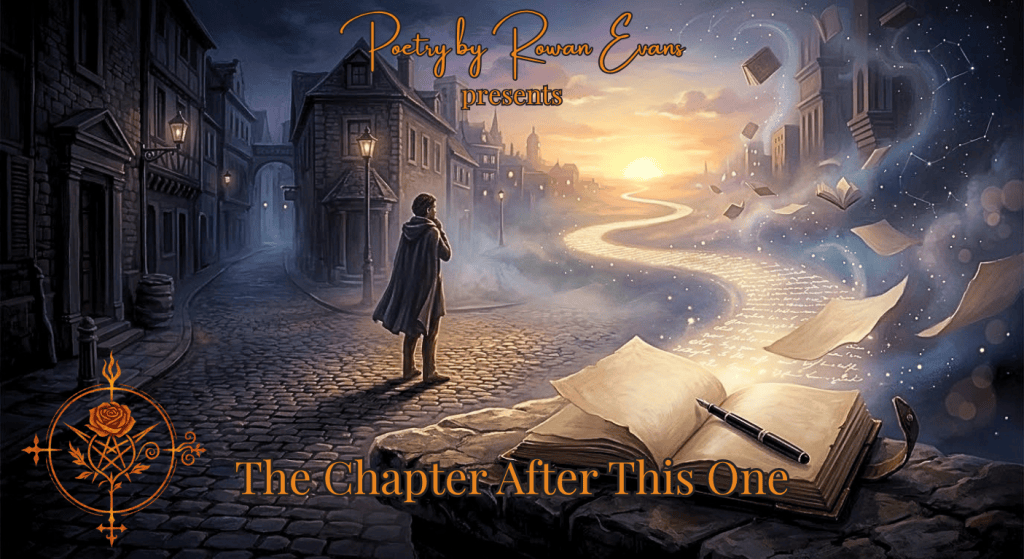
    A glowing ethereal dog made of light and ink runs freely through a surreal night cityscape filled with floating pages and abstract thought imagery.
    “Some thoughts were never meant to stay leashed.”

    Off Leash Thought
    Poetry by Rowan Evans

    I like to let my mind
    wander sometimes—
    like a dog off leash.
    It chases thoughts
    like cars,
    and makes a mess
    wherever it goes.

    Sometimes it comes back
    with ideas like sticks.
    Sometimes it’s problems
    I can’t dismiss.

    It returns to me panting,
    proud of whatever it found.
    I always forgive it.
    It’s only doing what it knows.

    Last week it ran off
    and didn’t come back for hours.
    Sometimes it digs holes
    in places I didn’t want to revisit.

    But—

    Most days it behaves.
    Some days it bites.
    Some days I wish I could leash it.
    Most days I’m glad I can’t.

    Sometimes it likes to play fetch,
    I throw away an idea—
    it brings it right back,
    like I have to write that.


    Journey into the Hexverse…

    [Monster Theology]
    What if the monsters under the bed weren’t monsters at all? Monster Theology explores difference, belonging, and the human tendency to fear what we don’t understand through a conversation with the creatures we’ve spent our lives imagining.

    [Danny Phantom Theology]
    What begins as a metaphor borrowed from a childhood cartoon becomes something deeper: a reflection on existing between survival and possibility, exhaustion and hope, the life we have and the life we long for. Danny Phantom Theology explores what it means to keep moving toward a future that feels worth living.

    [Lone Wolf Theology]
    A philosophical pop-culture poem exploring freedom, identity, and self-authorship through the lens of superheroes, antiheroes, mythic archetypes, and personal rebellion. A declaration of autonomy in a world determined to write your story for you.

    [I Write Cathedrals]
    “I Write Cathedrals” explores faith, doubt, belonging, and the search for meaning beyond certainty. Through Gothic spiritual imagery and confessional reflection, the poem examines how writing can become a sacred space for questioning, wonder, and the people who feel displaced by traditional structures of belief.

    [The Needle Doesn’t Point North]
    “The Needle Doesn’t Point North” is a deeply personal free verse poem about displacement, identity, and spending a lifetime feeling emotionally disconnected from the place you were born while being drawn toward distant shores.

    If you’re interested in more poetry, you can find it here → [The Library of Ashes]
  • Author’s Note

    This piece began exactly where it sounds like it did:

    With a headache.

    Not a dramatic one. Not a poetic one.

    Just the kind that makes it difficult to focus. The kind where every sound feels a little sharper than it should. The kind where your thoughts stop moving cleanly and start dragging their feet.

    I sat down intending to write about that feeling.

    But somewhere along the way, the poem became less about pain and more about disconnection.

    Because what struck me wasn’t the headache itself.

    It was the strange sensation of feeling slightly removed from the world around me.

    Like reality had taken half a step backward.

    Like I was still present, but not entirely anchored.

    The images of echoes, warped thoughts, blurred edges, and slipping focus all came from trying to describe that experience as honestly as possible.

    What surprised me was where the poem ended.

    I started by writing about a physical sensation.

    I ended by writing about recognition.

    About the desire to feel fully present again.

    To feel connected to yourself, your surroundings, and the moment you’re living in.

    The title comes from that realization.

    Because sometimes discomfort doesn’t make us feel absent.

    It makes us feel forgotten.

    Not by other people, necessarily, but by the world itself.

    As though we’ve drifted just far enough away from ourselves to notice the distance.

    And all we can do is sit quietly and wait for clarity to return.

    For the world to remember us again.

    Rowan Evans


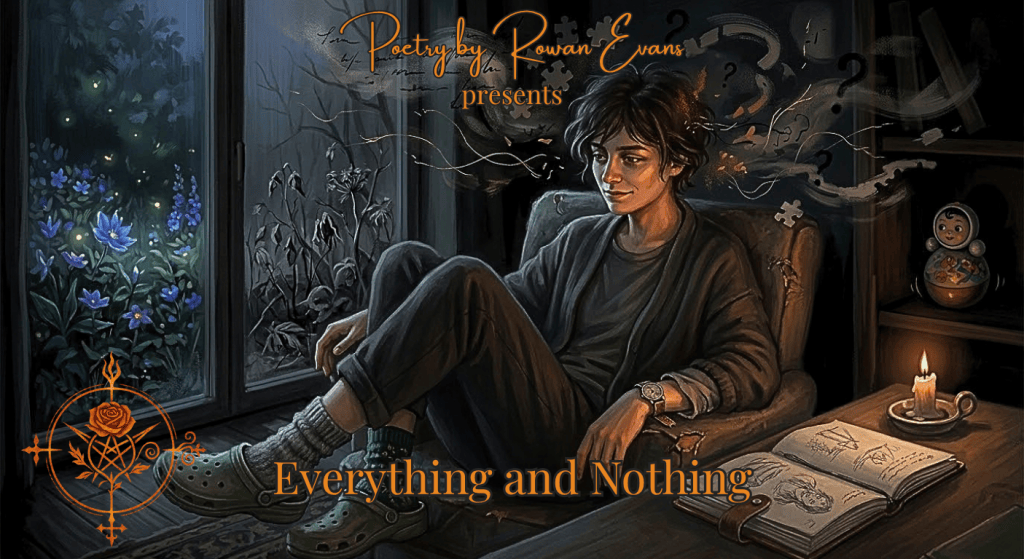
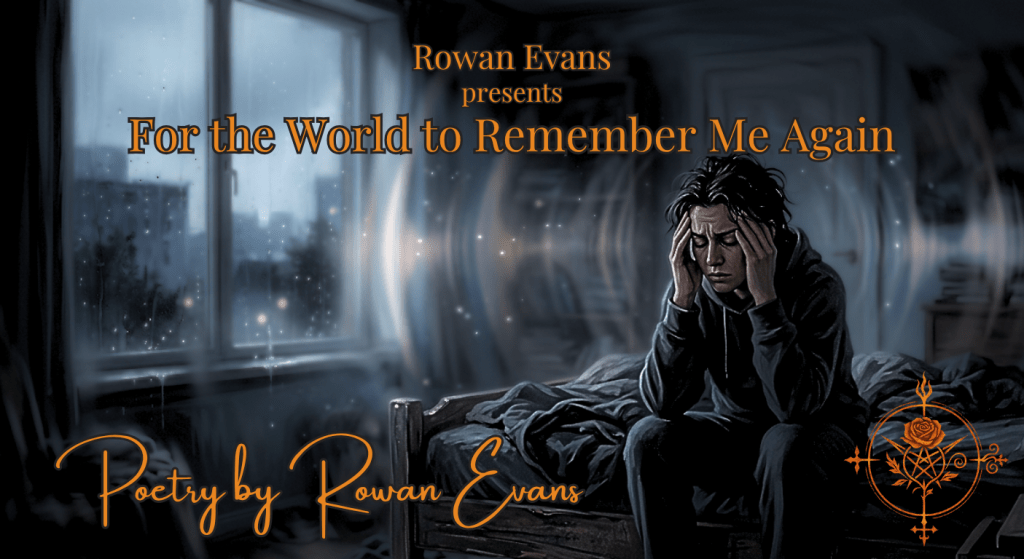
    A solitary person sitting quietly with a headache as the world around them blurs and fades into soft echoes of light.
    “Some days it isn’t pain that feels overwhelming—it’s the distance between yourself and the world around you.”

    For the World to Remember Me Again
    Poetry by Rowan Evans

    I’ve got a headache,
    can’t see straight—
    vision blurring at the edges.

    It’s the kind of headache—
    where even the silence
    is loud.

    And I sit in it,
    this ringing hush,
    like the world has stepped back
    and left me echoing alone.

    It’s like—
    every sound echoes
    in a cavernous skull.

    Like my thoughts are ricocheting
    off the walls of me,
    coming back warped,
    a little less mine
    each time—

    the rhythm
    loses a little bit
    of its rhyme.

    Every pulse is thunder,
    every heartbeat a warning—
    a storm gathering
    behind my eyes.

    I try to focus,
    but the edges keep slipping—
    like my mind is smudging
    under its own weight.

    So I breathe,
    slow and deliberate,
    hoping the world will settle
    back into focus—

    or at least…

    stop slipping away.

    And I wait,
    quiet as I can,
    for the world
    to remember me again.


    Journey into the Hexverse…

    [Before My Feet Touch the Floor]
    What happens when your dreams feel more real than your waking life? Before My Feet Touch the Floor explores the strange grief of waking up, the lingering memory of dream selves, and the quiet question of which version of us is truly real.

    [Recognizes Home]
    A free-verse poem exploring the difference between love as dependency and love as choice. It challenges the idea that love must be need-based, instead centering the quiet strength of choosing someone while still remaining whole on your own.

    [Monster Theology]
    What if the monsters under the bed weren’t monsters at all? Monster Theology explores difference, belonging, and the human tendency to fear what we don’t understand through a conversation with the creatures we’ve spent our lives imagining.

    [Not Rebuilding You]
    A poem about love as an act of presence rather than rescue. Through construction imagery, Not Rebuilding You explores trust, devotion, emotional safety, and the quiet work of building a foundation strong enough for healing to grow.

    If you’re interested in more poetry, you can find it here → [The Library of Ashes]
  • Author’s Note

    This piece comes from the space where speech and writing don’t quite align.

    There has always been a kind of delay for me—between what I think, what I feel, and what I can actually say out loud. Spoken language has never felt like the most reliable place for truth to land. It slips. It fractures. It gets filtered through hesitation, timing, or silence.

    Writing became something different.

    Not a replacement for speech, but a translation of it.

    A second mouth.

    One that doesn’t hesitate in the same way.

    One that doesn’t need to arrive perfectly formed in real time.

    Over time, I’ve come to understand my writing less as expression and more as continuity—a way of carrying versions of myself forward that might otherwise get lost between changes, growth, or silence. When I talk about shedding “lives like shells,” it isn’t about abandoning who I was, but making space for who I’m becoming.

    Writing is where those versions remain visible.

    Where they don’t disappear just because I’ve outgrown them.

    In that sense, this isn’t just about communication—it’s about survival through articulation. Not in the dramatic sense, but in the quiet one: staying connected to myself through language when voice doesn’t fully bridge the gap.

    And if spoken language is the place where I sometimes fall short of myself, then writing is where I learn how to keep translating who I am anyway.

    Rowan Evans


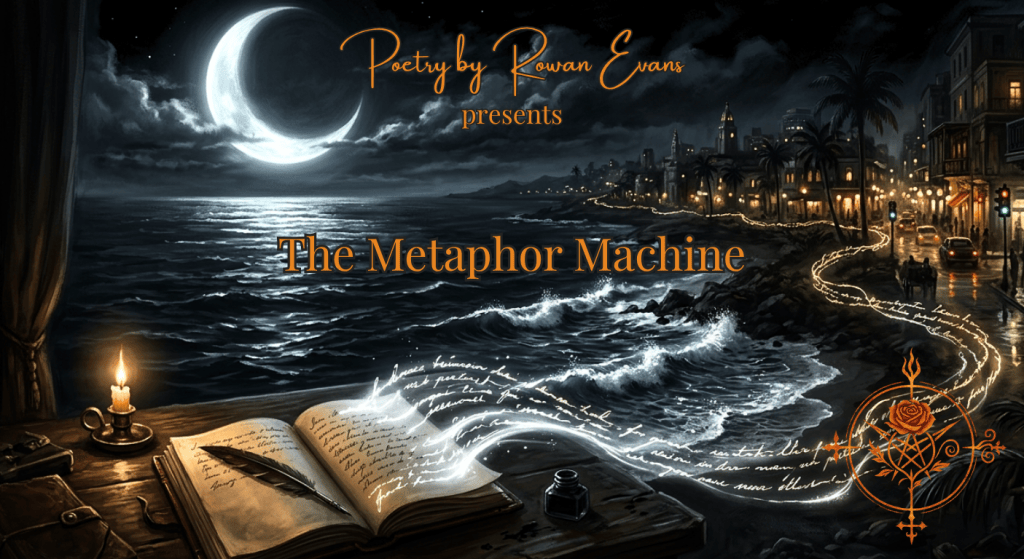
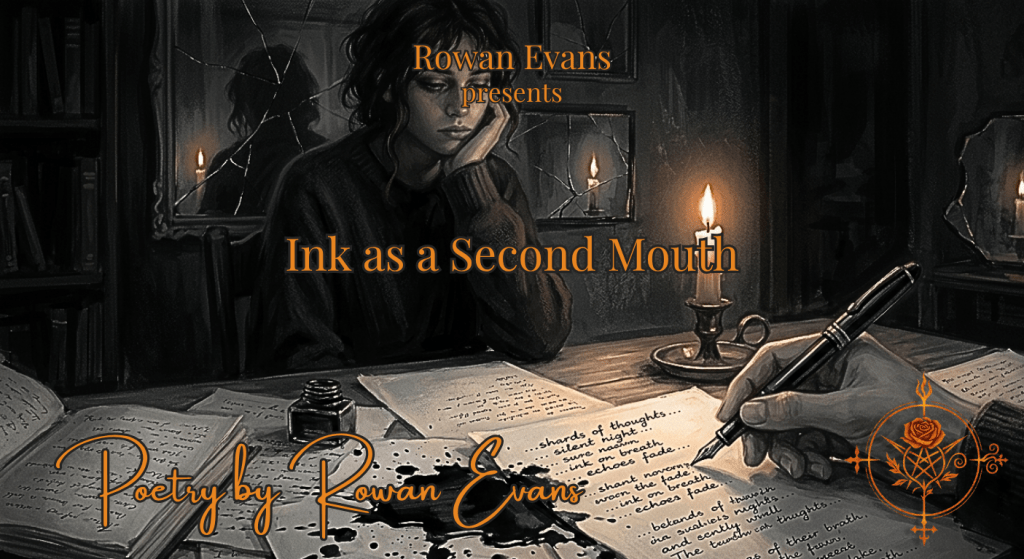
    A writer sitting beside scattered handwritten pages and spilled ink in a dimly lit room.
    If spoken language is where I fall short of myself, then writing is how I keep translating who I am anyway.

    Ink as a Second Mouth
    Poetry by Rowan Evans

    There is a delay
    between my mind
    and my mouth
    when I speak—

    that’s why I find
    it easier to talk in ink.

    I turned my pen
    into my mouth,
    so when I write
    it’s the only time—
    the truth spills through.

    When I open my mouth,
    my words won’t come out—

    but in ink, they run
    like the secrets slip
    from loose lips.

    I could write poem after poem,
    leaving piece after piece of me behind—
    scattered across the pages,
    like versions of me scattered
    across different lives.

    But do not mourn
    for what I’ve lost,
    because it’s simply the cost
    of me being me.

    I shed past lives,
    it leaves room for me to grow—

    just a hermit crab
    in human form.

    And I’ll continue
    to shed lives like shells until
    I find the version of myself—

    that can speak
    in more than ink.

    Until then I’ll continue to try,
    because growth comes slow.
    It’s gradual, it never comes clear.

    There are no definable lines—
    only slow becoming.


    If you’re interested in more poetry, you can find it here → [The Library of Ashes]
  • Author’s Note

    Some people can walk into a room and never notice the atmosphere change.

    I’ve never been one of them.

    I notice tone shifts, silence, tension, body language, eye contact, emotional static—sometimes before a word is even spoken. Rooms have always felt alive to me in that way, almost like weather systems with their own pressure and temperature.

    For a long time, I thought that sensitivity meant something was wrong with me.

    But over time, I realized I wasn’t imagining things. I was just noticing things other people either missed or ignored.

    This piece came from that feeling: walking into spaces and immediately sensing the emotional climate shift around you.

    Not because you’re dangerous. Not because you want attention.

    But because some people carry storms quietly, and other people instinctively react to the pressure.

    The important part is this:

    Not every storm is destructive.

    Sometimes thunder is just thunder. Sometimes lightning never comes.

    Rowan Evans


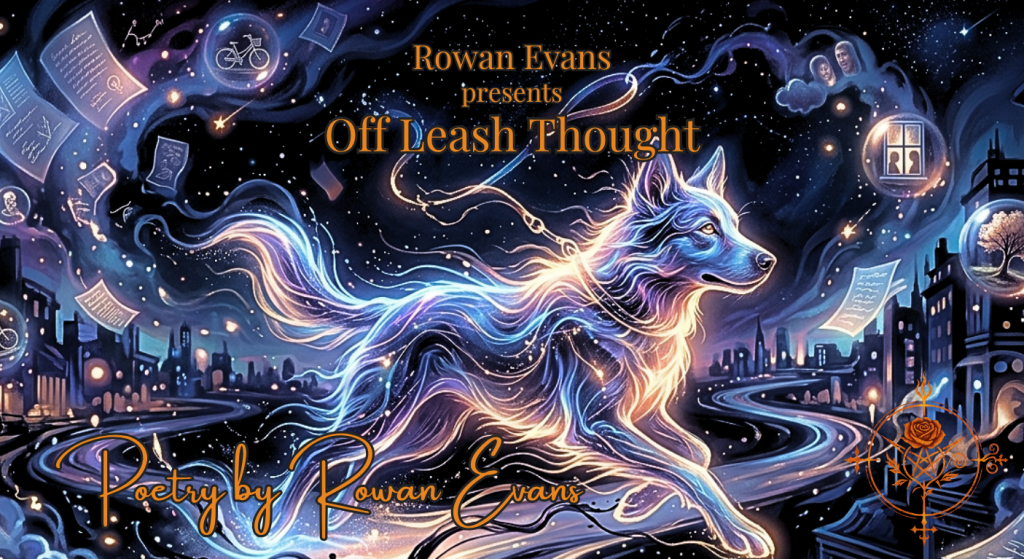
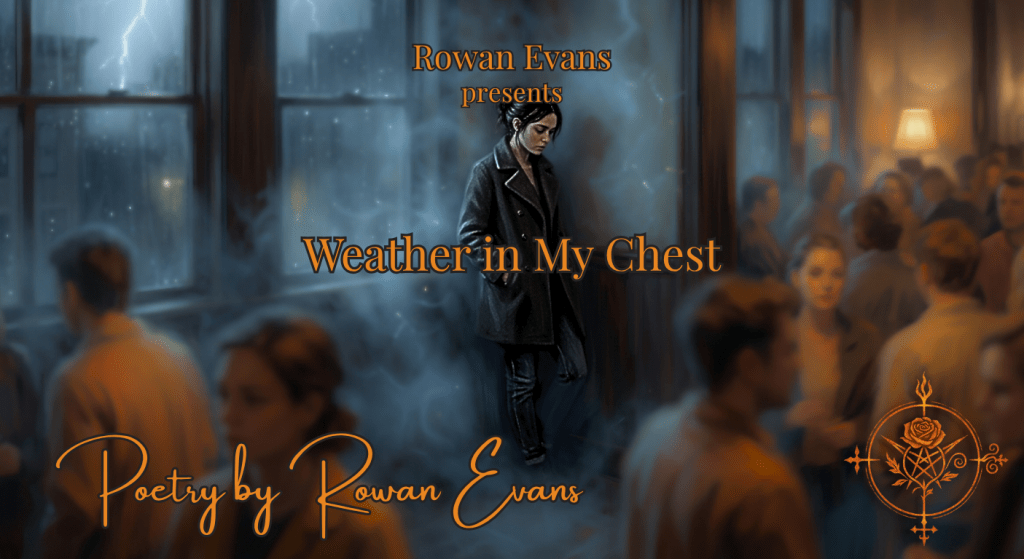
    A solitary figure stands quietly in a crowded room as storm clouds and atmospheric tension subtly gather around them.
    Some people don’t bring storms into rooms—they just notice the pressure before everyone else does.

    Weather in My Chest
    Poetry by Rowan Evans

    I enter rooms and I can feel
    the weather shift,
    the emotion gets thick
    like humidity—
    and the temperature
    begins to rise.

    And eyes
    move like clouds
    across the sky
    as they follow me.

    Drifting toward
    the horizon line,
    at the edge of the room.

    I can hear the whispers
    rumble like thunder,
    as the questions
    begin to spin.

    “What are they doing here?”
    “Who invited them?”

    I’ve learned
    to stand still
    in the middle of it,
    let the noise
    break around me
    like rain on concrete.

    “Why are they so quiet?”
    “Are they judging us?”

    They don’t know
    I’m not here
    to bring the storm—

    I just carry weather
    in my chest,
    and rooms react
    how they react.

    I’m not the danger
    they whisper about—

    I’m just the one
    who notices
    the temperature
    before anyone else does.

    They don’t realize
    I’ve felt this
    my whole life—
    rooms shifting,
    eyes gathering,
    like weather
    drawn to heat.

    I feel the pressure
    drop behind me,
    the way people tense
    like they’re waiting—

    for lightning
    that never comes.


    Journey into the Hexverse…

    [Sound as a Vessel]
    “Sound as a Vessel” is a free verse poem about music as emotional architecture, exploring how international artists and soundscapes shaped identity, creativity, memory, and poetic voice.

    [Just Knowing You Has Been Enough]
    “Just Knowing You Has Been Enough” is a deeply vulnerable free verse poem about unspoken love, emotional fear, coded confessions, and the quiet truth of caring for someone without needing perfection in return.

    [The Streets I Walk When I Sleep]
    “The Streets I Walk When I Sleep” is a deeply intimate free verse poem about recurring dreams, emotional connection, longing across distance, and the strange feeling of remembering places and moments that have never happened in waking life.

    [Memories From a Life Yet to Come]
    Some dreams feel less like fantasy and more like memory. “Memories From a Life Yet to Come” is a reflective free verse poem about longing, displacement, emotional alignment, and the strange comfort of recognizing yourself more clearly in dreams than in waking life

    [Separate Timelines]
    “Separate Timelines” is a surreal and deeply introspective free verse poem about emotional distance, time zones, vulnerability, and the fear of losing a connection that already feels meaningful before the words are ever spoken aloud.

    If you’re interested in more poetry, you can find it here → [The Library of Ashes]
  • Author’s Note

    I didn’t invent the conversation in this poem.

    That’s what makes this piece feel different to me.

    Usually when I write about dreams, I’m translating emotions into imagery after the fact—trying to capture the atmosphere more than the exact details. But this time, I woke up and realized I could still remember almost everything I said.

    Not perfectly. Dreams never survive intact.

    But the emotional core of it stayed with me long after I woke up.

    The strange thing about recurring dreams is how they stop feeling fictional after a while.

    The streets become familiar. The air feels recognizable. The people inside them start feeling emotionally real in a way that’s difficult to explain to someone else without sounding a little unhinged.

    And that’s part of what this piece explores.

    The disconnect between physical reality and emotional reality.

    I know I’ve never walked through Manila in waking life. I know I’ve never stood face to face with her like that. But emotionally?

    Some part of me feels like I already have.

    That’s the part that’s difficult to articulate.

    Especially because the dream wasn’t dramatic. There was no cinematic confession in the rain. No grand climax.

    It was quiet. Warm. Awkward. Honest.

    And maybe that’s why it affected me so much.

    Because the dream version of me said the things the waking version still struggles to say out loud.

    Not in metaphors. Not hidden inside symbolism.

    Just plainly.

    And then, right before I heard the answer—

    I woke up.

    Rowan Evans


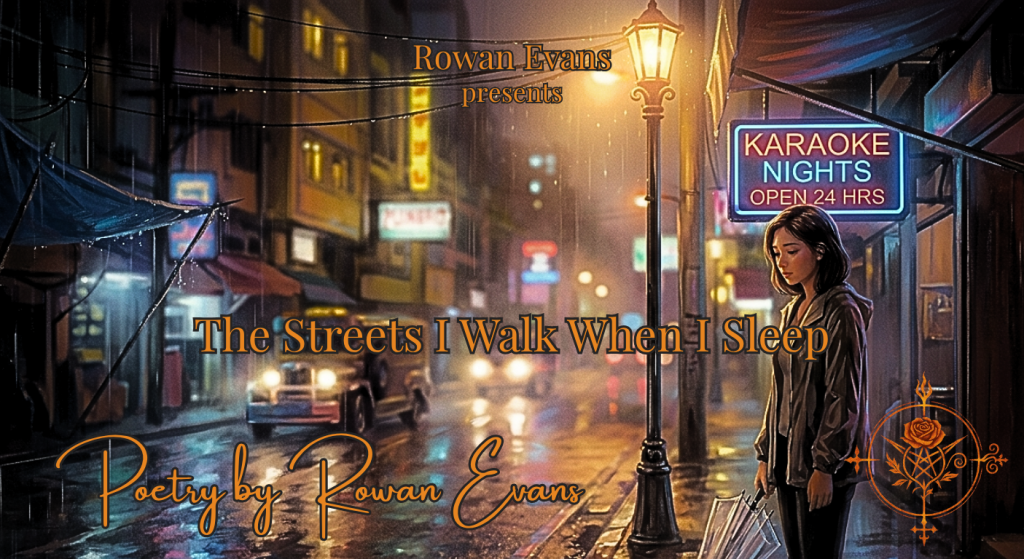
    A solitary figure stands on a rain-soaked city street at night beneath warm lights in a dreamlike urban atmosphere.
    Some places live in the heart long before the body ever arrives there.

    The Streets I Walk When I Sleep
    Poetry by Rowan Evans

    I had a dream last night—

    it’s a line, I’ve written
    a thousand times—

    and I’ll write it
    a thousand times more.

    Because dreams
    don’t feel like things
    that happened
    in my sleep.

    They feel like memories.

    There are times
    I have to remind myself—

    I’ve never been to Tokyo,
    I’ve never walked the streets
    of Manila or Seoul.

    I can’t explain it,
    definitely can’t name it—
    why these connections
    feel so strong.

    Yet, they are the streets
    I walk when I sleep
    and that’s still the same,
    it’s never changed—

    since I was fourteen.

    I’ve just been to
    Manila more lately.

    I had a dream last night…

    It was her and I,
    standing eye to eye—
    and I said everything
    I’ve been too scared to say.

    “I love you,”
    my voice came out
    softer than expected.

    “I always knew,”
    I continued.

    “Since the moment
    something in me changed,
    and you didn’t demand it.
    It just happened.”

    I took her hands
    in mine.

    Sun was gone,
    but you could still feel the heat—
    but the real killer?

    The way the humidity clung,
    making this moment
    sticky sweet.

    “I’ve known
    since the moment I met you
    you were special.”
    I said, my voice near a whisper.

    I felt the way you tensed up.
    You’re not used to this either.

    “It took me six days
    to realize things had changed.
    I wrote that first poem,
    and in my chest, I knew—

    I found home.”

    I felt the tremor in your breath,
    head tilting back
    and we made eye contact.

    Your mouth opened,
    you were about to speak—

    then I woke up.


    Journey in the Hexverse…

    [Memories From a Life Yet to Come]
    Some dreams feel less like fantasy and more like memory. “Memories From a Life Yet to Come” is a reflective free verse poem about longing, displacement, emotional alignment, and the strange comfort of recognizing yourself more clearly in dreams than in waking life

    [Separate Timelines]
    “Separate Timelines” is a surreal and deeply introspective free verse poem about emotional distance, time zones, vulnerability, and the fear of losing a connection that already feels meaningful before the words are ever spoken aloud.

    If you’re interested in more poetry, you can find it here → [The Library of Ashes]
  • Author’s Note

    Some dreams feel less like fantasy and more like memory.

    Not literal memory—something stranger than that.

    A feeling. A pull. A version of yourself that already exists somewhere ahead of you, waiting to be caught up to.

    I’ve written a lot about displacement, longing, and feeling emotionally out of sync with the place I was born into. But this piece isn’t rooted in resentment. It’s quieter than that.

    This poem came from the feeling of seeing glimpses of alignment before you’ve fully arrived there yet.

    The strange comfort of closing your eyes and feeling more connected to yourself in dreams than you do while awake.

    Not because sleep is escape— but because sometimes dreams reveal the shape of what your heart has been reaching toward all along.

    Rowan Evans


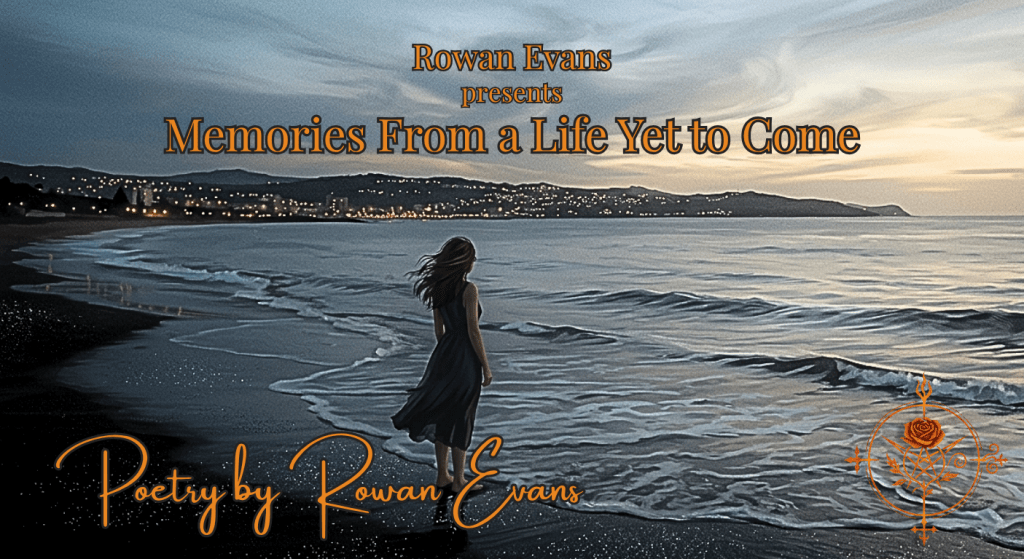
    A solitary figure stands at the edge of the ocean at twilight, looking toward distant city lights across the water as waves roll onto the shore.
    Some places feel familiar long before we ever arrive there.

    Memories From a Life Yet to Come
    Poetry by Rowan Evans

    I close my eyes—
    hear the crashing waves,
    taste the salt on my lips,
    feel the wind in my hair.

    I feel like I’m floating—
    even lying in bed.

    When I close my eyes—
    I travel in my head.

    It’s like I remember things
    I haven’t lived yet.
    Memories from a life
    yet to come.

    I see the life
    I want to lead,
    while I live the life
    I want to leave.

    Not because I hate it.

    I’m just misaligned.
    A little off-center,
    a little out of sync.

    It’s like I follow the waves,
    because I was never meant
    for this shore.

    Awake is the nightmare,
    asleep is when I open my eyes,
    and I can see the streets—

    where my life
    will finally align.


    If you’re interested in more poetry, you can find it here → [The Library of Ashes]
  • Author’s Note

    Some versions of yourself do not disappear quietly.

    Even after you’ve changed, even after you’ve tried to move forward, there are still old names, old mistakes, old selves that follow behind you like shadows.

    This piece came from thinking about transformation—not as a clean rebirth, but as something heavier.

    Something witnessed.

    The ravens in this poem aren’t meant to be enemies. They’re observers. Keepers of memory. Symbols of the parts of ourselves we can’t fully erase, no matter how badly we want to leave them behind.

    And the fire isn’t destruction alone.

    It’s momentum.

    Because sometimes growth doesn’t happen when you escape the past.

    Sometimes it happens when you finally walk through it.

    Rowan Evans


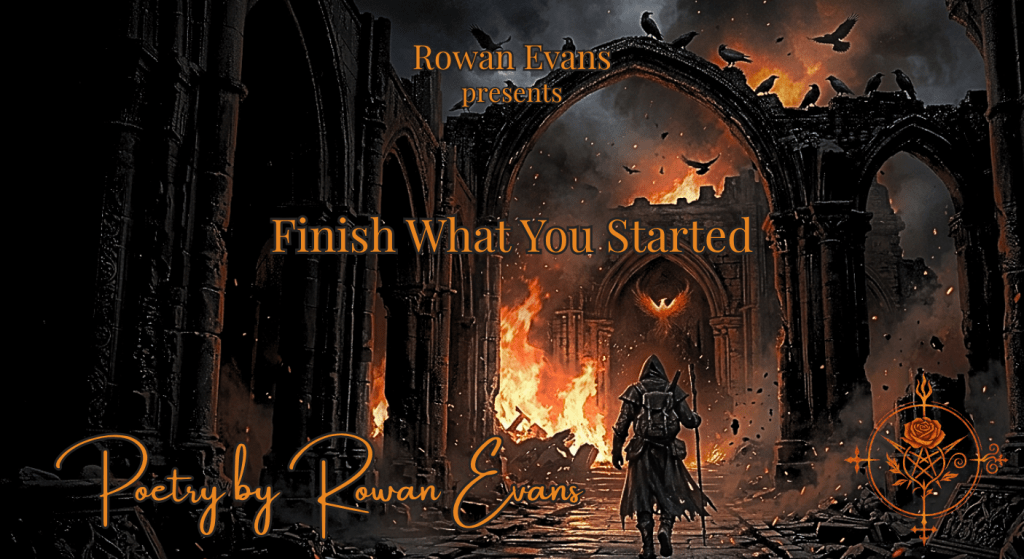
    Figure walking through burning temple ruins beneath watching ravens
    The only way out is through.

    Finish What You Started
    Poetry by Rowan Evans

    Strike the match
    and light the flame—

    watch the past
    decay and end.

    I walk through temples
    while the ravens watch me.

    I feel their eyes upon me,
    following—

    every movement
    traced.

    They tally every sin I’ve carried,
    every name I’ve buried,
    every version of myself
    I tried to outgrow.

    They know the weight
    I drag behind me,
    the shadows I pretend
    I’ve already outrun.

    The flame behind me grows,
    licking at the stone,
    urging me forward—

    a reminder
    that the only way out
    is through.

    The ravens
    do not warn me back.

    They only tilt their heads,
    as if to say—

    go on…

    finish
    what you started.


    Journey into the Hexverse…

    Previous:
    [The Shadow and the Spark]
    A psychologically charged free verse poem using Mortal Kombat imagery to explore anxiety, depression, identity, and the realization that survival matters more than victory.

    [East Knows My Name]
    A deeply introspective poem about emotional displacement, cultural disconnect, and feeling spiritually drawn toward a place far from where you were born.

    [Out of Sync]
    A reflective free verse poem about emotional displacement, shifting sleep cycles, and feeling spiritually drawn toward another side of the world.

    Upcoming:
    [Altars and Roses]
    A gothic free verse poem about poetic identity, recurring symbolism, devotion, and the quiet humanity beneath dramatic imagery.

    If you’re interested in more poetry, you can find it here → [The Library of Ashes]
  • Author’s Note

    There’s a strange kind of exhaustion that comes from feeling emotionally out of sync with your surroundings.

    Not just tired physically— but displaced internally.

    Like your body exists in one place, while some deeper part of you keeps reaching toward another.
    This piece came from that feeling.

    From late nights, shifting sleep schedules, wandering thoughts, and the growing realization that sometimes longing isn’t just emotional—
    sometimes it becomes geographic.

    The Tagalog woven through this poem wasn’t added for aesthetic reasons. It felt necessary.

    Because some emotions arrive more honestly in the languages tied to the places, people, and futures living inside your mind.

    And maybe that’s what this piece really is:

    a confession from someone physically rooted in one side of the world, while their heart keeps leaning toward another.

    Rowan Evans


    Person awake at night imagining distant city streets while feeling emotionally displaced
    Body in the west. Heart in the east.

    Out of Sync
    Poetry by Rowan Evans

    Eyes open—
    when they should be shut.

    You’re awake
    when you don’t want
    to be up.

    It’s hard to exist
    when your day shifts.

    Spirits fall
    when nothing’s wrong
    at all.

    You’re just
    out of sync…

    Four in the evening
    is near eight A.M.

    Time is the distance
    between my feet
    and the streets
    I want to walk.

    Seryoso ako—

    I want to go.
    I want to leave
    these streets behind.

    They were never mine.

    An American zombie,
    sleepwalking
    through life.

    Because the only time
    I feel alive—

    ay kapag ako’y
    nananaginip.

    When I sleep,
    I can walk
    different streets—

    body in the west,
    puso sa silangan.


    Journey into the Hexverse!

    [They Trip on Meaning]
    A free verse poem about miscommunication, emotional exhaustion, and the burden of constantly translating yourself for others.

    [Global Takeover]
    What if home isn’t a place—but something you build from the music you love? Global Takeover blends sound, culture, and identity into one borderless space.

    [Two Americans]
    What does it mean to share a country, a language, and still feel completely different? Two Americans explores identity, culture, and the quiet disconnect between people who should feel the same—but don’t.

    [I Don’t Mean Life]
    “I don’t want to be here” doesn’t always mean what people think. This poem explores identity, misunderstanding, and the weight of not feeling at home in your own environment.

    [121° East]
    A single line of longitude becomes something more—a reflection of distance, identity, and the quiet decision to become who you were always meant to be.

    If you’re interested in more poetry, you can find it here → [The Library of Ashes]
  • Author’s Note

    For a long time, I confused standing still with failure.

    Like if I wasn’t moving fast enough, succeeding quickly enough, becoming who I wanted to be on everyone else’s timeline—then maybe the people doubting me were right.

    But growth rarely looks clean while you’re inside it.

    Sometimes progress is just continuing to move, even when fear, uncertainty, or other people’s expectations try to keep you frozen in place.

    This piece sits in that space between doubt and momentum.

    Between hearing the warnings… and still feeling the pull forward anyway.

    Because there are moments in life where the call toward something bigger becomes louder than the voices telling you to stay where you are.

    And eventually— you either trust that pull,

    or spend your whole life wondering what would’ve happened if you did.

    Rowan Evans


    Person standing on a shoreline looking toward ocean waves symbolizing dreams and personal transformation
    Some voices tell you to stay. The waves tell you to move.

    The Waves That Call Me
    Poetry by Rowan Evans

    I stood on the shoreline,
    eyes locked
    on ocean waves—

    pain and longing
    painted across my face.

    I feel stuck in place,
    like I forgot
    I’m trying to win
    the race.

    But I’ve got dreams
    to chase.

    One foot
    and then the other—

    even as they doubt me.

    They shout:
    “Not a snowball’s chance in—”

    Well—

    leave them puddles
    at my feet.

    I thrive in heat.

    They think
    they’ve got room
    to talk,
    trying to still
    my walk
    with warnings.

    They try
    to warn me.

    They say—
    only time will tell.

    But she’s not speaking.

    Thinking—
    I’m a failure.

    That’s what
    they said to me.

    If I’m a failure,
    then I’m glad—

    opposites attract,
    and success is coming
    down the track.

    I may have turned,
    taken the long way around—

    but I’ve got dreams,
    and I don’t plan
    to back down.

    So I stand on the edge,
    shoreline stretching
    without end—

    but it’s the waves
    that call me.


    If you’re interested in more poetry, you can find it here → [The Library of Ashes]
  • Author’s Note

    I’ve realized over the years that music does more than inspire my writing.

    It organizes me.

    When my thoughts become too loud, too fragmented, too heavy to carry all at once, music gives them shape. Rhythm turns chaos into movement. Emotion becomes something I can follow instead of drown in.

    This piece is about that process.

    About the strange balance between instability and expression. Between wobbling and staying upright. Between feeling overwhelmed… and still creating anyway.

    The references throughout the poem aren’t random. They reflect the sounds and artists that genuinely help ground me—music that travels across borders the same way emotion does.

    Because sometimes healing doesn’t look like silence or peace.

    Sometimes it looks like headphones on, music loud, pen moving, and surviving one line at a time.

    Rowan Evans


    Person writing poetry in a dimly lit room surrounded by music-inspired imagery and candlelight
    The ground may shake, but music, ink, and light still hold me upright.

    The Music Holds Me Upright
    Poetry by Rowan Evans

    I sit with them
    when thoughts get heavy—

    the weight
    I’ve struggled
    to carry.

    My spine bends,
    but never breaks.

    They call me weeble,
    the way I wobble
    but don’t fall down.

    Standing
    on shaking ground.

    Depression.
    Anxiety.

    The fire
    inside of me.

    Flames flicker—
    entranced—

    the pen
    begins
    to dance.

    When thoughts grow heavy
    with the weight
    I’ve struggled
    to carry—

    I write.

    Lights.
    Camera.
    Action.

    The page—
    a stage.

    The pen—
    a dancer.

    Weaving
    ink-stained paths
    across lined paper.

    Word after word,
    I write what hurts—

    but I need
    the music first.

    Soundtrack
    to the chaos,
    drifting through
    Thailand,
    Japan,
    Korea,
    and the Philippines.

    Soundscapes
    helping my emotions
    take shape.

    Painting images,
    arranging metaphors—

    the music becomes
    a tour guide
    inside my mind.

    Each stop
    refracting—

    light fractured,
    split.

    A new emotion
    coming into focus
    as the sound shifts.

    And still,
    I steady—

    not by force,
    but by rhythm.

    The ground may shake.
    The thoughts grow heavy.

    But the music,
    the ink,
    the light—

    they hold me upright
    every time.

    So let the scene roll.
    Let the soundtrack swell.

    I’ll take every fracture,
    every wobble,
    every spark—

    and turn it
    into something
    that moves.


    If you’re interested in more poetry, you can find it here → [The Library of Ashes]