Author’s Note
This poem began with an image.
Not a line. Not a metaphor.
An image.
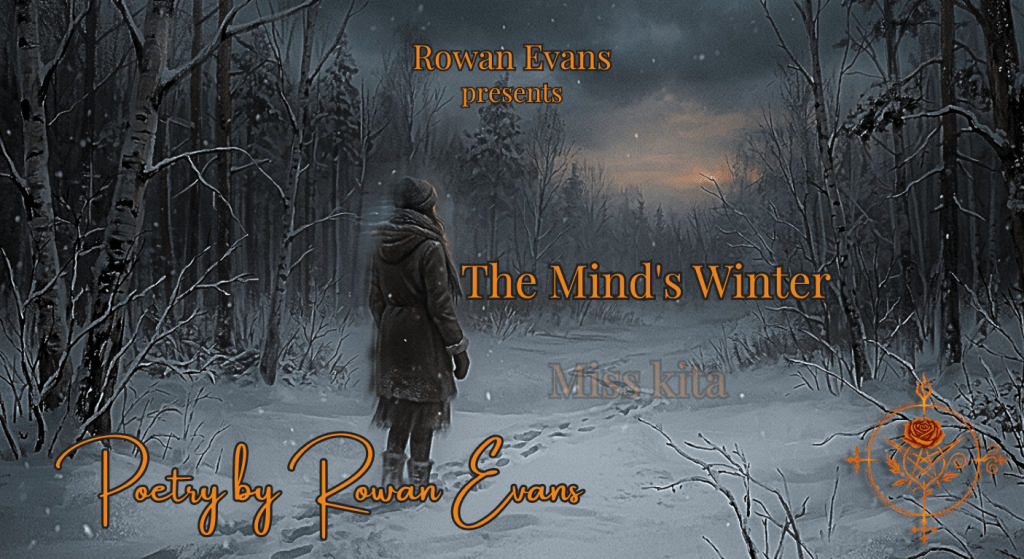
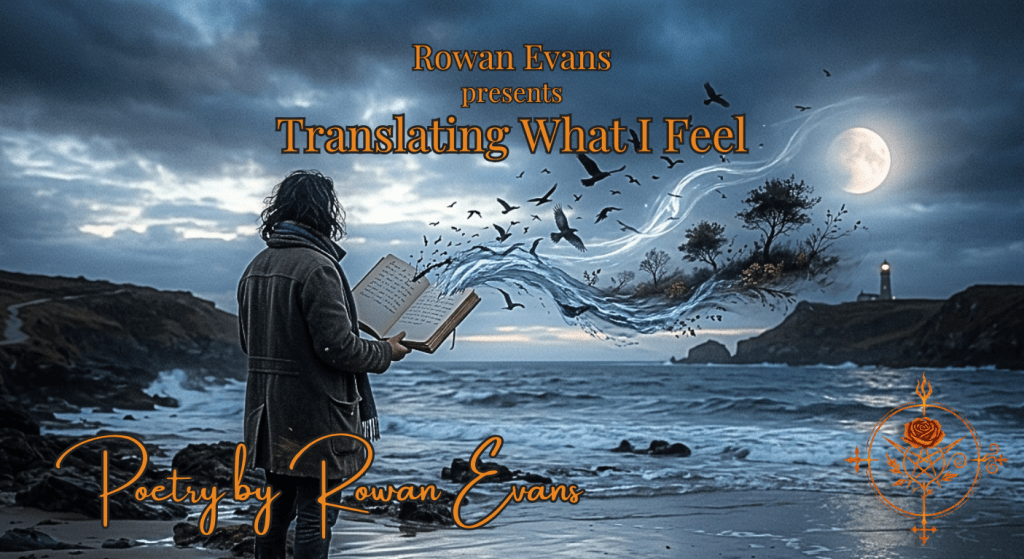
A single figure standing alone, staring into the distance like the opening shot of a film.
At first, the poem exists entirely outside the body. The speaker is observed rather than understood. We see the wind. The trees. The dirt beneath their feet. We hear a voice describing loneliness from a distance.
Then the question arrives:
“Is that the truth or the depression talking?”
For me, that’s the moment the camera moves.
The poem stops observing the speaker and starts inhabiting them.
Everything before that question is external.
Everything after it is internal.
The scenery gives way to self-examination. The loneliness becomes less important than the act of interrogating it. The poem begins pulling apart its own construction, examining how emotions become images and how images eventually become language.
In many ways, this piece accidentally became a poem about my entire creative process.
I’ve spent twenty-three years translating feelings into words.
Not just the dramatic emotions. Not just love, grief, or heartbreak.
Everything.
The strange moments. The passing thoughts. The questions that linger longer than they should.
The title came from that realization.
Because that’s what poetry has always felt like to me.
Translation.
An emotion enters one side of the mind.
An image emerges from the other.
And somewhere in between, a poem happens.
— Rowan Evans
Translating What I Feel
Poetry by Rowan Evans
I stand, staring into the distance,
alone in this instance—
it’s just me and the breeze,
running through the trees.
I can feel cold dirt and stone
beneath my feet.
Wind brushes skin,
feather-light
like finger tips—
it reminds me
of how alone I am.
Is that the truth
or the depression talking?
Because sometimes
I feel alone
when there are people
around me.
That last stanza
moved like the tide.
A long line—
followed by one shorter,
then longer again.
Even when I don’t say it,
the ocean imagery arrives.
I don’t even have to try—
it just pours out of me,
like a dam breaking.
Everything held back,
rushes forth as the pen
hits the page.
You get the opening lines,
that’s where the truth slips.
Mid-stanza
is where the truth sits.
Then one or two lines
to really make the truth hit.
You see—
this is the creative side of me.
I feel something then translate it
inside of me,
from data to image
then I spit it in ink on the page.
I’ve spent 23 years
translating what I feel—
love, loneliness and rage…
happiness and pain.
Two sides of the coin,
they’re different
but the same.
So there I stood…
staring into the distance,
unsure if I was alone in that instance—
it was just me and the thoughts
running through my mind.
Slowly being translated
into poetic lines.
Journey into the Hexverse…
[Where Music Becomes Weather]
Some songs feel like storms. Others feel like shelter. Where Music Becomes Weather explores how music shapes emotion, memory, and the landscapes we carry within us.
[Returning to My Bones]
Some dreams fade the moment we wake. Others leave behind emotions that linger long after reality returns. Returning to My Bones explores the strange grief of leaving a dream that felt real enough to matter.
[Recognizes Home]
A free-verse poem exploring the difference between love as dependency and love as choice. It challenges the idea that love must be need-based, instead centering the quiet strength of choosing someone while still remaining whole on your own.
If you’re interested in more poetry, you can find it here → [The Library of Ashes]