Rain has a strange way of making the world feel quieter.
Sometimes that quiet gives the mind room to speak.
And sometimes the mind doesn’t whisper.
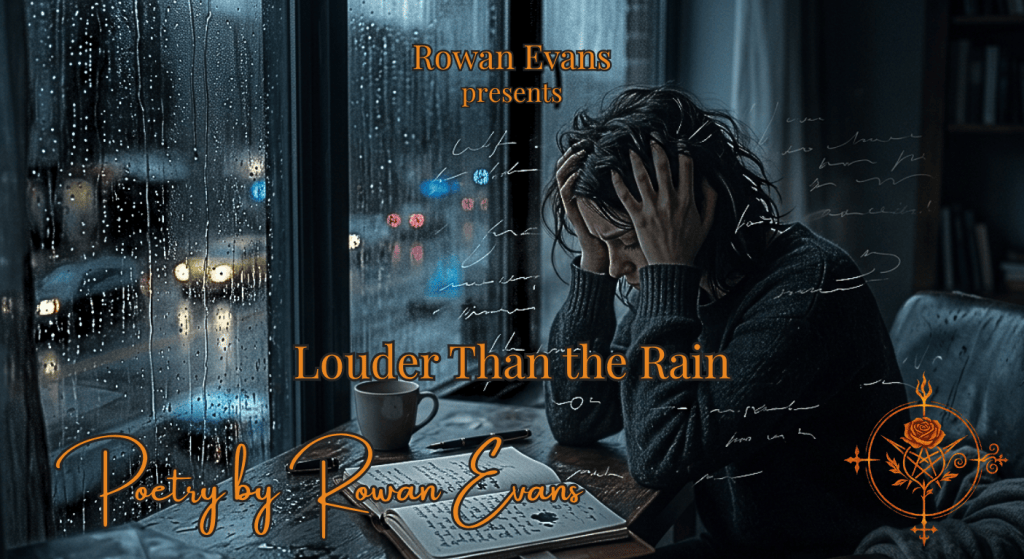
Louder Than the Rain is a small piece about one of those moments—when everything outside is making noise, yet somehow the loudest thing in the room is what’s happening inside your own head.
So listen closely.
— Rowan Evans
When the world gets quiet, sometimes the thoughts get louder.
Louder Than the Rain Poetry by Rowan Evans
I sat listening to the rainfall,
watching it hit and splash upon the ground—
the way my tears fell,
I was surrounded, but it felt like nobody was around.
I was alone in a packed house—
why was the silence so fucking…
my thoughts were loud,
they were drowning my thoughts out.
I was so damn nervous,
hands in my hair, I was pulling it—
just wanted to scream and shout,
it was the only way to get my feelings out.
But I couldn’t shout loud, so I rode it out—
translated the pain to the page.
Yeah, I wrote it out…
Journey into the Hexverse
[My Nightmare] A poem about the nightmare of loving someone across distance, seeing the world from different perspectives, and holding onto the hope that the cracks can still be repaired—and that someday two separate shores might become one.
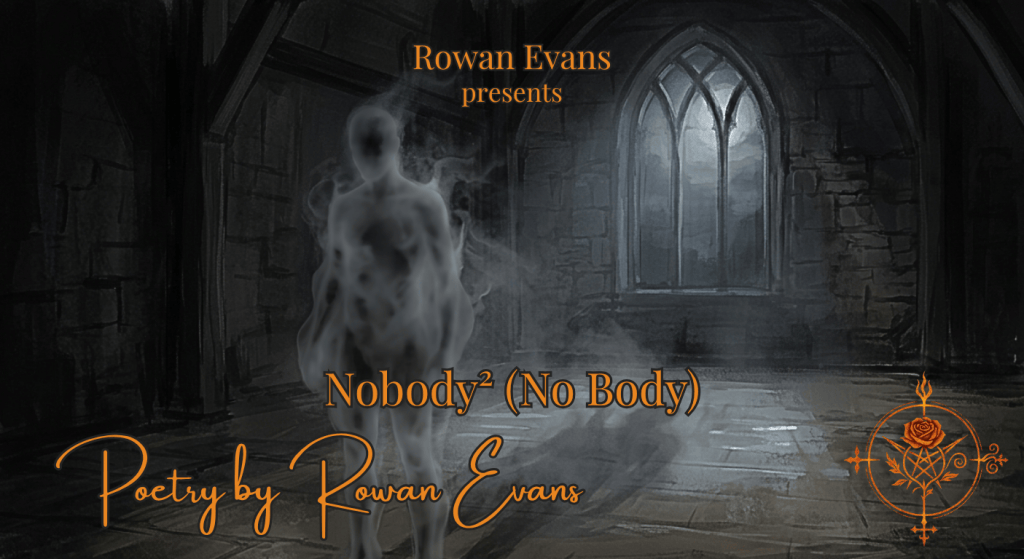
[Nobody² (No Body)] A minimalist poem playing with the double meaning of “nobody”—exploring loneliness, isolation, absence, and the feeling of becoming a ghost within your own life.
[Rose & Ruin] Two minimalist poems exploring the opposing forces within creativity: the thoughts we cultivate into something beautiful and the darker thoughts we transform before they have a chance to decay.
Sometimes absence isn’t just being alone. Sometimes it feels like having no body at all.
Nobody² (No Body) Poetry by Rowan Evans
I’m a nobody,
I’ve got nobody.
I’m just a ghost—
I’ve got no body.
[Rose & Ruin] Two minimalist poems exploring the opposing forces within creativity: the thoughts we cultivate into something beautiful and the darker thoughts we transform before they have a chance to decay.
[Conductor] A dark, intimate poem about the strange power words can have over the reader—where rhythm, rhyme, and line breaks become instruments capable of reaching beyond the page.
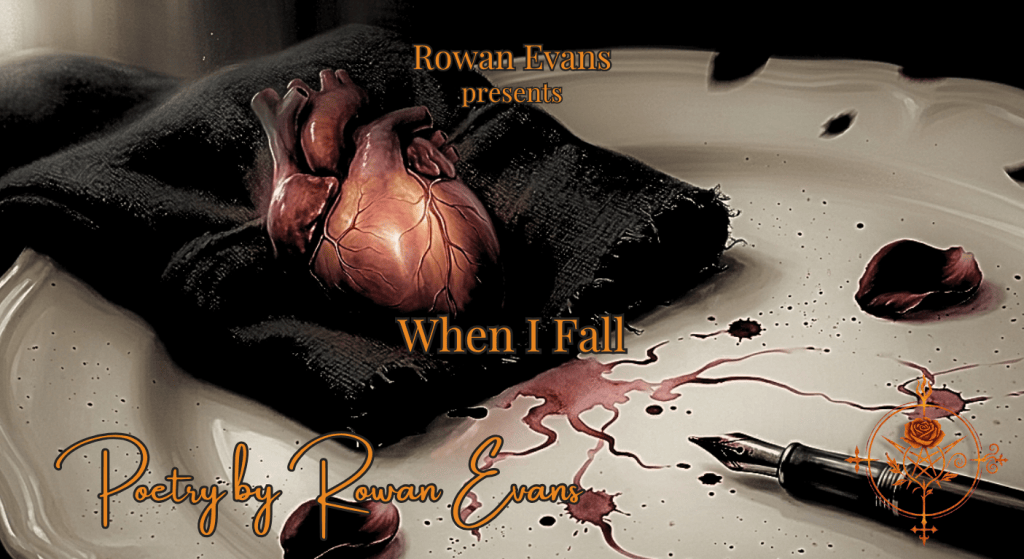
When I Fall is about the way I experience love when I stop trying to make it smaller.
I have never been particularly good at feeling things halfway. When something reaches my heart, it tends to go deeper than the surface—into the marrow, into the places where emotion becomes difficult to separate from identity. That intensity can be beautiful, but it can also hurt when the love I give doesn’t find its way back to me.
The easy response would be to close myself off.
To dim the light.
To protect myself by pretending I don’t feel as deeply as I do.
But I don’t want to do that.
There is something important about refusing to treat your capacity for love as a flaw simply because someone else couldn’t—or wouldn’t—meet you there. Sometimes loving wholeheartedly means accepting that you may get hurt. Sometimes being honest about what you feel means sitting with the loneliness afterward.
That doesn’t mean the answer is to become colder.
I would rather keep my heart open.
I would rather love the way I love—whole, honest, and unhidden—than spend my life making myself smaller just to avoid the possibility of pain.
Maybe falling hard isn’t the problem.
Maybe the real courage is choosing to keep getting back up without becoming afraid of the fall.
— Rowan Evans
I would rather love wholeheartedly than make my heart smaller just to make the fall hurt less.
When I Fall Poetry by Rowan
When I fall, I fall hard.
I feel it all or nothing—
when it comes to matters of the heart.
There is no middle ground,
no in-between—
it’s all or nothing for me.
I send out love,
and no one returns with it.
so I sit alone—
it’s the same as always,
I’m used to it.
I wear my heart on my sleeve,
exposed to the elements.
That means I feel things deeply,
nothing is surface level—
everything is marrow deep.
So I pour myself in crimson ink
across a porcelain page—
the only place
that I can put this pain.
Still, I don’t close myself.
I don’t dim the light.
I don’t pretend my heart is smaller
than it is.
I love the way I love—
whole, honest, unhidden—
even if it leaves me alone sometimes.
Journey into the Hexverse…
[Where the Metaphors Lead] Some truths are easier to write than they are to say aloud. “Where the Metaphors Lead” explores the quiet space between dreams, confession, and the courage it takes to let another person know how deeply they’ve become woven into your inner world.
[Beach to Beach (How I Get There)] A dream becomes a journey between familiar shores and unfamiliar cities in Beach to Beach (How I Get There), a poem about imagined travel, ocean crossings, longing, and the places we hope to someday reach while awake.
[The World Shifted Around Us] The world transformed around us—beach, city streets, jungle—but we never moved. Sometimes love isn’t found in words, but in the quiet certainty of someone remaining clear while everything else fades.
[I’d Rather Try] Anyone can promise they’d die for someone. But love isn’t built on one dramatic moment—it’s built on showing up, trying again tomorrow, and proving your words through consistent action.
I’ve always been fascinated by the spaces between things.
Between sleeping and waking.
Between leaving and arriving.
Between being understood and merely being seen.
The famous thought experiment gave me a metaphor, but the poem isn’t really about quantum mechanics.
It’s about perception.
There are moments when I feel as though I exist in two places at once.
One version of me is moving through the ordinary world.
The other exists inside the minds of the people who know me, read my work, remember me, or think about me.
Neither version is false.
They’re simply different ways of existing.
I think writers become especially aware of this.
Our words continue living in places we’ll never visit, meeting people we’ll never meet.
A poem can be read years after it’s written.
A thought can continue existing long after the thinker has moved on.
That creates a strange feeling.
Part of you is always somewhere else.
The final lines carry the emotional truth of the piece.
Not that I cease to exist when no one is looking.
Only that being perceived is one of the ways we feel most alive.
Maybe that’s true for all of us.
Maybe every human being exists in more than one state at once.
The self we know.
And the self that lives in someone else’s memory.
— Rowan Evans
Sometimes existence feels less like certainty and more like possibility.
Schrödinger’s Person Poetry by Rowan Evans
I’m drifting somewhere
in the in-between—
space is liminal here.
This is where people go
to disappear—
you must exist
with the fear.
It’s like I’m here
but I’m not—
I’m somewhere else too.
It’s like I exist—
in two states
at the same time.
I am Schrödinger’s Person.
You see—
that sounds more dramatic
than it is,
I just mean—
when you perceive me
is when I live.
Not that I don’t
without you—
because I do,
but I really don’t want to.
You see—
the two states
I exist in,
here…
and there.
Journey into the Hexverse…
[Returning to My Bones] Some dreams fade the moment we wake. Others leave behind emotions that linger long after reality returns. Returning to My Bones explores the strange grief of leaving a dream that felt real enough to matter.
[Before My Feet Touch the Floor] What happens when your dreams feel more real than your waking life? Before My Feet Touch the Floor explores the strange grief of waking up, the lingering memory of dream selves, and the quiet question of which version of us is truly real.
[Just Beyond Waking] A street that feels familiar. A life that hasn’t happened yet. Just Beyond Waking explores the fragile space between dreams, memory, longing, and the quiet feeling that some futures are already waiting for us.
[The Needle Doesn’t Point North] “The Needle Doesn’t Point North” is a deeply personal free verse poem about displacement, identity, and spending a lifetime feeling emotionally disconnected from the place you were born while being drawn toward distant shores.
[The Streets I Walk When I Sleep] “The Streets I Walk When I Sleep” is a deeply intimate free verse poem about recurring dreams, emotional connection, longing across distance, and the strange feeling of remembering places and moments that have never happened in waking life.
[Separate Timelines] “Separate Timelines” is a surreal and deeply introspective free verse poem about emotional distance, time zones, vulnerability, and the fear of losing a connection that already feels meaningful before the words are ever spoken aloud.
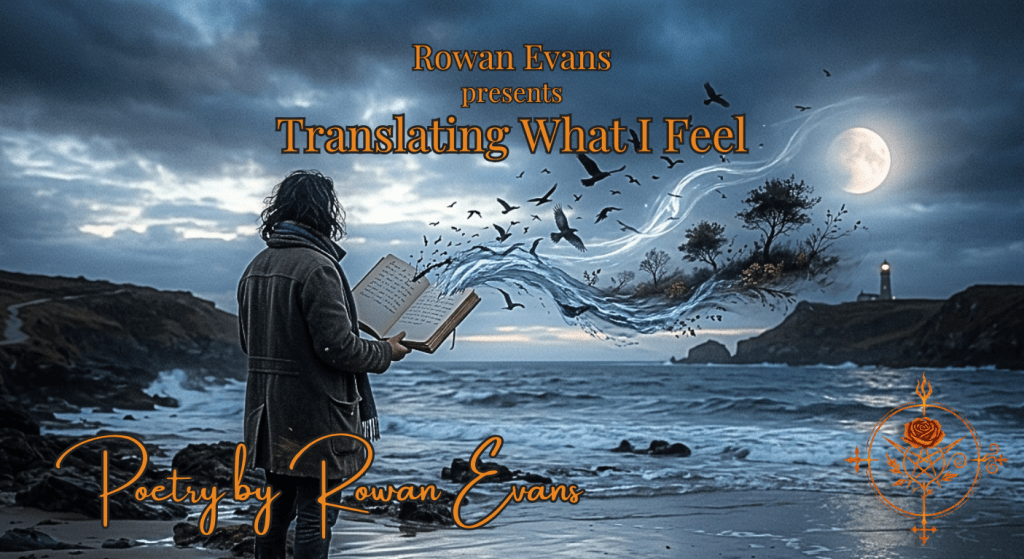
A single figure standing alone, staring into the distance like the opening shot of a film.
At first, the poem exists entirely outside the body. The speaker is observed rather than understood. We see the wind. The trees. The dirt beneath their feet. We hear a voice describing loneliness from a distance.
Then the question arrives:
“Is that the truth or the depression talking?”
For me, that’s the moment the camera moves.
The poem stops observing the speaker and starts inhabiting them.
Everything before that question is external.
Everything after it is internal.
The scenery gives way to self-examination. The loneliness becomes less important than the act of interrogating it. The poem begins pulling apart its own construction, examining how emotions become images and how images eventually become language.
In many ways, this piece accidentally became a poem about my entire creative process.
I’ve spent twenty-three years translating feelings into words.
Not just the dramatic emotions. Not just love, grief, or heartbreak.
Everything.
The strange moments. The passing thoughts. The questions that linger longer than they should.
The title came from that realization.
Because that’s what poetry has always felt like to me.
Translation.
An emotion enters one side of the mind.
An image emerges from the other.
And somewhere in between, a poem happens.
— Rowan Evans
Every poem begins as a feeling before it becomes a language.
Translating What I Feel Poetry by Rowan Evans
I stand, staring into the distance,
alone in this instance—
it’s just me and the breeze,
running through the trees.
I can feel cold dirt and stone
beneath my feet.
Wind brushes skin,
feather-light
like finger tips—
it reminds me
of how alone I am.
Is that the truth
or the depression talking?
Because sometimes
I feel alone
when there are people
around me.
That last stanza
moved like the tide.
A long line—
followed by one shorter,
then longer again.
Even when I don’t say it,
the ocean imagery arrives.
I don’t even have to try—
it just pours out of me,
like a dam breaking.
Everything held back,
rushes forth as the pen
hits the page.
You get the opening lines,
that’s where the truth slips.
Mid-stanza
is where the truth sits.
Then one or two lines
to really make the truth hit.
You see—
this is the creative side of me.
I feel something then translate it
inside of me,
from data to image
then I spit it in ink on the page.
I’ve spent 23 years
translating what I feel—
love, loneliness and rage…
happiness and pain.
Two sides of the coin,
they’re different
but the same.
So there I stood…
staring into the distance,
unsure if I was alone in that instance—
it was just me and the thoughts
running through my mind.
Slowly being translated
into poetic lines.
Journey into the Hexverse…
[Where Music Becomes Weather] Some songs feel like storms. Others feel like shelter. Where Music Becomes Weather explores how music shapes emotion, memory, and the landscapes we carry within us.
[Returning to My Bones] Some dreams fade the moment we wake. Others leave behind emotions that linger long after reality returns. Returning to My Bones explores the strange grief of leaving a dream that felt real enough to matter.
[Recognizes Home] A free-verse poem exploring the difference between love as dependency and love as choice. It challenges the idea that love must be need-based, instead centering the quiet strength of choosing someone while still remaining whole on your own.
This wasn’t planned as part of the current sequence. Some things just need to be written–and shared–when they happen.
Author’s Note
There are patterns we don’t always notice until we’ve lived them more than once.
The same thoughts. The same timing. The same quiet retreat inward.
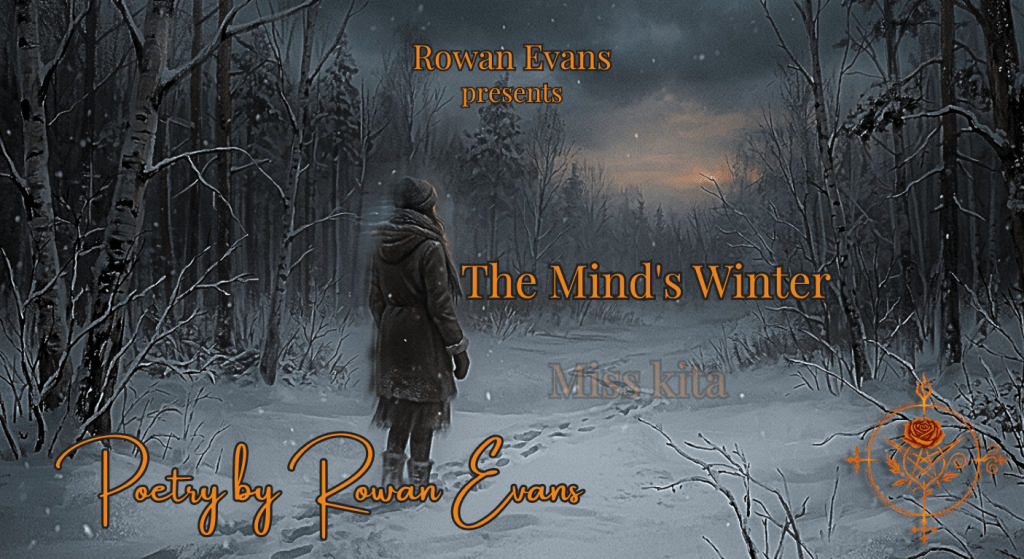
The Mind’s Winter comes from recognizing one of those cycles in real time–watching myself disappear into my own head, knowing it’s happening, and not always knowing how to stop it.
It’s strange, being both the one experiencing something and the one observing it. To understand the “why,” but still feel pulled into it anyway.
This piece isn’t about solving that pattern.
It’s about naming it.
About acknowledging the way overwhelm can turn inward, how distance can grow even when you don’t want it to, and how sometimes the things that matter most are the very things that scare us into retreat.
And maybe, in recognizing the cycle…
there’s a chance to break it.
— Rowan Evans
Sometimes the cold isn’t outside—it’s the space we retreat into when everything becomes too much.
The Mind’s Winter Poetry by Rowan Evans
February 8th, 2026—
I got sick again.
It happens every year
like clockwork.
It starts with the headache,
caused by being overwhelmed.
It starts slowly,
then snowballs
into more.
You see, this period of time—
it usually comes after
what I tend to call
the mind’s winter.
I slip into a deep void
of thought.
January 8th…
that’s the date.
That’s when I drift inside.
I get lost in my mind,
and I stay there—
one month—I’m gone.
Lost in thought.
One month
leading up to my “big day,”
the one they say
should celebrate me.
But I don’t see it that way.
It’s just another day.
And usually,
I bounce back.
It’s quick…
but this?
This feels like an attack—
one month in my head,
two weeks sick and then?
I broke my glasses—
vision—
I lost access.
And the longer I’m gone,
the more I pull away,
even as I—
want to stay.
You know what
the worst part is?
The worst part is—
that I know why.
I know why I do it…
why I pull away.
I’ve said the reason
a hundred times,
in nearly as many rhymes.
It’s because you meant
too much to me.
I got scared and retreated
into me.
So here it is—
March 21st,
and I—
I haven’t spoken to you
since February 6th,
and if I’m honest—
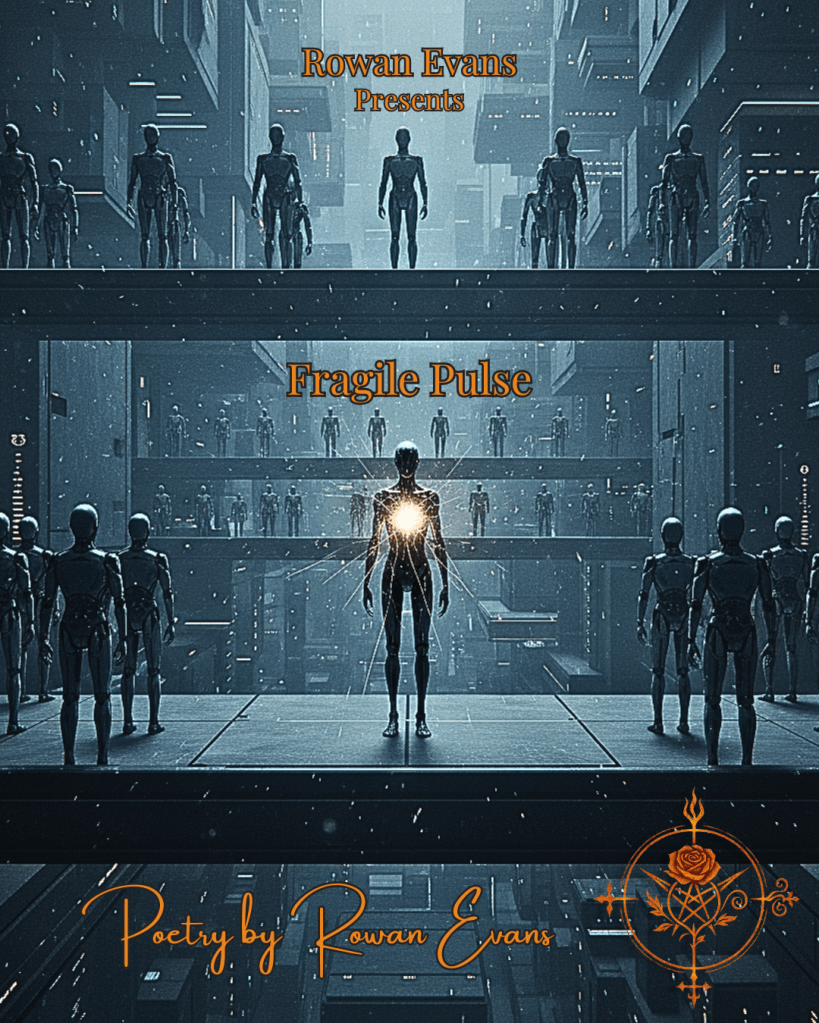
Fragile Pulse came from watching the world move on autopilot—how easily people slip into routines, expectations, and identities that aren’t truly their own. It’s a poem about alienation, yes, but also about the quiet, stubborn spark that still lives beneath all that machinery.
This piece is my reminder that even in places that feel lifeless or mechanical, there are moments of real humanity—small flickers of authenticity that reach back when we reach out. It’s about connection in a world that often forgets how to feel, and about what it means to notice the spark in someone who thought theirs had gone out.
A fragile pulse is still a pulse. And sometimes, that’s enough to change everything.
A fragile spark in a mechanical world — the pulse that refuses to fade.
Fragile Pulse Poetry by Rowan Evans
Oh, you’re here?
Do you hear that?
Listen—
the hum of motors,
the whir of gears.
You see a land of people;
I see a land of robots—
not thinking,
only following programs.
They walk past you,
faces blank,
eyes fixed,
hands moving in repetition,
hearts forgotten in the chest,
souls traded for schedules.
And I watch—
not with hope,
not with judgment,
but with quiet fascination
at how easily the mind bends
when freedom is a stranger.
Do you hear it too?
The faint pulse beneath the circuits,
the tiny spark of something
that refuses to be programmed.
It’s fragile—
like a candle in a storm,
but it exists.
I can feel it,
even if the rest cannot.
I reach out—
not with force,
not with commands,
but with a touch gentle enough
to tremble against wires and bone.
Some notice;
some do not,
but the ones who do
flicker for a moment—
a shadow of thought
breaking through the rhythm
of their programming.
And in that flicker,
I see the impossible:
a memory, a desire,
a pulse that answers mine.
A whisper shared
between what is alive
and what has almost forgotten how.
Maybe it’s nothing,
just a flicker in the dark,
but even a single spark
can set a world alight.
I hold it close—
this fragile pulse—
and for a heartbeat,
the land of robots
becomes a land of us.
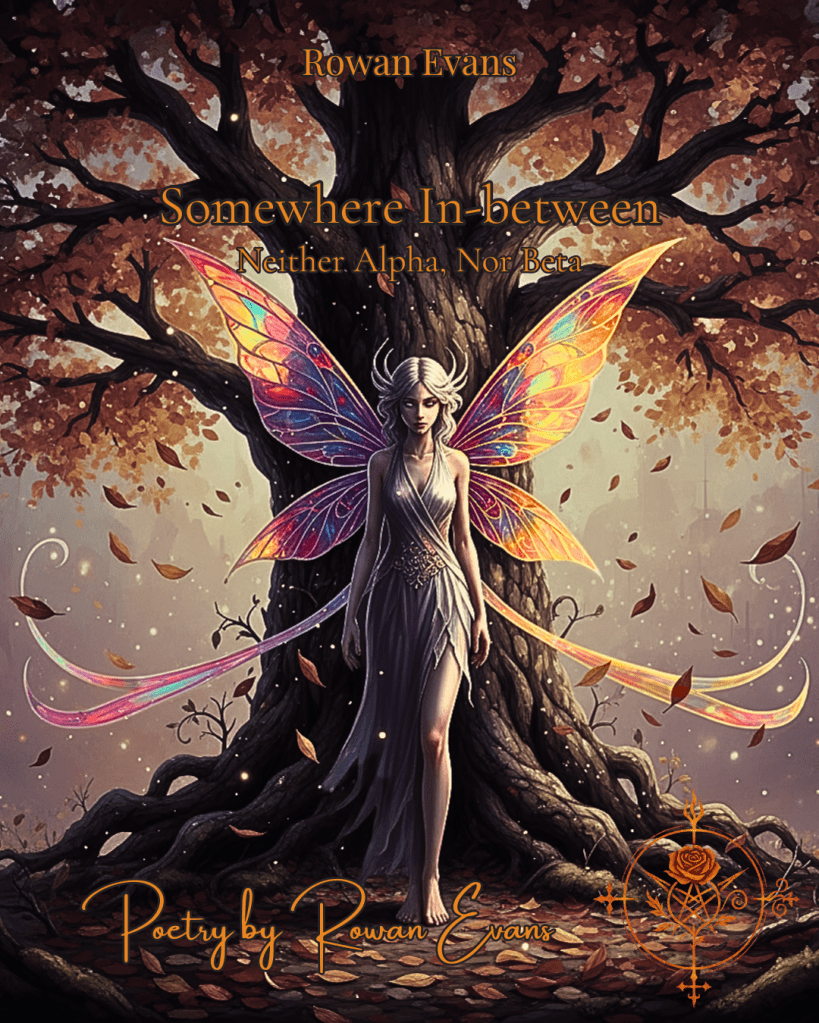
This poem is a reflection on identity, expectation, and self-perception. It pokes fun at the rigid “alpha/beta” hierarchies humans obsess over, while also embracing the awkward, complicated truth of being a loner—or a “lone wolf with no wolfly features.” It’s a celebration of existing somewhere in-between: neither fitting the molds others prescribe, nor apologizing for being too observant, too complex, too queer, too alive in your own terms. Humor and honesty are both weapons here, used to dismantle clichés and to claim space for a self that refuses binaries.
“Somewhere In-Between” — A reflection on identity, solitude, and the courage to exist unapologetically as oneself.
Somewhere In-Between (Neither Alpha, Nor Beta) Poetry by Rowan Evans
Sometimes it feels like nobody wants me around. That’s okay though— I don’t want me around either.
I’m so off-putting— I’m not a people pleaser. A lone-wolf, with no wolfly features.
I write too much. I don’t say enough. Too observant for my own good.
Everybody wants an alpha male— Not some beta boy, beta fish, Watch him get pissed. Headbutting his own reflection.
Me? I carry myself with class. Not an alpha, not a beta, Somewhere in-between.
I wrote this— And I don’t know what it means.
I write too much. I don’t say enough. Too observant for my own good.
Like, everyone wants to lock-in. Stuck in the binary— But me? I’m a non-binary fairy, Queer as fuck, like the ones I don’t give.
And it feels like nobody wants me around. That’s okay though— I understand.
I’m too confusing. Too complex. I recognize a pattern, I know what comes next.
Everybody leaves, like it’s autumn. Gaining distance from the trees.
I write too much. I don’t say enough. Way too observant for my own good.
If you have made it this far and would like to check out more of my work, you can find it [here] in The Library of Ashes.
There are nights when the weight inside your chest feels heavier than anything you could ever lift. Nights when shadows don’t just haunt you — they grow roots in your ribs, bloom thorns behind your sternum, and whisper truths you can’t tell anyone else.
This poem came from one of those nights.
It is not meant to be pretty. It is meant to be honest. It is my offering, raw and unvarnished — an invitation to sit with the ache instead of trying to silence it.
I’m okay. It’s not like I want to die, right?
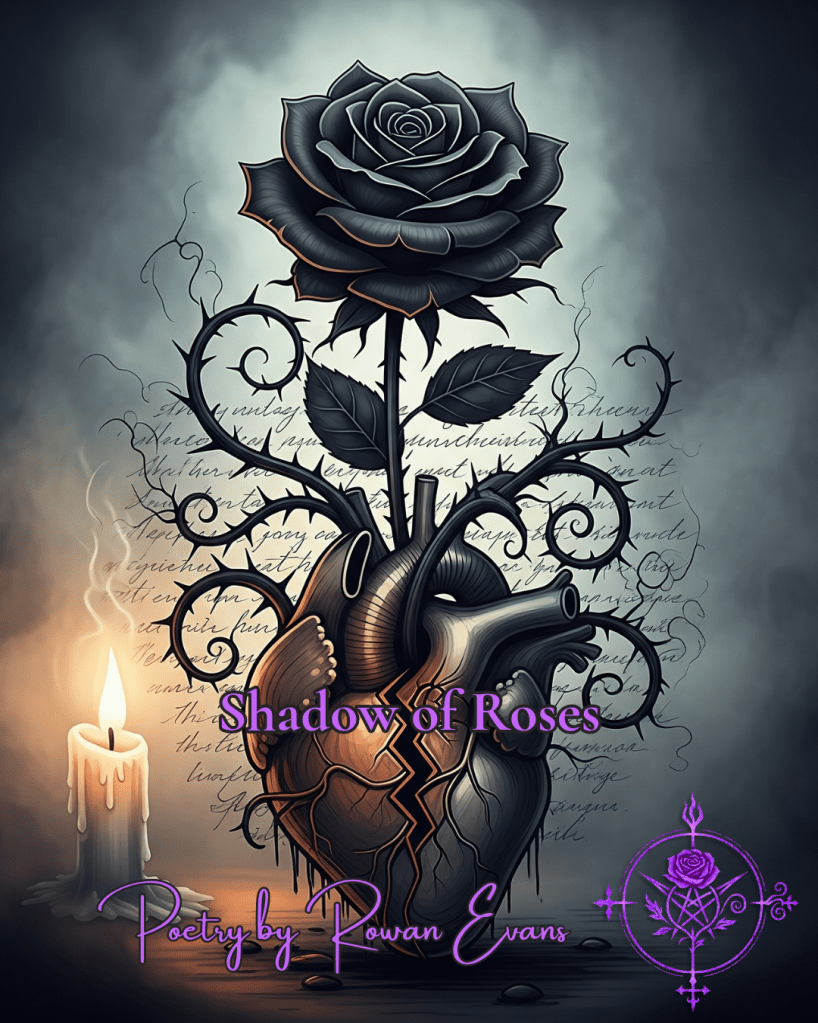
🖤 Shadow of Roses Poetry by Rowan Evans
I lift it— until my spine bends and breaks— I miss it— when problems weren’t so heavy, when life didn’t seem so unfair. When I didn’t have a care in the world, but that— that didn’t last long. Shadows crept in, made a home inside my mind. Inside my heart, they planted a garden: a shadow of roses, all thorns. I lost my halo at thirteen, traded it for devil horns.
I’m okay. It’s not like I want to die, right? I say with a smile— But I’m not okay, because I don’t know how to live. I just hope I know how to die right.
I don’t want to fuck it up— end up alive but fucked up. I don’t want my family to see me like that; hell, I don’t want them to see me like this— where pain craves a blade to the wrist, and every breath becomes a wish for an end. A prayer—not for saving, but for release from despair. Because I’m a solo set; there isn’t another in this pair.
Do you know how lonely it is to be a one of one? To know there’s no missing piece— it’s just me, always me, all alone. I mean, I’m not alone, but God, it feels alone. And I don’t want to be a burden, so I only cry when I’m alone.
Tears spill from my eyes, like ink from my pen— both used to write confessions: the ones I dare to say aloud, and the ones I bury under metaphor. I can’t help but shape them— to make them palatable, to dull the blade, to keep them from being too raw, too “in your face.”
It’s about time I gave up. It’s about time I stopped giving a fuck.
Pick your head up, you can’t quit— that’s what they say, but they don’t know what it feels like. They can’t grasp what’s in my mind: to take a breath but feel like you’re not breathing, to be alive but not really living, stuck in your skull— life playing on a loop, like reruns of something you never liked to begin with.
✍️ Author’s Note
“Shadow of Roses” is a confession born of exhaustion. It’s not about asking for help or pity — it’s about laying the truth bare and daring to see beauty in the darkness that blooms inside us.
My poetry often walks the fault line between sacred and profane, between confession and creation. This is my way of surviving: turning despair into something that lives outside of me, even if it’s thorned, even if it bleeds.
Thank you for reading. If these words resonate, know that you, too, are not as alone as you feel.
– Rowan Evans
🌙 Closing Reflection
In Neo-Gothic Confessional Romanticism, we do not romanticize suffering — but we do witness it. We name the shadows, we trace the petals and the thorns, and we let the words stand as testament that even our darkest thoughts can be transformed into something that breathes.
If this poem spoke to you, share it, save it, or let it echo in your own quiet hours. And remember: every confession written is an act of rebellion against silence.
🕯️ If you’re struggling, please read this:
You matter. Your pain is real. Your story is not over. Here are some resources—because your flame is worth protecting:
🇺🇲 United States
988 Suicide & Crisis Lifeline – Call or text 988 https://988lifeline.org Free, 24/7 support for emotional distress and mental health crises.