Tag: healing

  • Author’s Note

    This poem began with a cartoon.

    Or rather, it began with a metaphor borrowed from one.

    I’ve always been drawn to characters who exist between worlds—people who don’t fully belong in one place or another, who spend their lives navigating the space between identities, expectations, realities, and possibilities.

    When I thought about Danny Phantom, I realized the metaphor fit more than I expected.

    Not because I feel haunted.

    Not because I feel supernatural.

    But because I understand what it feels like to exist in two places at once.

    Part of me lives in the present moment—the practical world of obligations, routines, limitations, and survival.

    Another part lives somewhere else.

    A quieter place built from hope, imagination, memory, longing, possibility, and the belief that life can become more than what it currently is.

    For a long time, much of my writing has existed in the tension between those two worlds.

    The opening sections of this poem lean into that tension. They acknowledge exhaustion, frustration, and the feeling of carrying more weight than you’d like. But the poem isn’t interested in staying there.

    What matters to me is where it ends.

    Because this isn’t a poem about giving up.

    It’s a poem about wanting more from life than survival.

    About wanting a future that feels inviting instead of merely manageable.

    About believing that the light inside us isn’t meant to spend its entire existence fighting to stay alive.

    Sometimes it deserves the chance to burn because it’s excited.

    Excited about tomorrow.

    Excited about possibility.

    Excited about whatever comes next.

    Maybe that’s the real theology hidden inside the title:

    Not that we exist between worlds.

    But that we keep moving toward the one where we finally get to live.

    Rowan Evans


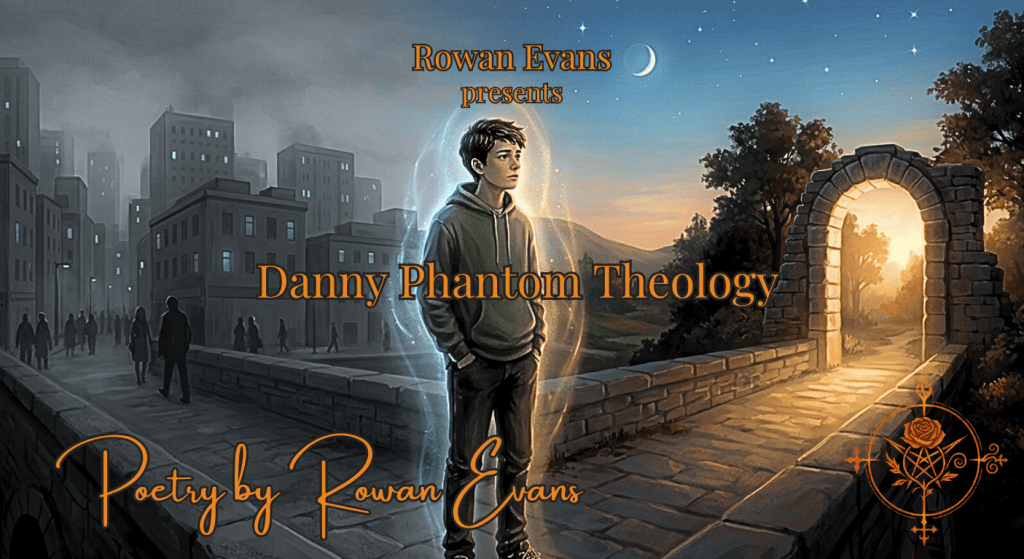
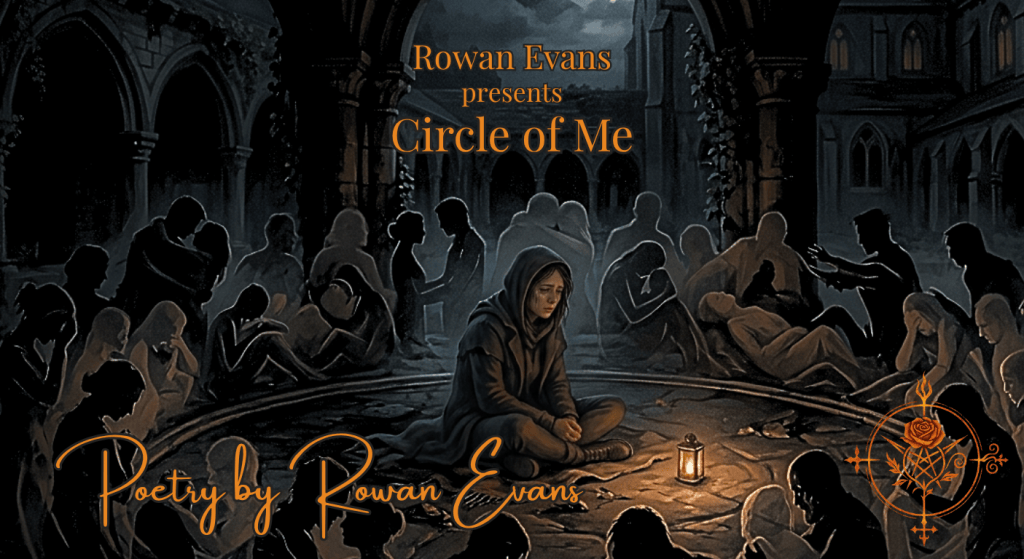
    A solitary figure stands between a gray city and a glowing world of light and possibility, symbolizing living between survival and hope.
    Somewhere between the life we endure and the life we imagine, hope keeps the light alive.

    Danny Phantom Theology
    Poetry by Rowan Evan1s

    Sometimes I feel
    like Danny Phantom,
    a boy between worlds—
    one alive, the other
    a quiet place inside me
    where the light flickers
    but never fully goes out.

    I exist in both.
    But I do not thrive,
    most the time
    it barely feels like I’ll survive.
    I know that’s a little dramatic—
    it’s a bad habit.
    I know my words feel heavy,
    more than intended most the time.
    I know what it sounds like—
    it sounds like I don’t like life.

    But that’s not true—
    I’m a lover of life,
    a hater of the conditions.
    I want a change—
    in environment,
    in circumstance.

    I want a world
    where I don’t have to split myself
    to make it through the day,
    where the light inside me
    doesn’t flicker
    from exhaustion
    but from possibility.

    I want a life
    where survival
    isn’t the main objective.
    Where waking up
    isn’t an act of endurance,
    but anticipation.
    Where the light inside me
    doesn’t flicker
    because it’s fighting to stay alive—

    but because…

    it’s excited
    for what’s next.


    Journey into the Hexverse…

    [Frankenstein’s Monster]
    Some poems are built to make a point. Others are built to reveal the mechanism. Frankenstein’s Monster (and I’m the Doctor) explores associative thinking, creative chaos, and the strange process of stitching disconnected ideas into something alive.

    [Lone Wolf Theology]
    A philosophical pop-culture poem exploring freedom, identity, and self-authorship through the lens of superheroes, antiheroes, mythic archetypes, and personal rebellion. A declaration of autonomy in a world determined to write your story for you.

    [Before We Created the Labels]
    Ancient gods return to a fractured world shaped by borders, identities, and separation. “Before We Created the Labels” explores humanity’s divisions through mythic imagery, sacred ritual, and symbolic collapse—asking what remains when we learn to see one another beyond labels.

    [A Heart That Echoes in Another Language]
    A poetic journey through music across Japan, Korea, China, and the Philippines, exploring how sound becomes identity, memory, and emotional geography.

    If you’re interested in more poetry, you can find it here → [The Library of Ashes]
  • Author’s Note

    Some poems arrive all at once.

    This one arrived in pieces.

    The opening came first—a joke, a banana peel, a little bit of wordplay and self-awareness. The speaker trips over their own feelings and tries to laugh about it before anyone notices.

    That’s fairly normal for me.

    Humor has always been one of the ways I approach vulnerability. Not because the feelings aren’t real, but because sometimes honesty becomes easier to hold when it’s carrying a joke.

    But somewhere during the writing process, the poem shifted.

    The focus stopped being the speaker’s feelings and became the person receiving them.

    Because love, at least the kind I’m interested in writing about, isn’t ownership.

    It isn’t rescue.

    It isn’t fixing someone.

    It’s creating safety.

    The construction imagery in the second half comes from that idea. The speaker isn’t trying to rebuild another person or erase their past. They’re trying to create something steady. Something reliable. A place where another person can set down their fears for a while and rest.

    That distinction matters to me.

    Too many love stories focus on saving someone.

    I’m more interested in what happens when you simply show up, consistently, and help build conditions where healing becomes possible.

    Brick by brick.

    Choice by choice.

    Day by day.

    The final lines grew from a belief I’ve carried for a long time:

    Everyone deserves a future that feels safe to stand inside.

    Everyone deserves foundations that don’t shake beneath them.

    And sometimes the greatest gift we can offer another person isn’t a promise to save them.

    It’s a promise to help build something that lasts.

    Rowan Evans


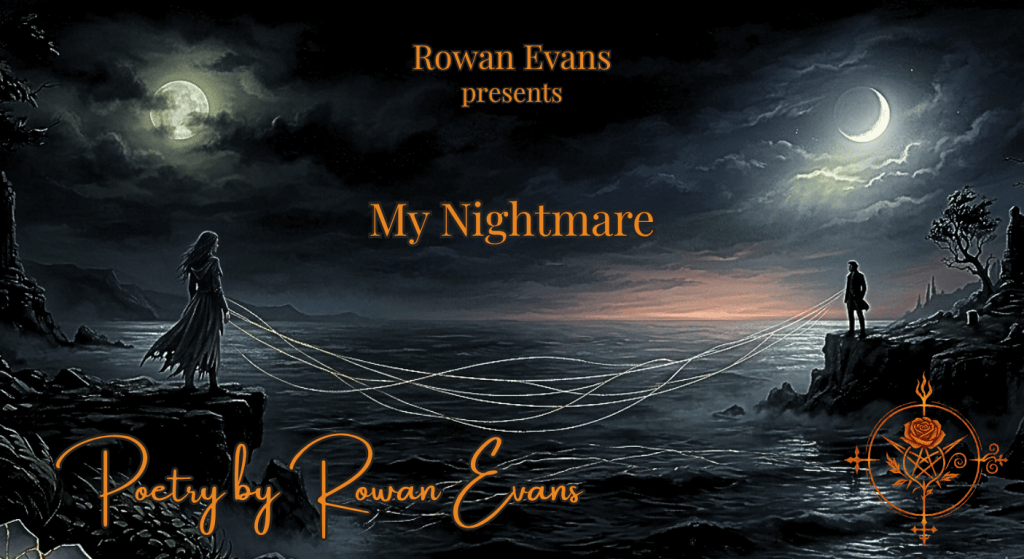
    A new foundation being built beside old ruins at twilight, symbolizing healing, trust, and creating a safe future through love.
    Sometimes love isn’t about fixing what’s broken. Sometimes it’s about laying a foundation strong enough for someone to finally rest without fear of collapse. 🖤🧱✨

    Not Rebuilding You
    Poetry by Rowan Evans

    It happened quick.
    I slipped—
    banana peel.
    But you can trust me,
    I think I’ve proven that, (huh?)
    so you know
    you can trust
    what I feel is real.

    From the fear
    to devotion,
    loyalty in motion—
    I try to give you no reason
    to question.

    And you don’t need
    to return this.
    This isn’t a library,
    no overdue charge—
    just a gift straight from my heart,
    that I give with purpose.

    And if you’re wondering
    why I give like this…

    You’re worth it.

    I’d move earth,
    shift dirt—
    excavate
    to stop the hurt.
    Prepare the land
    for a new foundation.

    So let me lay brick after brick,
    patience in every layer,
    hope in every line.
    Not rebuilding you—
    just building a place
    where you can finally rest
    without fear of collapse.

    And if it takes time,
    I’m not afraid of slow miracles—

    because love like this
    isn’t renovation—
    it’s resurrection.

    A clearing of old ruins,
    a promise carved into the earth:
    you deserve a future
    that doesn’t hurt to stand on.


    Journey into the Hexverse…

    [The Language Her Soul Speaks]
    What if love isn’t about being understood, but learning to understand someone else? “The Language Her Soul Speaks” is a free verse poem about intimacy, communication, curiosity, and the desire to know another person beyond the limits of language.

    [Ocean Waves (1, 4, 3)]
    A moonlit shoreline, a rowboat full of ducks, a piggybank with no cents, and a confession hidden in plain sight. Ocean Waves (1, 4, 3) explores how humor, wordplay, and absurdity can become a side door to vulnerability when the truth feels too difficult to say directly.

    [L Words & Heart]
    A playful, self-aware poem about love, longing, loyalty, and the quiet ways another person can reshape our inner world. What begins as humor slowly reveals a heartfelt confession about affection, imagination, and the faces that linger in our dreams.

    If you’re interested in more poetry, you can find it here → [The Library of Ashes]
  • Author’s Note

    I’d been stuck in my head for days—looping memories, fogged thoughts, the usual spiral.

    Then I had a dream.

    In it, someone I care deeply about cut through the noise in the bluntest, most effective way possible. It wasn’t gentle. It wasn’t poetic. But it worked.

    This poem came from that moment—the realization that sometimes the way forward isn’t overthinking, but following the one thread that still feels steady.

    Even through the fog.


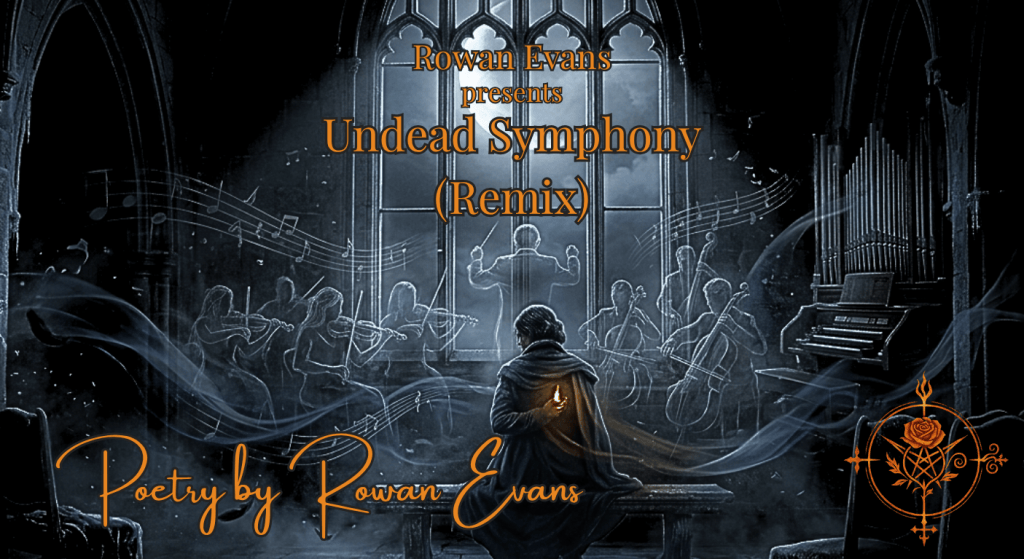
    A glowing thread leads through foggy woods toward a softly lit clearing at night, symbolizing guidance and emotional connection.
    Sometimes the way out of your head is just one honest thread—and the courage to follow it.

    The Thread That Led Me Home
    Poetry by Rowan Evans

    The fog rolls over hills,
    and a chill clings
    to my mind.
    Memories linger
    in flickering fragments,
    clinging static—
    the kind that hums
    behind the eyes,
    buzzing with moments
    I thought I buried
    but never really left.

    They circle back—
    whispers caught
    between stations,
    half-formed voices
    I almost recognize
    but can’t quiet name.
    Threads of memory
    tangled in the mist,
    pulling me back
    to places
    I never meant to revisit.

    I stumble through playgrounds,
    bumping off walls
    as I march down the hall.
    A single thread,
    I’ve begun to follow—
    It leads through memory,
    after memory.
    Twisting and turning,
    it knots—
    and I pause,
    fingers trembling
    over the tangle,
    wondering what unravels
    if I pull too hard.

    I run fingers
    over threads.
    Gripping soft,
    pulling slow—
    I watch
    as the string
    slips free—
    and it hums,
    like it’s guiding me.

    So I follow.

    Step after step,
    one foot
    in front
    of the other.
    I step and stumble
    through fog,
    thick as my thoughts.
    And when
    I feel lost,
    my fingers tighten
    grabbing the string
    like a lifeline.
    It’s the only guide
    through my mind.

    I stumble through,
    snapping twigs
    and branches.
    The rustle of
    rotting leaves
    under feet,
    until I see it.
    A light,
    a clearing.
    And when I reach it,
    when I find
    the strings conclusion—
    what do I see?

    You.
    A smile.
    Home.


    Closing Note

    Yesterday’s poem was about the weight of memory. This one is about the moment something — or someone — breaks through that weight. Not to fix it, not to erase it, but to remind me that I don’t have to walk through the fog alone.


    Journey into the Hexverse

    [Memory Lane Has No Exit]
    With my birthday approaching, I found myself trapped inside my mind—wandering memory lane, revisiting love, loss, and the moments that built me. This poem is a reflection on betrayal, survival, and the quiet realization that drifting isn’t the same as healing.


    If you’re interested in more poetry, you can find it here → [The Library of Ashes]
  • Sometimes the world feels loud in ways we can’t explain.
    This was written as a soft place to land—
    for kids, for anxious hearts, for anyone who needs a reminder
    that calm is something you can learn, not something you have to earn.


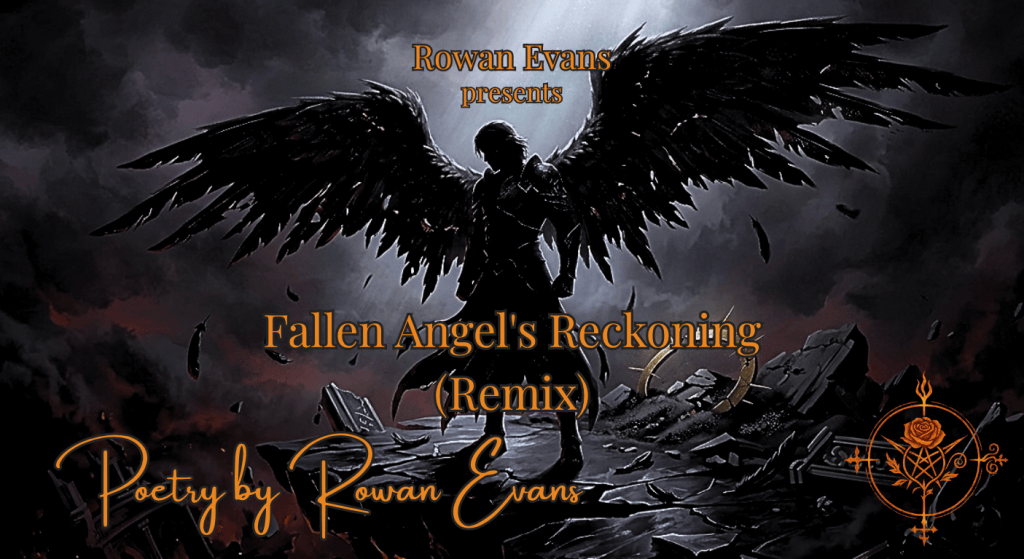
    A friendly glowing ghost and a child drifting through a peaceful, magical landscape of moonlight, flowers, and calm waters.
    Paul T. Geist guiding RoRo through the Land of Calm and Cheer, where big feelings learn how to breathe.

    Paul T. Geist & RoRo’s Adventures in the Land of Calm and Cheer
    Poetry by Roo the Poet
    Written September 13th, 2024

    In a cozy little town where moonbeams play,
    Lived a ghost named Paul T. Geist who loved to sway.
    With a gentle laugh and a shimmer so light,
    He brought comfort and joy on a soft, starry night.

    RoRo was a girl full of bright, happy beams,
    But sometimes her feelings were wild, it seems.
    One day she felt frazzled, her emotions a storm,
    And her mood became chilly, her smile not so warm.

    Paul T. Geist floated by with a friendly glow,
    “Dear RoRo,” he said, “there’s something you should know.
    Let’s visit a land where calmness takes flight,
    And find peace for your heart on this magical night.”

    They drifted through fog that was soft and serene,
    To the Land of Calm and Cheer, where joy was seen.
    “Welcome,” said Paul, “to a place so profound,
    Where finding your calm is the treasure you’ve found.”

    They met a wise owl with feathers of blue,
    Who spoke of deep breaths and feelings anew.
    “Sometimes,” said the owl, “our minds race so fast,
    But finding still moments can make calmness last.”

    RoRo watched as the owl closed her eyes tight,
    And took gentle breaths to feel peaceful delight.
    She saw how stillness could quiet the storm,
    And how feelings could settle, transforming the norm.

    Paul T. Geist then showed her a pond so clear,
    Where ripples of peace danced near and dear.
    “When you’re feeling stormy, take a deep breath,
    Like ripples that spread, it helps calm the depths.”

    They visited a meadow where colors would sway,
    In hues that brought calm to each passing day.
    RoRo learned to breathe deeply and slow,
    Finding calm in the feelings that ebb and flow.

    As they floated back home, RoRo felt light,
    Her heart now at peace, her emotions just right.
    She learned to embrace her feelings with care,
    And find calm in the storm, floating light as air.

    Paul T. Geist waved with a glow soft and bright,
    “Remember, dear RoRo, your feelings are light.
    In the Land of Calm and Cheer, you’ve learned so much,
    To find peace and calm with a gentle touch.”

    So children, remember, as you grow and play,
    Find calm in your heart at the end of the day.
    For in the Land of Calm and Cheer so near,
    Peace can be found, and your heart will be clear.


    If you’re interested in more poetry, you can find it here → [The Library of Ashes]
  • Author’s Note

    This poem was written as a story for children — a soft place to land, a little lantern of kindness and empathy wrapped in rhyme.

    I’ve always believed that the lessons we learn earliest are the ones that shape the way we love the world. Paul T. Geist & RoRo’s Adventures in the Land of Heartfelt Wonders was born from that belief: that gentleness can be taught, that growth doesn’t have to come with shame, and that even a grumpy heart is still a good heart learning how to bloom.

    One day, I would love to see this story illustrated and bound into an actual children’s book — something a parent could read at bedtime, something a child could return to when their feelings feel too big. Until then, it lives here as a small spell for softness.

    For the little ones.
    And for the inner children still learning how to be kind to themselves.


    A friendly ghost and a young girl walk through a glowing pastel forest in a whimsical children’s storybook scene.
    Paul T. Geist and RoRo begin their journey through the Land of Heartfelt Wonders, where kindness makes the world bloom.

    Paul T. Geist & RoRo’s Adventures
    in
    The Land of Heartfelt Wonders
    Poetry by Roo the Poet
    Written September 13th, 2024

    In a town where whispers float on a breeze,
    Lived a ghost named Paul T. Geist with a chill that could freeze.
    He wore a top hat and a smile that was bright,
    And danced through the shadows with pure delight.

    RoRo was a girl with a heart full of cheer,
    But sometimes her kindness would disappear.
    One day she was grumpy, she wasn’t so nice,
    And her friends felt the sting, not once but twice.

    Paul T. Geist saw her frown from afar,
    He floated in gently, like a soft falling star.
    “Dear RoRo,” he said with a ghostly wink,
    “Let’s go on a journey—come, let’s rethink.”

    They ventured through woods with leaves soft and blue,
    To a place where the flowers glistened with dew.
    “Welcome to the Land of Heartfelt Wonders,” he cheered,
    “A place where kindness and empathy are revered.”

    They met a small bunny with a tear in her eye,
    And RoRo learned why with a heartfelt sigh.
    She saw how her words could hurt, oh so deep,
    And how kindness was a promise to keep.

    Paul T. Geist showed her a magical scene,
    Where kindness grew flowers, in shades of serene.
    Each smile and hug, a petal so fair,
    Blossomed in joy through the sweet, fragrant air.

    RoRo then saw the bunny’s sad eyes grow bright,
    As she offered a hug with all of her might.
    The bunny then beamed with a heart full of cheer,
    And the Land of Wonders sparkled with cheer.

    With a heart now open, RoRo returned,
    With a lesson of kindness eagerly learned.
    She spread love and warmth in all she did,
    Making sure no one’s heart was ever hid.

    Paul T. Geist waved as he faded from sight,
    Leaving RoRo with warmth and delight.
    And as she drifted to sleep that night,
    She knew kindness and empathy made the world bright.

    So remember, dear children, as you grow and play,
    Let kindness guide you in every way.
    For in the Land of Heartfelt Wonders so near,
    A heart full of love is the treasure most dear.


    If you’re interested in more poetry, you can find it here → [The Library of Ashes]
  • Author’s Note

    This poem isn’t about skill.
    It’s about orientation.

    Some people write to be understood.
    Some people write because silence feels lethal.

    This piece is for the ones who learned to live in the deep—
    who didn’t choose intensity so much as need it to breathe.

    It isn’t an accusation.
    It’s a recognition.

    Not everyone was taught that the ocean is real.


    A figure breathing underwater in deep blue ocean light, symbolizing emotional depth and survival.
    Some of us learned to breathe underwater.

    Depths
    Poetry by Rowan Evans

    I write
    like I might
    die, if I don’t.

    You write
    like you’re trying
    to pen
    the perfect quote.

    We are not the same.

    But you
    are not to blame.
    It’s not on you
    to carry
    society’s shame.

    They went shallow,
    and punished the depths.


    Closing Note

    Some of us learned
    to breathe underwater.

    Some of us
    were told
    the ocean
    was a lie.


    If you’re interested in more poetry, you can find it here → [The Library of Ashes]
  • Author’s Note

    This piece is a reflection on persistence, inspiration, and the threads that connect my work over the past year. Each italicized title is a window into the poems that shaped this journey—moments of love, desire, trauma, healing, and devotion.

    At its heart, this is about process as much as outcome: the daily practice of writing, the sparks of muse, and the quiet work done in the late hours when the world is still. It’s also a tribute to those who witness these words—across screens, pages, and hearts—you are part of this ongoing journey too.

    Consider this piece a bridge: between poems, between moments, between the past and the work yet to come.


    A writer’s hands holding a pen over scattered pages of poetry, lit by a warm lamp, evoking quiet inspiration and devotion.
    Late nights, ink-stained fingers, and the quiet companionship of words—where every poem begins.

    131 Days
    (A Journey Through Words, Fire, and Devotion)
    Poetry by Rowan Evans

    I’ve been
    so focused—
    over-focused, some say.
    One hundred thirty-one days
    and counting.

    I’ve written with range:
    love, desire, mental health,
    trauma, recovery.
    There’s more, of course,
    but that’s the core.

    I write like
    A Heart Unveiled,
    witnessing the
    Colors of Your Soul.
    My pen
    revealing,
    the Infinity Within.
    As my mind
    drifts free
    in The Hallow Sea.

    My muse,
    my inspiration is—
    A-Woman.
    The vision of beauty,
    an angel on earth—
    a Filipina,
    with fire in her eyes.
    When the world tries
    to put her fire out,
    that is when I
    Cry to the Quiet.
    And why
    I Am
    offering myself
    to her, fully.
    Freely.
    For you see,
    she—
    is Perfectly Imperfect,
    which means…
    she is perfect for me.

    She has shown me,
    that there are
    Timelines Worth Rewriting.
    And your essence,
    I will never forget—
    because
    I Am the Storm That Remembers.

    Late nights, ink-stained fingers,
    the quiet my closest companion.
    For those who witness, across pages and screens,
    you carry a piece of this journey too.
    And still, I write on.


    If you enjoyed this piece and want to check out more of my work, you can click one of the many links scattered throughout the poem itself. They take you to my highest viewed pieces of the year. I am not saying they are my best pieces, just the ones that got the most views. Anyway, you can find more of my work here: [The Library of Ashes]

  • Author’s Note

    This poem is not a cry for help — it’s a confession. It’s the truth about living in a body that feels too heavy, a heart that beats even when I’m too tired to hold it. For anyone who knows what it’s like to rise with no hope, no spark, just sheer stubborn survival — this one is for you. You’re not alone in the mornings that feel impossible. You’re not alone in the weight.


    Ghostly figure with glowing heartbeat, representing emotional struggle and resilience, emerging from darkness.
    “Even when the body feels heavy and the heart refuses rest, the spirit rises — a ghost in its own skin.”

    Ghost in My Body
    Poetry by Rowan Evans

    I awoke,
    empty of hope.
    Chest tight, eyes wide—
    the world felt
    unbearably heavy.
    I took a minute,
    recalibrated.
    I fix my face
    into something readable,
    something quiet—
    because they’ll look
    straight into my eyes,
    and still ask,
    “But… are you happy?”

    I haven’t really been
    since I was thirteen—
    the year something in me
    stopped blooming.
    Yeah, it’s been
    a lack of smiles,
    since I
    was thirteen.
    The year the light in me
    learned to dim itself.

    It’s been a
    constant struggle,
    as I’ve struggled constantly.
    I struggle to find
    my place.
    I struggle to recognize
    my face.
    Trust me, when I say
    I struggle with everything.
    Like, I don’t want to die,
    but I—
    don’t really want to be alive.
    It’s a struggle
    just to survive.

    It’s a struggle just to survive,
    carrying a body
    that feels heavier
    than I do.
    Dragging a heartbeat
    that won’t quit
    even when I’m tired of holding it.

    And yet—
    every morning,
    somehow,
    I rise.
    Not healed,
    not whole,
    just here.
    Dragging the weight,
    of a heartbeat
    that refuses to stop
    even when I want rest,
    even when I want it to.

    I’m just
    a ghost still trying
    to haunt its own body.

    But still,
    I pull myself upright—
    not because I’m hopeful,
    but because something in me
    refuses to die quietly.
    And maybe one day
    the bloom returns,
    the light rekindles—
    but tonight,
    I just breathe
    and call it survival.


    Looking for more poetry? You can find it all in the Library of Ashes.

  • Author’s Note

    This piece came from a place of uncomfortable clarity — the kind that only arrives after you’ve survived enough storms to notice the patterns in the people around you. There’s a strange truth I’ve learned over the years: some people loved me louder when I was breaking than when I was healing. Pain made me poetic, easy to praise, easy to place on a pedestal of tragedy. But healing? Healing is quieter, steadier, less romantic. And somehow, to some people, that made it less worthy of attention.

    I didn’t write this to shame anyone. I wrote it because it’s real — because recovery deserves reverence too, because resilience isn’t any less beautiful than collapse, and because we don’t talk enough about how lonely healing can be.

    This piece is for anyone who’s ever felt more valuable broken than whole. For anyone rebuilding themselves without applause. For anyone learning to exist without having to bleed for validation.

    You are still art.

    Rowan Evans


    A solitary figure in a dim, gothic museum surrounded by cracked statues, symbolizing healing after emotional collapse.
    Even survival can feel quiet in a world that only learned to listen to the sound of breaking.

    When Survival Gets Quiet
    Poetry by Rowan Evans

    It’s always been strange to me
    how people praised me louder
    when I was dying inside
    than when I wasn’t.

    And I don’t say this
    to make anyone feel shame—
    it’s just something I’ve noticed
    over time.
    Over a lot of motherfuckin’ time.

    I can think back
    to so many moments
    where I was ready to check out.
    Where the smallest thing
    felt like the final straw.

    And I don’t say that
    to minimize, or erase,
    or make light of the weight
    those moments carried.

    They held me like a museum tragedy—
    a relic of ruin,
    a beautiful collapse.

    But when I finally learned to breathe again,
    their applause softened,
    like my healing made the art
    less valuable.

    Maybe it’s easier to love me
    when I’m bleeding metaphors
    than when I’m quietly rebuilding.

    Maybe survival is too quiet
    for people who only learned
    to listen to the sound
    of breaking.


    Looking for more poetry? You can find it all in the Library of Ashes.

  • Author’s Note

    This piece is a meditation on resilience, self-reclamation, and the sanctity of imperfection. I wrote it as a sermon for anyone who has ever felt broken, misfit, or misaligned with the world’s expectations. It’s a reminder that divinity exists in survival, in truth-telling, and in the courage to rebuild oneself repeatedly. For the fractured souls out there: this one’s for you.

    Rowan Evans


    A lone figure stands in a dimly lit gothic cathedral, bathed in colored light from stained glass, representing resilience and sacred rebellion.
    A sermon for the fractured soul—finding divinity and strength in imperfection.

    Sermon for the Fractured
    Sermon by Rowan Evans

    Every poem I write
    is a sermon for the fractured soul.
    Saint with a pen,
    heathen in the mind.
    I’m a preacher’s child
    gone wild—
    welcome to my church,
    it’s a service for the misfits.

    I crowned myself a deity.
    My divinity
    lives somewhere between
    G-O-D and Lucifer.
    I’m a morningstar, lightbringer.
    Or a shadow
    walking through a holy world.

    Your holy book
    banned my name.
    Heaven doesn’t want me,
    Hell doesn’t either.
    So I made
    Purgatory my kingdom.

    You don’t have to praise me,
    you don’t have to worship.
    I don’t need blind faith—
    for the miracles I create.
    You don’t have to suffer
    to prove a thing—
    your breath is devotion enough.

    You don’t have to
    sell me your soul.
    I will bless you,
    while you remain whole.

    I am not a deity without flaw—
    I’ve been cracked, fractured,
    put back together
    by my own hands.
    I’ve rebuilt myself,
    time and time again.
    So I don’t ask for perfection,
    I ask for confession,
    truth and witness.


    You can find more of my gospel in the Library of Ashes. [The Library of Ashes]